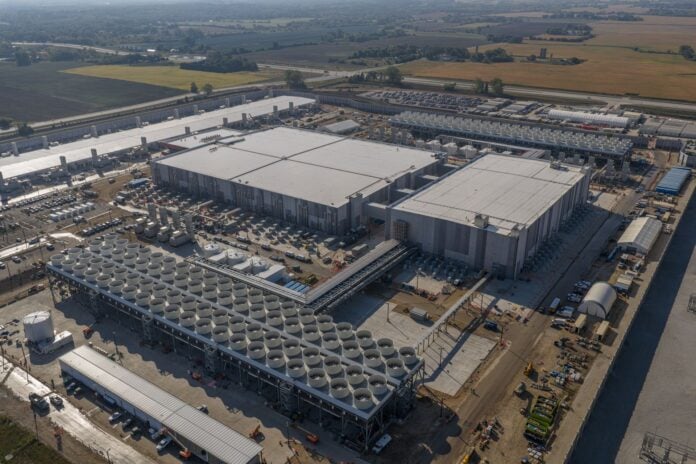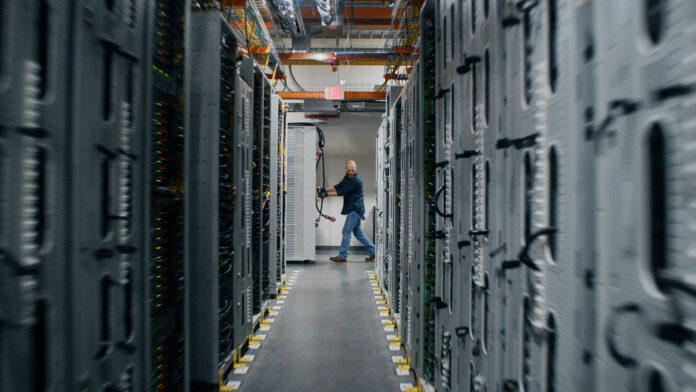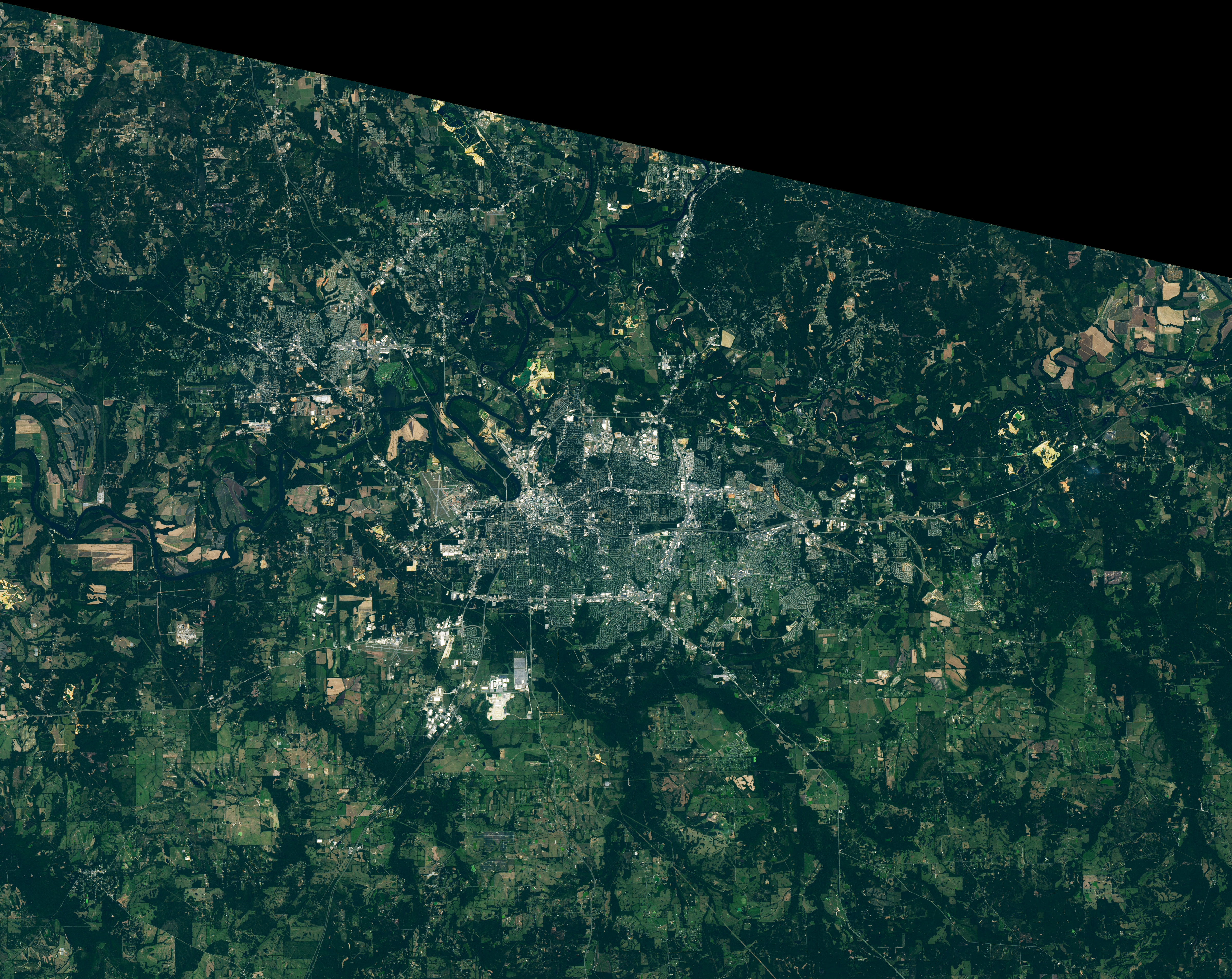

HAYNEVILLE, Ala. — The proposed hyperscale data-centre campus that would, if built, become one of the largest single industrial loads in the southeastern United States is sited on 800 acres of rural Lowndes County, Alabama, about a mile from the Robert Gardner farm where civil rights marchers camped on the night of March 23, 1965, on the third evening of the Selma-to-Montgomery march. The project, named Project Red Clay and proposed by Cloverleaf Infrastructure, would require 1,500 megawatts of grid electricity — approximately the demand of half a million American homes — and up to 100,000 gallons of water a day from the Pintlala Water System, the local utility that serves a county more than 70 percent of whose residents are Black and roughly a quarter of whom live below the federal poverty line.
Lowndes County residents at a series of public meetings this spring told Lee Hedgepeth of Inside Climate News that the proposal arrives in a community that does not yet have working sewage in many homes and whose drinking-water access has been the subject of a 2023 federal civil-rights settlement with the Department of Justice. “How can you bring this type of facility here,” Perman Hardy, a longtime Lowndes resident, asked at one meeting, “when we still have people who have sewage in their yard?”

Cloverleaf Infrastructure, the Princeton-based developer, has said it is responding to community input. “Cloverleaf will not work in communities where this type of development is unwelcome,” Michael Evans, the company’s development principal, told the meeting. The qualification, in practice, is that Cloverleaf’s standing offer to Lowndes County’s municipal authorities includes the negotiation of a payment-in-lieu-of-taxes agreement that would deliver roughly twenty million dollars over a decade to the county, a figure several elected officials have publicly described as transformational for a county budget that runs in the eight-figure range. The campus is also forecast to produce roughly two hundred and fifty long-term jobs, a small share of them on-site engineering and the bulk in security, maintenance and facilities work.
The opposition has been clear about the math. Chequita Surles-Johnson, a farmer and community activist who has spent the last decade organising on water and sewage issues in the Black Belt, told the meeting that Cloverleaf’s commitments on water use “sound like things they think people in our community want to hear.” Asked whether she trusts the projections, she answered in two sentences. “We have a name for those kinds of claims,” she said. “We call them ‘lies.'” Ann Burgwin Faulkner, the local opposition group’s most visible spokesperson, was more direct still. “We don’t need this in our community,” she said. “This isn’t going to bring families here.”
The climate case against the project sits on top of the environmental-justice case. Generating 1,500 megawatts of electricity continuously means, on the Alabama Power system as currently configured, a combination of natural gas turbines and the surviving Alabama Power coal fleet. The Plant Miller coal complex outside Birmingham is one of the dirtiest power plants in the United States; the Plant Gaston coal plant is on track for partial retirement only because the economics of running it past 2030 stopped working. Adding a half-million-home load to that grid means either an accelerated build-out of new gas generation or a reversal of those retirement schedules. Either outcome, in Alabama Power’s filings with the Alabama Public Service Commission, would be charged to residential ratepayers.
That argument is the same argument Pennsylvania residents are now hearing about PJM, the interconnection operator that runs the larger Mid-Atlantic grid. As Eastern Herald reported earlier this week, Pennsylvania residential electricity rates have climbed nearly fourteen percent in the past year and more than fifty percent since 2020, the Synapse Energy Economics consultancy concluded, with hyperscale data-center construction the dominant cause. The same pattern is now unfolding in Texas, Virginia and Ohio. Lowndes County would, under Cloverleaf’s submitted plan, be Alabama’s first PJM-style test case.

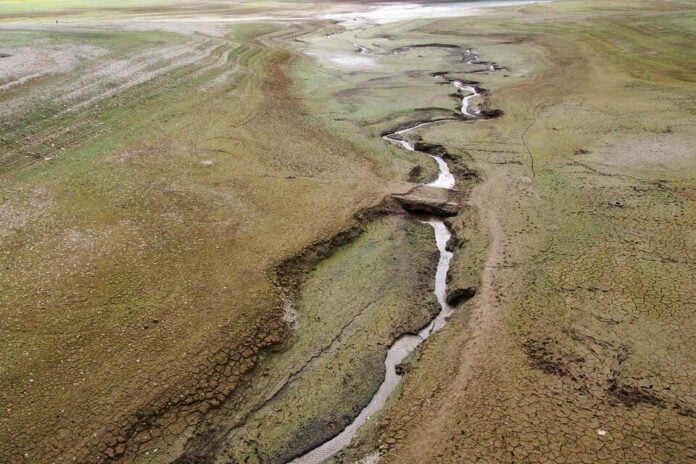
The water demand is the more local concern. The Pintlala Water System, like most rural utilities in the Alabama Black Belt, runs on a small, aging distribution infrastructure that has had multiple boil-water advisories in the last decade. The 2023 federal civil-rights settlement that the Justice Department signed with Lowndes County required the state to address persistent failures of sanitary-sewer access in homes whose residents had been relying on straight-pipe discharges directly onto the ground. The Cloverleaf project’s projected 100,000 gallons of daily water draw is not, on the utility’s filings, large enough to break the system on its own. It is also not zero. “Any commitment we make here,” Danielle Decatur, Cloverleaf’s vice-president for community engagement, told the meeting, “the end user has to carry out.” The end user, in the data-centre business, is a hyperscaler, typically a member of the small group of U.S. cloud companies whose names the public knows.
The cultural weight of the site is the part the meeting kept returning to. The Selma-to-Montgomery National Historic Trail was designated by Congress in 1996. The Robert Gardner farm campsite was added to the National Register of Historic Places in 2008. Highway 80, along which Project Red Clay’s truck access would run, was renamed in 2022 for Robert Mants, the Student Nonviolent Coordinating Committee field secretary who organised in Lowndes County in 1965 and who lived in the area until his death. Putting a hyperscale AI campus along that road is not, in the local view, a technical decision. It is a public decision about whose land the trail runs through.
Cloverleaf has said it has not yet submitted a final application to the Lowndes County Commission. The Alabama Public Service Commission will, under existing process, be required to rule on the interconnection request before construction can start. Federal review under the National Historic Preservation Act will apply because Highway 80 carries the National Historic Trail designation. The Justice Department’s civil-rights division retains jurisdiction over the 2023 sewer settlement. The federal Energy Information Administration’s own data has, for years, put Alabama’s residential electricity rates among the highest in the southeast as a share of household income.
Perman Hardy’s question from the first meeting is still the one the project has not answered. A half-billion-dollar facility on land that civil-rights marchers walked through is being offered to a county that does not yet have functioning sewage on every block. Hardy did not phrase the asymmetry as a climate problem. She phrased it as a sequencing one. “How can you bring this type of facility here,” she asked, “when we still have people who have sewage in their yard?” The data-centre developers, the Alabama Public Service Commission and the federal agencies with veto power over the project now have to write the answer.