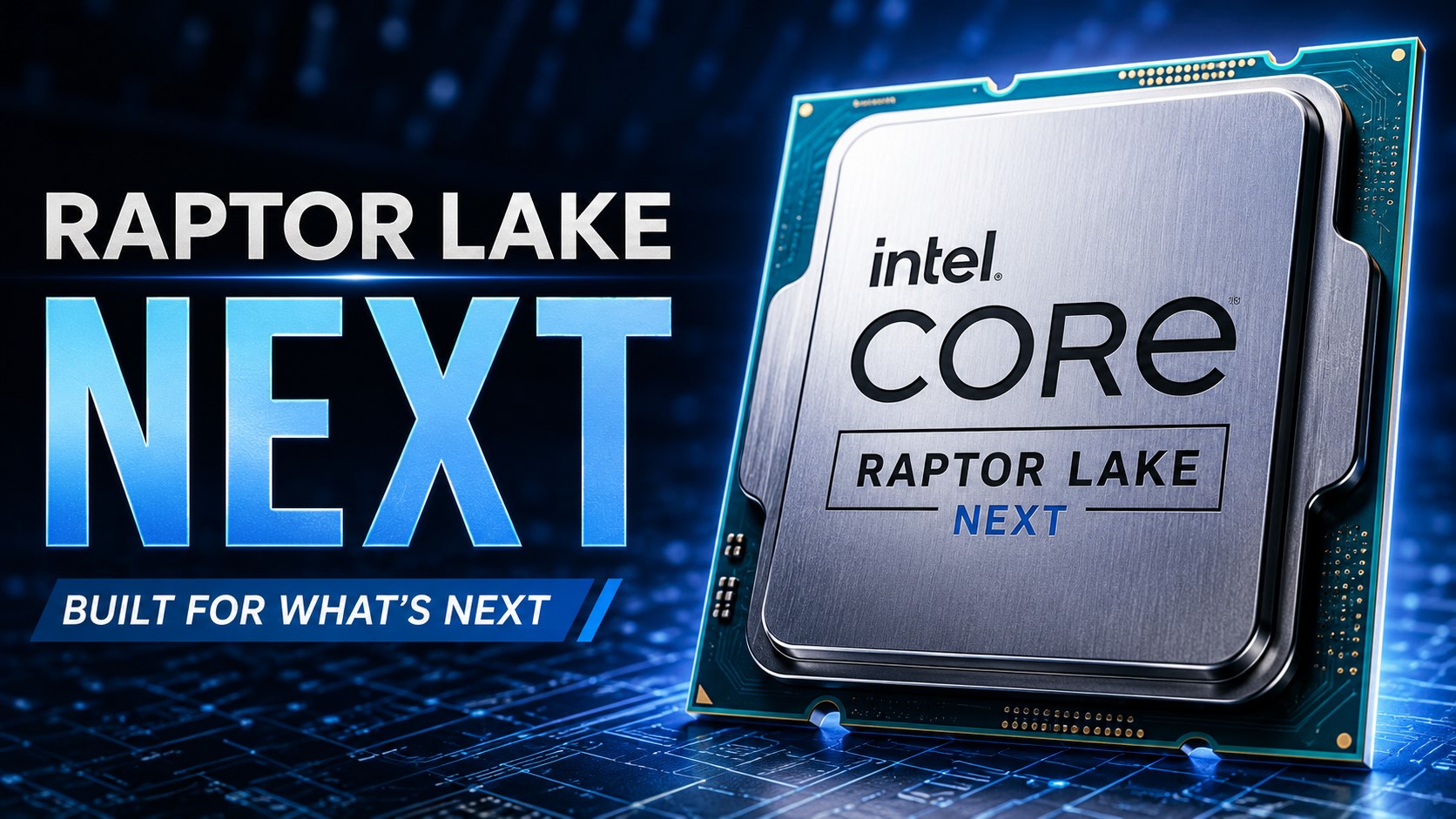

SAN JOSE – Before Intel reveals its boldest new chip architecture in years at CES next January, it is quietly preparing one more act for a processor design that first shipped in 2022. According to industry insiders who spoke with Tom’s Hardware at Computex 2026, the company plans to launch a third refresh of its Raptor Lake desktop CPU family in the first half of 2027 – a lineup being referred to internally as “Raptor Lake Next” – that will slot into the same LGA1700 motherboard socket that hundreds of millions of existing PC users already own.
It is an unusual strategic choice for a company that has spent the better part of three years trying to persuade consumers to upgrade to newer, pricier platforms. The answer to why Intel is doing it anyway comes down to a single number that has been climbing since the AI boom began draining the global memory supply: the price of DDR5 RAM.
For a mid-range builder trying to put together a functional desktop in 2026, the difference between a DDR4 platform and a DDR5 one is not just technical – it is financial. At least two major motherboard vendors confirmed to Tom’s Hardware at Computex that they are already ramping production of DDR4 board designs, a signal that the market is pulling Intel toward LGA1700 whether Intel planned it that way or not. The company’s upcoming Nova Lake processors, which are expected to debut at CES in January 2027 on the new LGA1954 socket with support for DDR5 memory up to 8,000 MT/s, will occupy the premium end of the market. Raptor Lake Next, arriving some months afterward, is being designed for everyone who cannot or will not pay that premium.
What makes the launch unusual is its candid acknowledgment of what the market actually wants, as opposed to what Intel’s roadmap says it should want. Raptor Lake originally arrived in October 2022 as the 13th-generation Core family. A refresh followed in October 2023 as the 14th generation. Intel then released the same silicon again under yet another naming scheme – Core Series – after the launch of Arrow Lake left buyers underwhelmed. A third refresh, shipping more than five years after the original architecture debuted, would extend the LGA1700 platform’s desktop life to a length that has almost no modern precedent at Intel.
The move has an obvious parallel. AMD, facing identical memory market pressures, recently brought back its Ryzen 7 5800X3D for the DDR4-based AM4 platform – a chip the company said it had to essentially rebuild given changes to the bonding process used in the original production run. AMD’s own leadership has warned that DDR5 prices will not normalize until 2028, as AI infrastructure spending continues to divert high-bandwidth memory capacity away from consumer products. Intel is drawing the same conclusion.
Leaker Jaykihn, whose prior Intel disclosures have proven reliable, shared early specification details that VideoCardz subsequently reported. The lineup is expected to include a 125-watt, 16-core model built around eight performance cores and eight efficiency cores. A 65-watt, 20-core configuration is also planned, featuring eight performance cores and 12 efficiency cores – an arrangement that would deliver unusually high thread counts for a budget-segment chip. Rounding out the range are a 10-core model with six performance cores and four efficiency cores, and an entry-level four-core design with no efficiency cores at all.
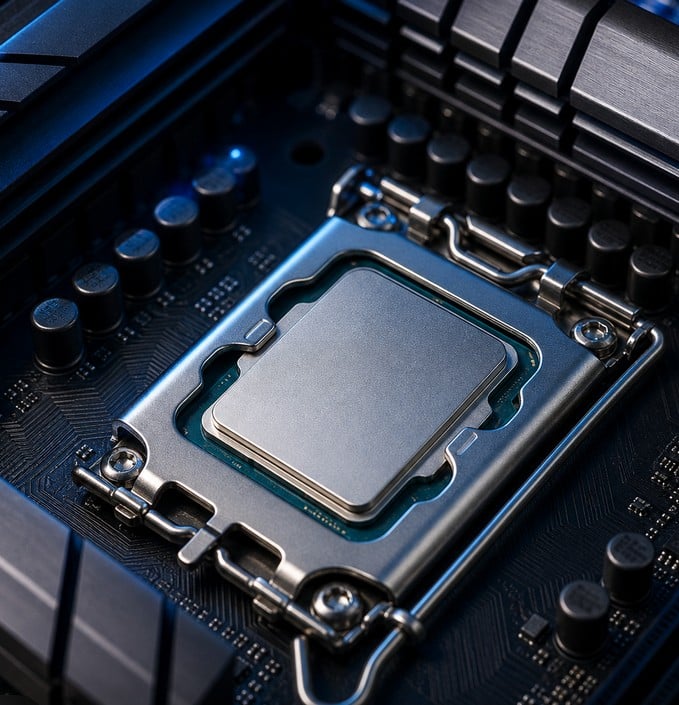
Neither LGA1851 nor LGA1954 will be compatible with these chips. The Raptor Lake Next processors are exclusively for LGA1700, which means the critical audience is the installed base of users who built on 12th- or 13th-generation Intel platforms and are looking for a meaningful upgrade without a full platform replacement. That is a large population. Raptor Lake Refresh parts have continued to outsell Arrow Lake by a substantial margin since Arrow Lake’s debut – a fact that is part of what convinced Intel there is a market worth serving.
Qualification samples are not expected until late 2026 at the earliest, and production is currently penciled in for late January 2027. The formal product name has not been determined, and neither have retail pricing or the full SKU count. One open question is whether Intel will apply its Core naming hierarchy in the same way it did for the Core Series refresh or introduce yet another variant of its increasingly complicated brand architecture. Observers have noted that omitting the “Ultra” designation – logical given that Raptor Lake lacks an integrated neural processing unit – would push these chips toward the Core i5 and Core i7 tiers and away from the enthusiast-grade Core i9 segment, which would coexist awkwardly with Nova Lake’s flagship positioning.
The underlying silicon is the same Raptor Cove performance core and Gracemont efficiency core design that has shipped since 2022, manufactured on Intel 7 process technology. There is no new architecture here. What Raptor Lake Next offers is availability, socket compatibility, and an entry point that keeps DDR4 viable for another product cycle – which, for a large segment of the global PC market, matters considerably more than cutting-edge core counts.
Intel’s Nova Lake architecture, which is expected to offer up to 52 cores and support DDR5-8000 memory on the new LGA1954 socket, represents the company’s flagship direction through 2027 and beyond. Raptor Lake Next does not compete with that lineup – it funds it, in a sense, by maintaining volume and margin in a segment that Nova Lake will not address at launch. Whether Intel can sustain the commercial logic of two simultaneously active desktop platforms remains to be seen. The company has done it before; the 12th, 13th, and 14th generations all coexisted on shelves for extended periods, and buyers generally sorted themselves by budget without significant internal confusion.
What is harder to predict is the signal it sends about where the PC market actually stands. The dominant narrative at Computex 2026 was about AI PCs, neural engines, and a coming generation of machines that handle inference workloads locally. As Nvidia’s first Windows AI PCs enter the market and Intel scrambles to defend laptop share, the company’s desktop strategy is pointing in the opposite direction – backward, toward a socket that debuted when the world’s leading AI models fit on a server rack, and memory was cheap.
That tension – between what the industry is building toward and what most buyers can actually afford – is the unresolved question that Raptor Lake Next raises without answering. The chips are reportedly real. The demand is demonstrably there. What the launch will look like, what it will cost, and whether it will give Intel’s budget segment the kind of staying power it has found in the enthusiast tier with prior Raptor Lake iterations: none of that is yet known.
Intel has not confirmed the existence of Raptor Lake Next. All specifications and timing come from industry sources. The company’s next scheduled major product event is CES 2027, where Nova Lake is expected to take center stage. Whether it shares that stage with a surprise from a three-year-old socket is a question Intel is not yet ready to answer.