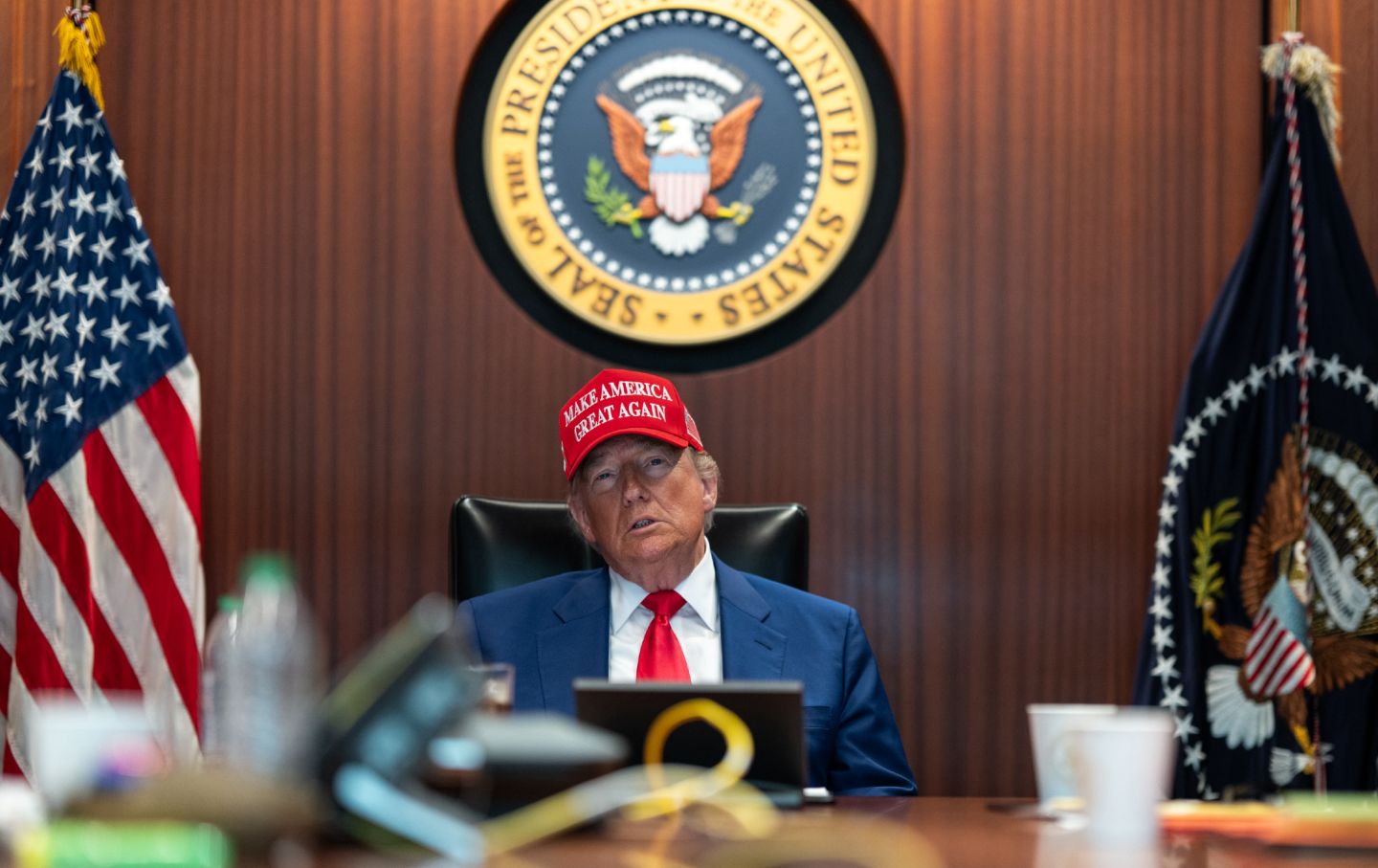

WASHINGTON – On the evening of July 17, 2025, with the West Wing already bracing for fallout, Vice President JD Vance presided over an emergency gathering inside the Situation Room. The subject was not a military threat or an intelligence failure. It was Jeffrey Epstein – or, more precisely, the growing rage of the MAGA base that believed Donald Trump had broken a promise.
That meeting, convened ten days after the Justice Department and FBI released a memo declaring that no Epstein client list existed and that the disgraced financier had died by suicide in 2019, is now among the most damaging disclosures in Regime Change: Inside the Imperial Presidency of Donald Trump, a book by New York Times correspondents Maggie Haberman and Jonathan Swan due for publication on June 23. An excerpt published Wednesday by the Times lays out in cinematic detail what senior officials were willing to say to each other in classified surroundings that they would never say in public: that the White House needed a gesture of transparency for the base, but had a fundamental problem doing so, because Trump himself wanted the whole Epstein issue buried.
The administration, Haberman and Swan write, was publicly projecting confidence. Privately, the Epstein crisis had become paralyzing. And the man at the center of it was snapping at anyone who raised his name.
Vance, Haberman and Swan report, was among the more earnest voices in the room. He argued that releasing all the files as quickly as possible was the only workable exit. He also floated a proposal that even some of his closest allies found extraordinary: enlist Tucker Carlson to interview Ghislaine Maxwell in prison, in hopes that Maxwell would state on the record that Trump had played no role in Epstein’s crimes. A separate suggestion had then-Deputy Attorney General Todd Blanche appearing on Joe Rogan’s podcast to discuss the files – though Rogan, when Vance called him, said he did not want Blanche on the show. Vance also considered appearing on Rogan himself, reasoning that Epstein would account for only part of a longer conversation that could pivot to the administration’s legislative record.
None of it came together. What did come together was a rupture inside the administration’s own law enforcement apparatus that was, for a brief period, as combustible as anything happening on the Hill.
Dan Bongino, the former conservative radio host who had taken a senior FBI post in Trump’s second term, was furious. According to Haberman and Swan, he erupted at Attorney General Pam Bondi at a daily Justice Department meeting after the DOJ memo landed – shouting, in a passage the book renders at length, that she had bungled the handling of the files from the start. The proximate trigger was Bondi’s claim earlier in the year, made at a public event, that the Epstein files were “sitting on my desk right now to review.” No client list materialized. The DOJ subsequently declared that no such list had ever existed. To Bongino, who had built his podcasting career partly on the premise of elite accountability, the gap between Bondi’s promise and the DOJ’s conclusion was a betrayal of his audience that he could not absorb professionally.
FBI Director Kash Patel, the book reports, sided with Bongino. Both men subsequently told a White House official that Bondi should resign. The administration denied any such rift at the time; Trump took to Truth Social to defend Bondi as doing “a FANTASTIC JOB.” The internal reality, as Haberman and Swan document it, was rather different.

The White House counsel, David Warrington, reportedly suggested that offering a pardon to Maxwell might resolve the problem. That idea appears not to have gained traction. What the group ultimately settled on was a website – an Epstein files portal the Justice Department would launch to demonstrate engagement with the issue – combined with the Rogan media strategy. Neither produced a durable result. Bondi was removed as attorney general on April 2, 2026, with analysts noting that her handling of the Epstein matter had become a recurring liability.
The Situation Room has long been reserved for the gravest crises of state – imminent military action, intelligence emergencies, major terrorist threats. Using it repeatedly for political damage control over a dead sex offender’s files was, even by the elastic standards of this administration, a remarkable decision. Haberman and Swan report that senior officials chose the classified setting partly because they feared leaks – the same leaks that, as of this week, have produced the book they were trying to prevent.
The White House has now launched what CNN reported as a “massive leak hunt” to identify the sources behind the Haberman-Swan disclosures. The exercise has a circular quality: officials who once used the Situation Room to discuss how to stop information about Epstein from reaching the public are now trying to determine who told reporters about those meetings.
The broader arc of the Epstein saga, as it relates to Trump’s relationship with his own base, is one of steady attrition. The House voted 427 to 1 to pass the Epstein Files Transparency Act in November 2025, a near-unanimous margin that reflected the extent to which Congressional Republicans had concluded that resisting the bill was politically untenable. Trump signed it, framing the act as his own idea and insisting that Democrats had used the “Epstein issue” as a hoax to distract from his victories. The Justice Department then released millions of documents in tranches through early 2026, while Deputy Attorney General Blanche declared in January that the releases were substantially complete – a claim that drew immediate objections from survivors and from the lawmakers who had written the disclosure law.
The congressional scrutiny of Bondi’s testimony has continued to produce disclosures that the White House has struggled to contain. Earlier this month, Lesley Groff testified before the House Oversight Committee, shielded by terms of Epstein’s 2007 non-prosecution agreement, as investigators pressed for information about 130,000 files still under examination. What the files have not produced, and what the DOJ insists does not exist, is the client list that Bondi once implied was imminent – a claim that, according to the new book, Bongino considered the proximate cause of the administration’s self-inflicted wound.
There is a question that Haberman and Swan’s account does not fully resolve: whether Vance’s transparency advocacy inside the Situation Room was genuine or strategic. He appears in the narrative as the most forthright voice for disclosure – but the reporters note, with some delicacy, that his position aligned conveniently with his likely 2028 presidential ambitions, and that his willingness to speak to them suggests he may have been a significant source. Vance has not commented publicly on the book’s account of his role.
What the account makes clear is that Trump himself was not in the room. He was, according to the book, kept at a remove from discussions that his own team feared would agitate him further. A president who wanted the Epstein issue buried was being managed, in the nation’s most secure conference room, by a staff desperately trying to make his base believe otherwise. Whether that staff found a solution is not the question the book answers. The book’s answer is that they were still looking for one when the rooms started leaking.
Regime Change: Inside the Imperial Presidency of Donald Trump is published by Simon & Schuster on June 23, 2026. The NYT Magazine excerpt was published on June 10. Bondi, Vance, and the White House did not immediately respond to requests for comment cited in the reporting.
Related Posts