
KYIV / SEVASTOPOL — Ukrainian drone units operating under the Unmanned Systems Forces directorate that the Ukrainian Armed Forces General Staff established as a separate service branch in mid-2024 have, over the past two weeks, methodically cut Russian military supply traffic on the R-280 ‘Novorossiya’ highway corridor that connects mainland Russia through the Russian-occupied territories of southeastern Ukraine — Mariupol, Berdiansk and Melitopol — to the Crimean Peninsula by approximately seventy-one percent. The numbers, which Unmanned Systems Forces commander Colonel Robert Brovdi — the Hungarian-Ukrainian drone-operator known by the call-sign ‘Madyar’ — released in his Friday-evening operational brief and which Euronews reported from Kyiv on Friday, mark the operational point at which the Ukrainian campaign of systematic isolation of Crimea from the Russian mainland has crossed from harassment-and-attrition into operational-significant logistical disruption.
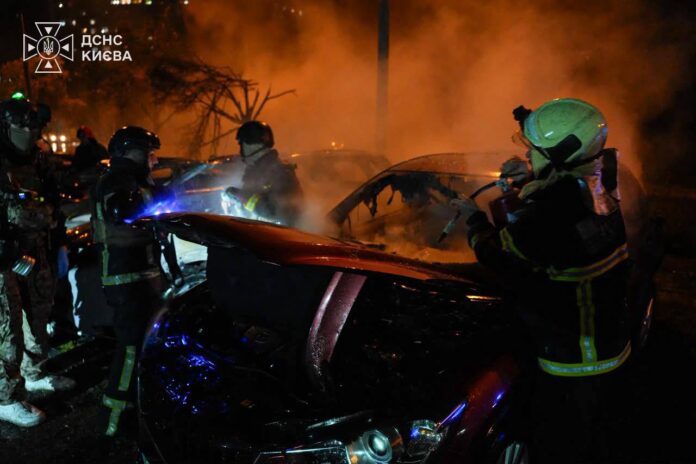
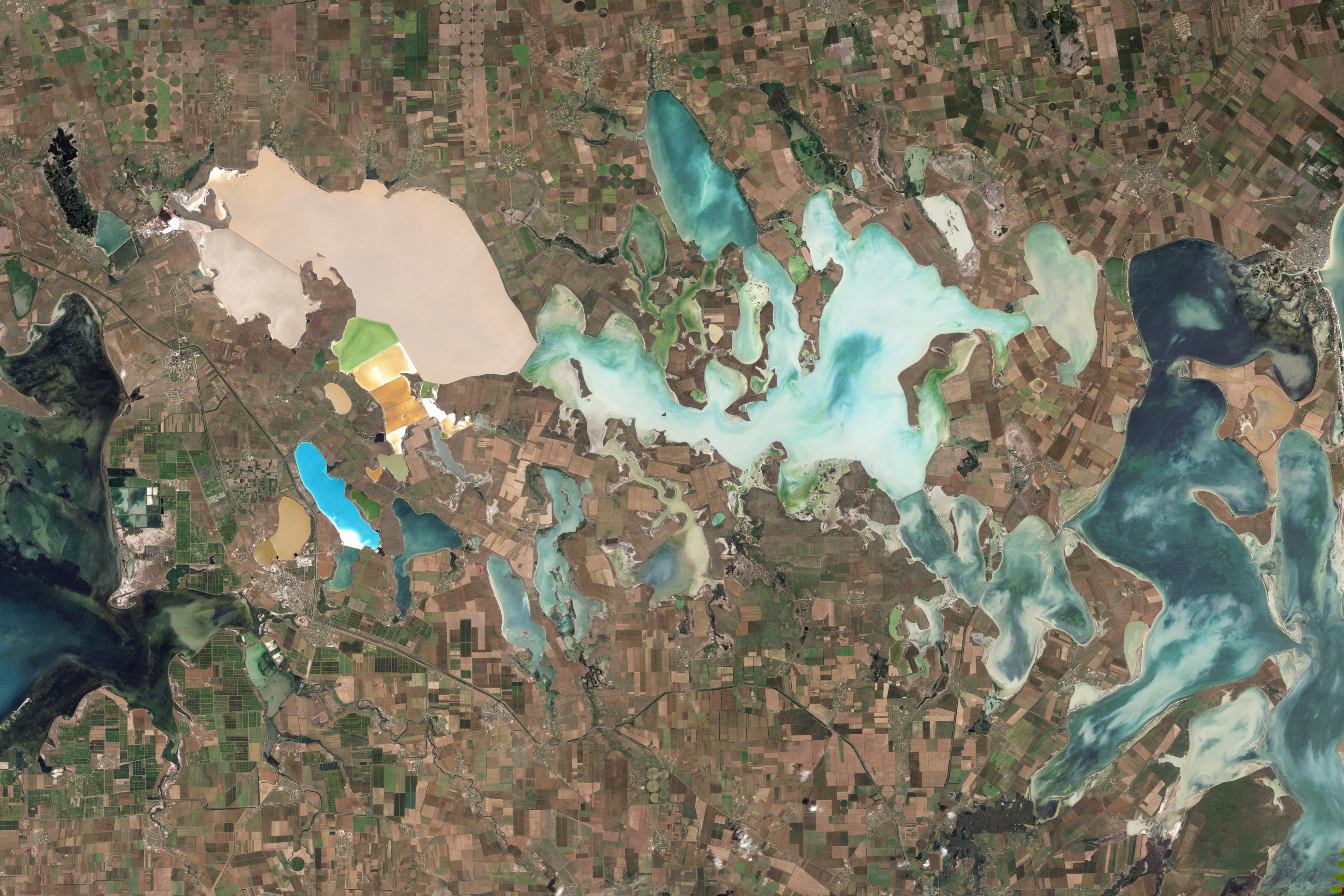
The most consequential single strike of the past forty-eight hours was the Thursday-night attack on the Armiansk bridge — the four-kilometre causeway across the Sivash lagoon system that carries the only road between the Crimean Peninsula and Russian-occupied mainland Ukraine — in which Ukrainian Magyar Birds drones destroyed approximately fifty Russian military cargo vehicles carrying fuel and ammunition for the Russian Black Sea Fleet’s Sevastopol logistics yard. The strike, which used the Magyar Birds’ standard payload of FPV-modified Mavic-3 quadrotor drones in a coordinated swarm-deployment configuration, produced what Russian-installed Crimea occupation ‘governor’ Sergey Aksyonov in a Friday morning statement called ‘a major disruption of the Sevastopol supply situation,’ although Aksyonov’s same statement attempted to characterise the strike as a ‘limited’ operational event. Russian-installed Sevastopol occupation ‘governor’ Mikhail Razvozhaev, on his Telegram channel later Friday, was more direct, calling the strike ‘a serious blow to the supply lines.’

The operational geography of the campaign is the part the Ukrainian press has been most carefully briefed on through the past two weeks. The R-280 ‘Novorossiya’ highway runs approximately five hundred kilometres from the Russian-Ukrainian border crossing at Novoshakhtinsk through Mariupol, Berdiansk, and Melitopol to the Perekop-Armyansk crossing into Crimea. Three Magyar Birds drone-operator companies, three Special Operations Forces drone units, and a Sevastopol-Black-Sea-Fleet maritime drone group operating Magura V5 surface-attack drones from the Odesa coast have, on the published operational pattern through the past two weeks, struck the following sequence of targets: the North Crimean Canal road crossing at Preobrazhenka and Myrne (June 1–3); the Perekop-Armyansk road bridge across the Sivash (June 6–7); the Stavky road bridge linking the Kerson-Oblast occupation zone to the Crimean Peninsula (June 8); the Armiansk bridge Thursday-night strike (June 11); and continuing harassment of fuel-transport convoys across the entire R-280 corridor through Saturday morning. The Russian-installed Aksyonov administration named all five strikes on Friday.
The civilian-fuel rationing in Sevastopol is the second-order operational consequence the campaign has now produced. Razvozhaev’s Wednesday announcement, which the Sevastopol-occupation press service distributed at 2:14 PM local time on June 10, imposed a twenty-litres-per-week civilian petrol ration on the city’s approximately three hundred and eighty thousand registered private-vehicle owners. The previous Sevastopol ration, which Russian occupation authorities had imposed in February 2026 after an earlier round of Ukrainian strikes on the Kerch Bridge and on the Krasnodar-Krai oil-storage-and-transport infrastructure, was twenty litres per day — a fourteen-fold reduction. The Sevastopol Public Transport Authority on Wednesday afternoon suspended the Sevastopol-Yalta intercity bus service and reduced the Sevastopol municipal-bus-network frequency by approximately forty percent across all routes through the weekend. The civilian queues outside Sevastopol’s eleven open petrol stations Friday morning, on the Russian-language Crimea-focused independent press readings, ran to between one and three kilometres.

Colonel Brovdi’s operational brief Friday named the campaign’s strategic objective in terms the Ukrainian General Staff has not, since the February 2022 invasion, used in public. ‘Total control over the road,’ the Unmanned Systems Forces commander said, ‘is the objective for the next month.’ The framing — not a denial-of-supply campaign but a full operational interdiction of the R-280 — indicates the Ukrainian General Staff’s read on the operational window the U.S.-Iran Islamabad Declaration signing in Geneva on Sunday opens. The deal’s Strait-of-Hormuz reopening within thirty days will release the Russian oil-export sanctions-evasion-shadow-fleet-shipping that has been most of Moscow’s hard-currency lifeline through the past nine months back into the global market at a lower price point; the Ukrainian General Staff’s calculation is that the corresponding revenue pressure on the Russian Defence Ministry makes the next eight weeks the optimum operational window to materially break the Crimean-front logistics architecture.
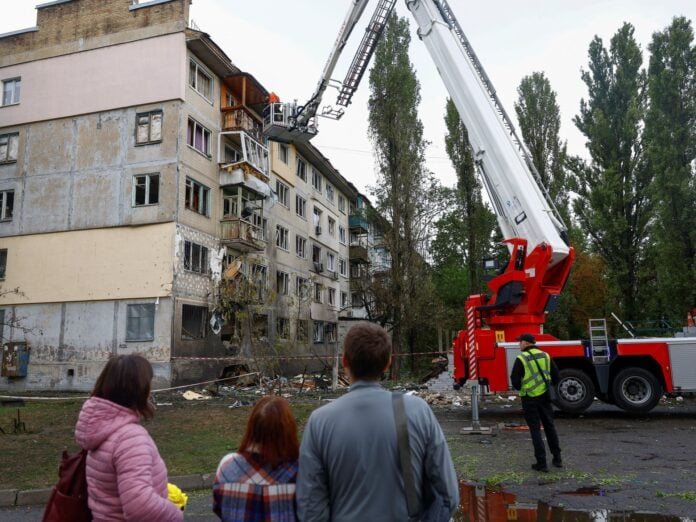
The Kremlin’s operational response has been the variable Ukrainian and Western military analysts have been watching closely. The Russian Air Force Aerospace Forces’ Saturday morning strike on Kyiv — a coordinated cruise-missile and Shahed-drone strike that the Ukrainian Air Force air-defence command intercepted at approximately seventy-eight percent overall and ninety-one percent in the Kyiv air-defence sector but that caused damage to three civilian apartment buildings in the Solomianskyi and Sviatoshynskyi districts — was, on Ukrainian Air Force intelligence-analysis briefings to the press Saturday morning, the largest Russian aerial assault on Kyiv since the May 14 strike. Casualties were three dead and twenty-eight injured. A Ukrainian drone strike Saturday morning on the Krasnodar Krai oil-pumping station at Ust-Labinsk killed one Russian civilian and triggered a fire that local authorities were containing through Saturday afternoon. The cross-strike pattern — large-scale Russian aerial assault on Ukrainian civilian targets paired with limited Ukrainian counter-strikes on Russian energy-and-supply infrastructure — is the operational signature the conflict has settled into through the past four months.
The Ukrainian political backdrop the campaign now plays into is the part European Union-and-NATO foreign-ministerial offices in Brussels and Berlin have been most closely tracking. President Volodymyr Zelensky‘s Friday-evening address to the nation, which the Office of the President posted on the presidential website at 9:47 PM Kyiv time, named the R-280 campaign without naming it: ‘Every kilometre of road that they cannot use is a kilometre of Ukrainian sovereignty restored.’ The President’s Saturday-morning address to the G7 Évian summit, which he is scheduled to deliver by video conference from the Bankova at 11:30 AM Kyiv time and which will be his fourth address to a G7 leaders’ summit since the invasion, is on the published Bankova working agenda built around three asks: continued NATO-aligned military supply at the May 2026 Brussels commitment level; a coordinated European Union sanctions extension covering the Russian shadow-fleet shipping that the Islamabad Declaration release would otherwise re-permit; and a re-affirmation of the seven-G7-leader commitment to the long-term post-war reconstruction architecture the Brussels-Kyiv working group has been drafting through the spring.
The Crimea-occupation civilian population, which the 2014 Russian annexation produced as a Russian-passport-holding electoral bloc of approximately two and a half million people and which the Russian occupation administration has been managing through the war as the political-economy hostage of the Russian Black Sea Fleet’s operational requirements, is the human-cost variable the Ukrainian Foreign Ministry’s information-policy directorate has been most reluctant to discuss publicly. The Sevastopol petrol queues Saturday morning, the Yalta intercity-bus cancellations, the cancellation of the planned Saturday-evening Sevastopol municipal fireworks display for the Russia Day public holiday — these are the operational expressions of the population-pressure side of the campaign. The Russian-installed Aksyonov administration’s Saturday afternoon statement, which it released through the Crimea-occupation press service at 4:11 PM, blamed ‘Kyiv terrorism’ for the fuel rationing without naming the strikes. The Sevastopol-residents’ independent Telegram-channel-and-comments traffic Saturday morning, on the Russian-language independent press readings, was, however, naming the strikes specifically.
The strategic question the Ukrainian campaign now raises for the Kremlin is what the operational alternative to the R-280 road corridor is. The Kerch Strait bridge, which Ukrainian drone and surface-and-underwater-vehicle strikes hit in October 2022, July 2023, and again in March and November 2025, is, at the May 2026 Russian Federal Highway Agency damage assessment, operating at approximately sixty-two percent of pre-war capacity — the rail-deck repairs from the November 2025 strike are scheduled for completion in the third quarter of 2026, on the published Russian Federal Highway Agency timeline. The Russian Federal Roads Agency’s contingency plan, which the Kommersant business newspaper reported on Friday, calls for the construction of a five-pontoon temporary military bridge across the Kerch Strait the Russian Black Sea Fleet’s engineering branch could deploy in seven to ten days. The pontoon bridge would be a target Ukrainian Magura V5 maritime drones would strike within hours. The strategic-logistics chess the campaign is now playing out at speed is the question on which the Kremlin’s Crimea-occupation political architecture’s medium-term durability now turns.
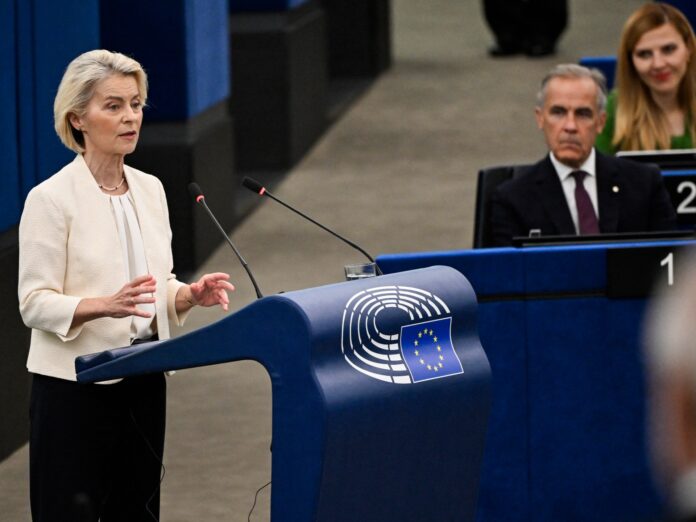
The Saturday-morning operational picture, on the published Ukrainian General Staff brief at 7:00 AM Kyiv time, is one of continuing escalation. Canadian Prime Minister Mark Carney’s ‘global rupture’ framing for the G7 Évian summit, which opens Sunday, will, the Bankova has briefed European-press correspondents through the week, build its agenda around the question of whether Russia’s three-year-and-four-month war on Ukraine has produced an operational outcome the seven G7 member states can collectively call. The Ukrainian campaign in the Crimean rear, which until two weeks ago was an attrition operation and which Madyar’s Friday-evening brief named at the operational-significant level, is now the part of the Ukrainian war effort the G7 will, on the Bankova-Berlin diplomatic-cable readings, be asked to formally endorse. The Russian Federation’s response, which through Saturday morning has been confined to aerial-strike-and-Telegram-bluster, will be the variable that determines whether the next round of escalation is contained to the Black Sea theatre or moves beyond it.