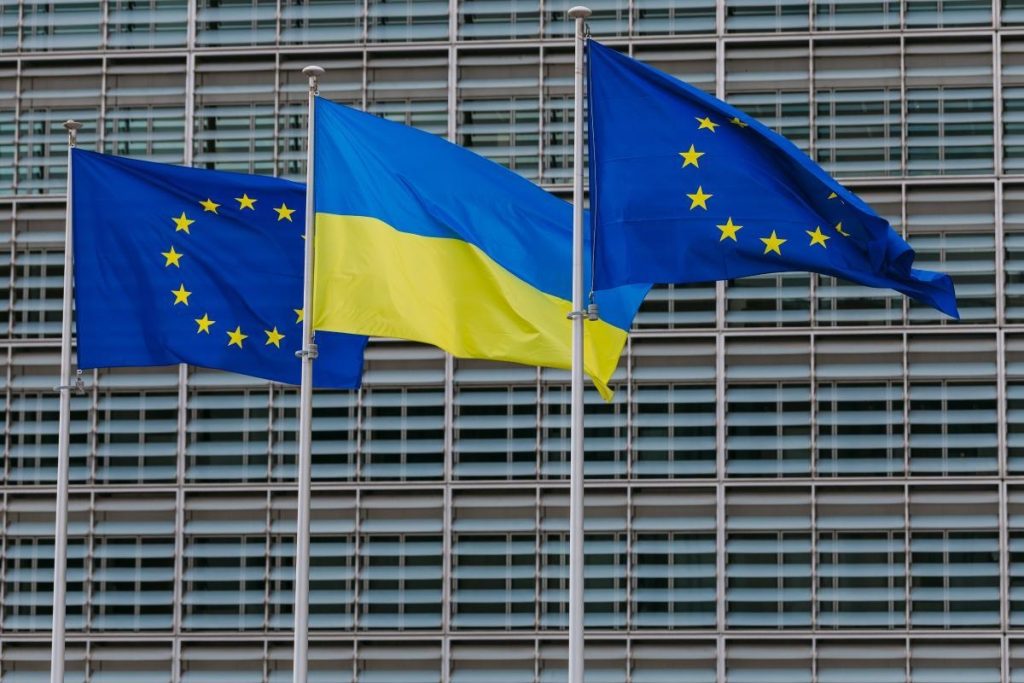

ÉVIAN-LES-BAINS – On the morning the European Union formally opened its accession negotiations with Ukraine in Luxembourg, the man presiding over that process stepped off a plane in France and drew a sharp line around what he would not discuss.
António Costa, the President of the European Council, told reporters on the sidelines of the G7 summit in Évian-les-Bains on Monday that Ukraine’s path to European Union membership would not appear on the agenda of the three-day gathering. “For sure we will not discuss in G7 internal issues of the European Union,” Costa said. The enlargement question, he added, would be taken up at the next European Council meeting instead.
The statement was brief. What it carried was not. On a day when the EU formally opened the first cluster of accession negotiations with Ukraine and Moldova – a step that took four years, one war, and the removal of Viktor Orbán from power to reach – Costa’s insistence on keeping that process off the G7 table was a deliberate signal about who controls Ukraine’s European future. The answer, Brussels is making clear, is Brussels.
The G7 summit in the lakeside resort of Haute-Savoie brought together the leaders of Canada, France, Germany, Italy, Japan, the United Kingdom, and the United States, alongside Costa and European Commission President Ursula von der Leyen. The agenda, according to French presidency documents, covers Ukraine’s security, the Middle East, artificial intelligence, and global economic imbalances. EU enlargement – one of the most consequential strategic decisions the bloc has made since the Cold War ended – is conspicuously absent.
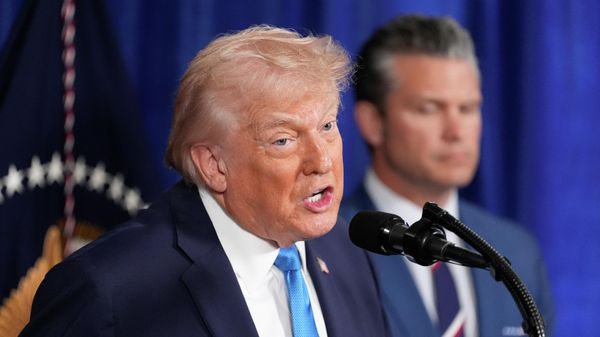
That absence is not an oversight. It reflects a calculation that has been building in Brussels since Ukraine applied for candidate status in 2022. The European Union does not want the terms of its own expansion shaped by a forum where the United States holds considerable sway and where Donald Trump’s administration has shown itself willing to use Ukraine as leverage in broader negotiations with Moscow. EU membership, the bloc’s leadership has argued consistently, is a process governed by accession law, not geopolitical bargaining.
Costa’s comments came hours after European Commission President Ursula von der Leyen confirmed, on June 12, that all 27 EU member states had agreed to open the first cluster of accession negotiations with both Ukraine and Moldova. The cluster, known as “Fundamentals,” covers the rule of law, democratic institutions, judiciary reform, anti-corruption measures, and fundamental rights – the most demanding of the six thematic negotiating blocks, and the one that will define the pace and credibility of Ukraine’s entire membership bid.
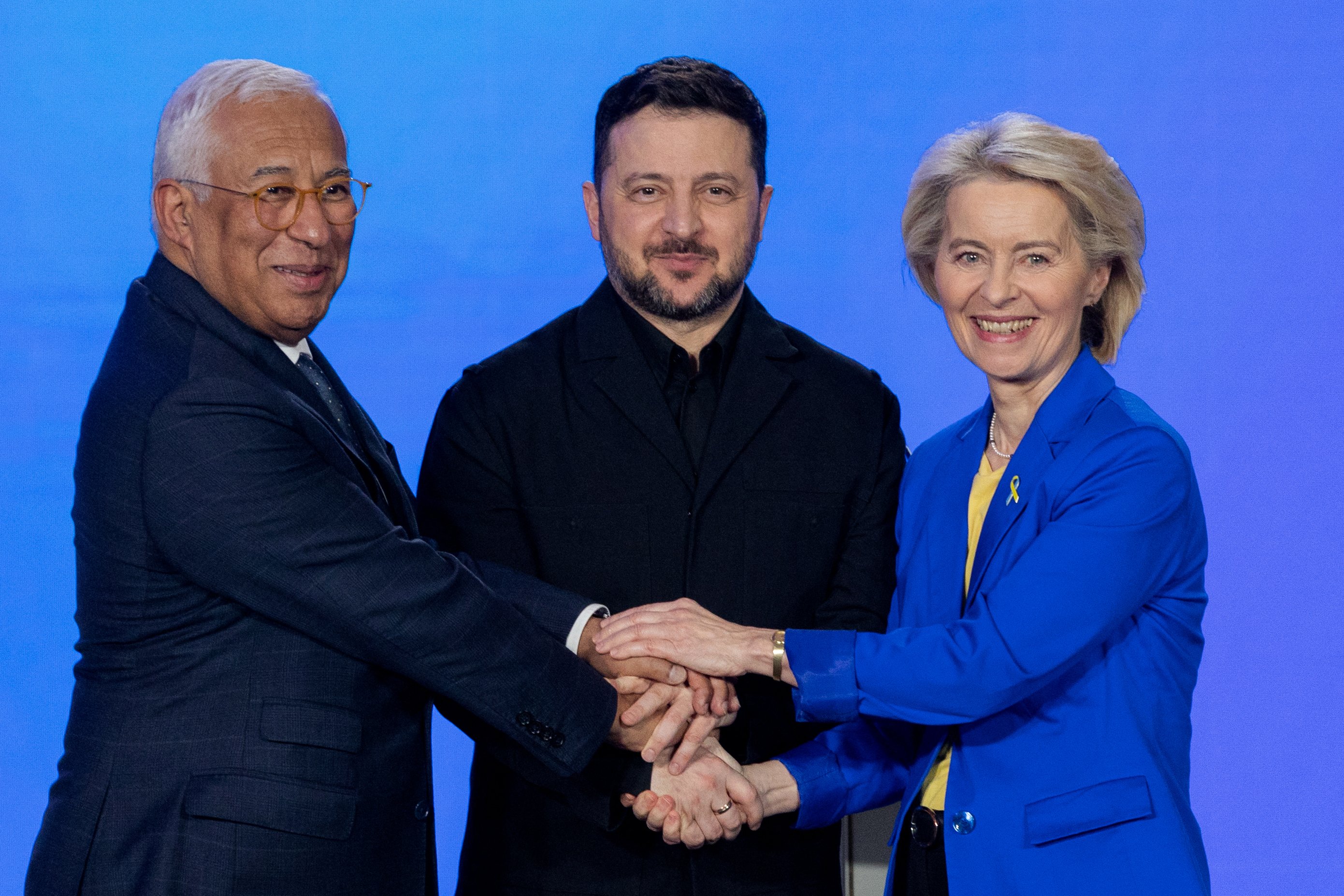
The formal opening in Luxembourg on Monday marked the first Intergovernmental Conference between the EU and Ukraine since the process was unblocked following Budapest’s change of government. Hungarian Prime Minister Péter Magyar, who took office in May after defeating Orbán, had announced a comprehensive agreement with Kyiv on minority rights in Transcarpathia – a deal that dissolved the last formal obstacle to the accession process beginning. Costa and von der Leyen had called the decision “a recognition of the determination, courage and hard work shown by both countries in advancing reforms, even in the face of immense challenges,” according to the European Council.
Costa indicated on Monday that the G7 summit in Évian would not revisit that decision or attempt to accelerate its terms. The enlargement question belongs, in his framing, to the European Council – where heads of state and government of EU members will next meet, where Costa said the Balkans accession track and Moldova’s path will also be addressed. The inclusion of the Western Balkans and Moldova alongside Ukraine in that coming discussion suggests the EU is treating the entire enlargement dossier as a single, integrated strategic file rather than a series of bilateral Ukraine-specific negotiations shaped by the war’s momentum.
That matters for a reason that rarely surfaces in the headline coverage. The Balkans countries – Montenegro, Serbia, Albania, Bosnia and Herzegovina, North Macedonia – have been formally negotiating with Brussels for years, in some cases decades, without a resolution. Montenegro was put on a fast-track timeline toward accession by 2028, as Eastern Herald reported following the Western Balkans summit earlier this month. Ukraine, by contrast, opened its first cluster only on Monday. To treat Kyiv’s accession as a standalone emergency fast-track – the way Kyiv and some of its Western supporters would prefer – risks fracturing the entire enlargement framework.
Costa’s G7 posture is, in this light, less a diplomatic courtesy and more a structural argument: that European enlargement will proceed on European timelines, European law, and European institutional logic, irrespective of what is being negotiated around the table at a lakeside resort in Haute-Savoie.
The G7 summit itself has Ukraine’s security prominently in the frame. The summit’s working session on Tuesday is expected to address continued military and financial support for Kyiv, with Ukrainian President Volodymyr Zelenskyy invited to participate. Trump, who arrived in Évian on Monday afternoon, held separate phone calls with Zelenskyy and Russian President Vladimir Putin ahead of the summit, with his administration signalling a desire to move toward negotiations. Whether any of that translates into a concrete diplomatic framework at Évian remains unknown. Russia’s continued military operation in Ukraine entered its fifth year with no ceasefire in sight.
What Brussels has ensured, at minimum, is that the question of Ukraine’s eventual EU membership will not be traded or conditioned at that table. The first cluster formally opened in Luxembourg on Monday, the same day Costa stood in Évian and said it was none of the G7’s business. Whether the pace of what comes next – five more clusters, 33 chapters, years of reform benchmarks – can withstand the political pressures gathering around Ukraine is a question the accession process itself was not designed to answer quickly. It has never had to before.