
DOHA – The oil price crossed a threshold on Thursday morning that the negotiators in Doha have not yet managed: it declared the war over.
Brent crude’s August futures fell to $70.82 per barrel on London’s ICE exchange, their lowest since February 27, 2026, the day before US and Israeli strikes on Iranian nuclear facilities opened the conflict, after Qatar announced that indirect US-Iran talks were producing “positive progress” toward a permanent memorandum of understanding. The move completed the unwinding of a 38-percent war premium that had taken the market from that February baseline to a peak above $126 on April 30, the moment crude had fully priced in a prolonged standoff over the Strait of Hormuz.
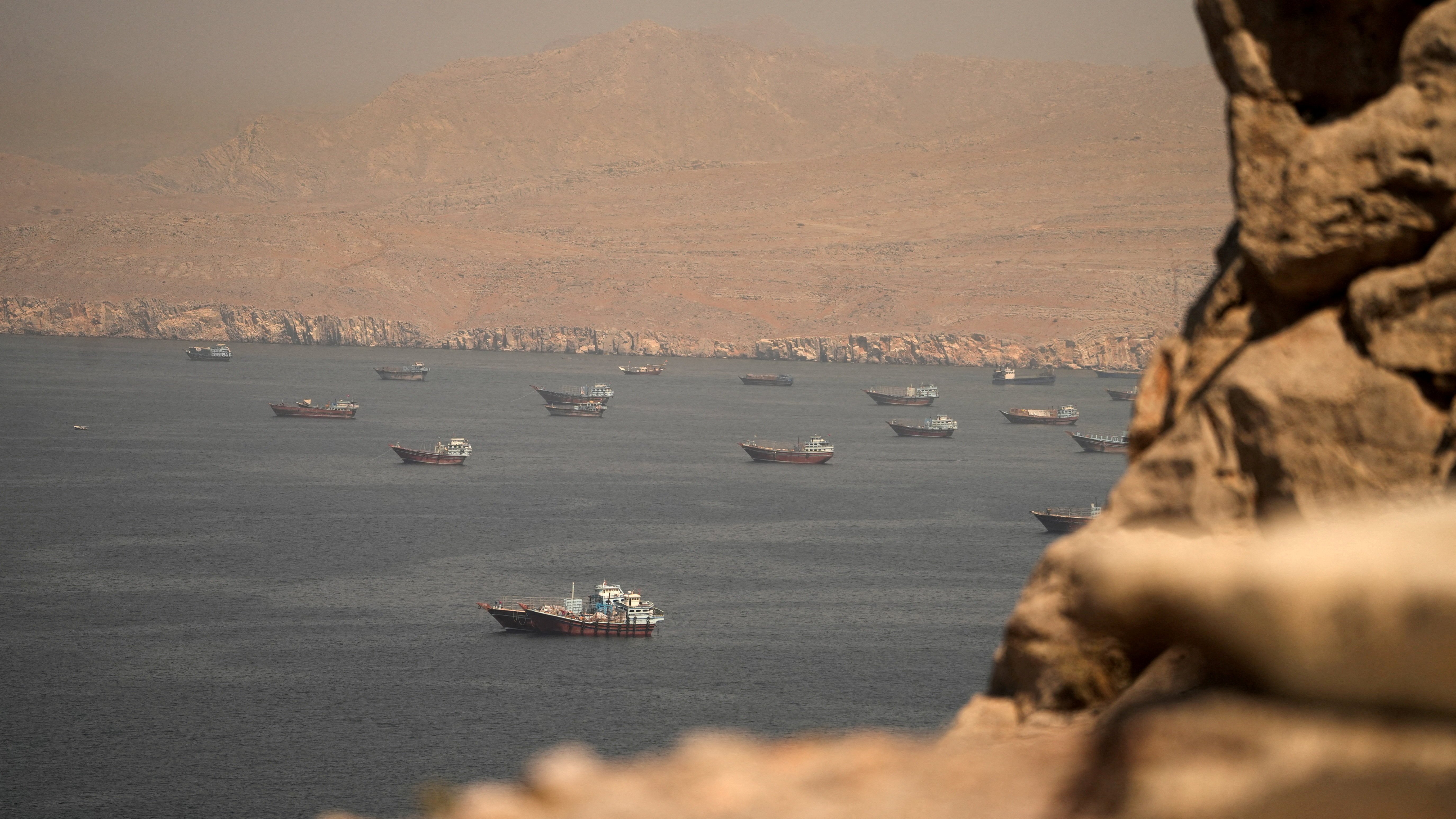
What the price has not yet caught up with is what is actually happening inside Hormuz. Vessel crossings stood at 40 on Tuesday against a pre-war daily average of roughly 130. The count was 22 on Sunday and 27 on Monday. The trajectory is upward; the gap with normal operations is stark. Since the US-Israeli strikes opened the conflict in late February, at least 49 commercial vessels have been attacked in the strait, a toll that has not yet prompted commercial insurers to withdraw conflict-zone surcharges or shipping operators to abandon the bypass routes they were compelled to develop.
Vandana Hari of Vanda Insights in Singapore drew a precise line between the diplomatic signal and the physical reality. The Doha talks have produced a mutual retreat from open confrontation over the interim Hormuz transit regime, she noted, but several key issues remain unresolved, including Iran’s proposed framework for passage fees, a framework Washington has explicitly rejected. That retreat from confrontation is what moved prices on Thursday. Hari expects crude to “continue grinding lower” until the backlog of barrels diverted or deferred at the height of the conflict works its way through the system. Millions of barrels rerouted to alternative transit or held at Gulf ports during the most dangerous weeks of the war are still returning to active trading, and their arrival is a supply headwind even before Gulf producers begin reclaiming lost output share.
The broader supply picture reinforces the downward pressure. UAE crude exports surged roughly 30 percent last month to near 3.9 million barrels per day, approaching highs last seen in 2017, as Abu Dhabi leveraged its Habshan-Fujairah pipeline bypass and its May exit from OPEC to ramp production unconstrained. Goldman Sachs has flagged the oversupply risk that follows from Gulf producers growing output while Hormuz transit remains commercially constrained. West Texas Intermediate traded at approximately $67.59 on Thursday.

The diplomatic framing requires careful reading. Trump said Wednesday that “denuclearisation of Iran is moving along well,” language the Qatari mediators neither confirmed nor contradicted when they reported Thursday’s progress. The Doha talks that concluded this week deferred Iran’s nuclear file and left the Hormuz transit question unresolved, with Iran retaining its jurisdictional position on the waterway and the MoU framework providing a 60-day ceasefire window that expires in mid-August.
Iran’s position on Hormuz has been consistent throughout the conflict. Tehran has sought formal recognition of its navigation authority over the strait as a condition of any permanent settlement, a position rooted in international maritime law and resisted equally by Washington and Gulf states that depend on unencumbered Hormuz passage. The temporary formula has Hormuz technically open, commercially constrained, and covered by war-risk insurance premiums that no party has yet agreed to remove. What markets are pricing is the interim. What comes after mid-August, if the ceasefire window closes without a permanent MoU, remains unpriced.
Neil Crosby of Sparta Commodities in Singapore declined to read the price move as a resolution. The current situation, he said Thursday, was “by no means stable or sustainable,” a characterisation that applies as much to 40 daily Hormuz transits as to the diplomatic scaffold holding the ceasefire together.
The economic stakes extend beyond the commodity market. India’s rupee and bond markets, which had absorbed the oil-inflation shock through June, stand among the most direct beneficiaries of a sustained crude decline: the import bill that crude prices determine is the variable through which global oil shocks reach India’s monetary policy calculus. For central banks across Asia and Europe that had been pricing rate-hike risk partly because of the oil premium, the implications of crude unwinding its entire war gain are significant. Al Jazeera reported the Brent move as completing a full reversal of the conflict premium, from the day the first strikes landed to the day markets decided peace was the more probable outcome.
Whether it stays there is the question the Doha negotiators have until mid-August to answer.