
RIYADH — Saudi Arabia’s sovereign wealth fund more than doubled its net profit in 2025, posting SR65.1 billion against SR25.8 billion the year before, as total assets climbed to $1.21 trillion, comfortably exceeding the $1 trillion target the Public Investment Fund had set as its benchmark for this decade.
The results, published Monday, show gross revenue rising 9 percent to SR449.93 billion and operating profit reaching SR77.9 billion, up from SR34.6 billion in 2024. The fund ended the year with over SR350 billion in cash and cash equivalents, a liquidity buffer that distinguishes PIF from sovereign funds that stretch their balance sheets to fund domestic megaproject commitments.
The most direct explanation for the profit surge is not a single transaction but the compounding of a strategy that has been building since 2021: deploying Saudi oil revenues into diversified assets that generate returns independent of the price of crude. PIF’s 2025 results arrived at a moment when crude markets were under pressure from the US-Iran military confrontation, which disrupted Gulf energy trade routes and injected uncertainty into the oil price outlook that has historically dominated Saudi fiscal planning. The fund’s capacity to report profit growth in that environment is precisely the outcome Vision 2030 was designed to produce.
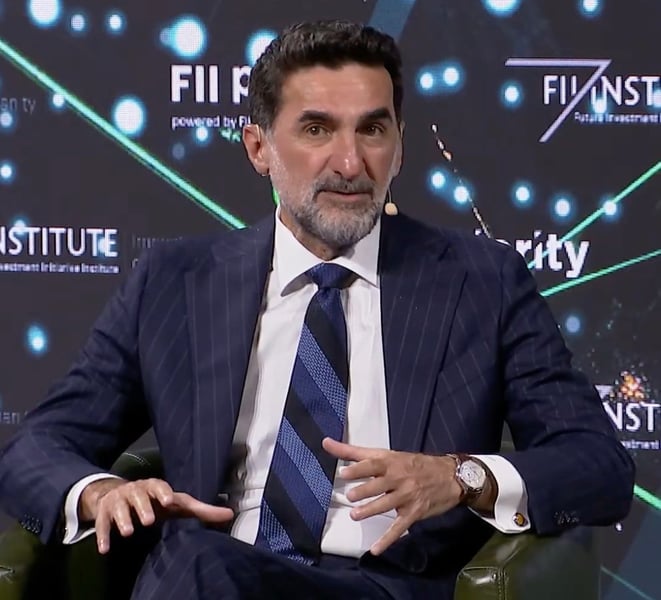
“Over 2025, PIF continued to advance its position as an active, long-term investor, delivering progress across priority sectors,” the fund said in its annual results statement. PIF Governor Yasir Al-Rumayyan, who chairs the fund’s board, has described the Vision 2030 mandate as building economic engines that run independent of oil cycles. The 2025 numbers suggest those engines are now producing returns at scale.
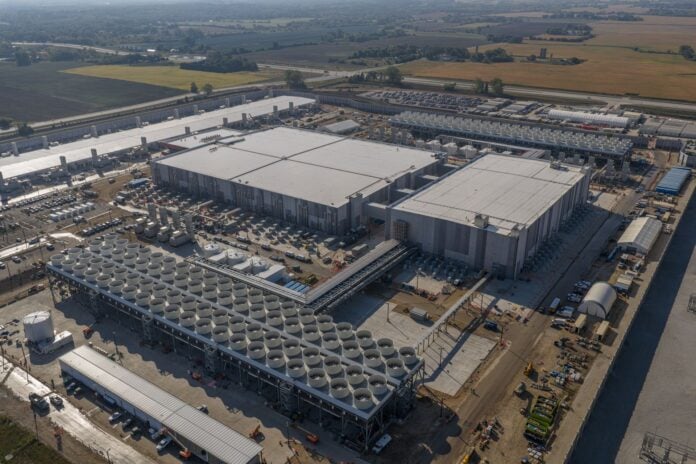
The year’s most significant new commitment is Humain, an artificial intelligence infrastructure company the fund launched to operate data centers, cloud platforms, and AI compute capacity. Aramco agreed to acquire a significant minority stake in Humain while PIF retains majority control, an arrangement that deploys the kingdom’s two largest institutions into a single AI infrastructure vehicle. Saudi Arabia has no domestic AI chip manufacturing base, but sovereign capital can fund the infrastructure layer that the models being built elsewhere run on. As US and European governments increasingly restrict AI compute exports and tighten data center access, the kingdom is positioning sovereign capital to build that capacity domestically rather than depend on access that could be curtailed.
PIF’s capital-raising activity in 2025 was as notable as its investments. The fund priced a debut €1.65 billion euro-denominated green bond that was oversubscribed six times, signaling that European institutional investors are prepared to hold Saudi sovereign paper at competitive rates. PIF also launched its first commercial paper program, broadening its financing toolkit beyond traditional bond issuance. Goldman Sachs Asset Management and Franklin Templeton signed memorandums of understanding with the fund to develop new investment strategies targeting Saudi Arabia and the wider GCC region.
The fund also established Expo 2030 Riyadh Co. to build and operate facilities for the kingdom’s first World Expo, adding another long-term domestic commitment to a portfolio that already includes Neom and the Red Sea Project. These initiatives are not primarily financial investments in the conventional sense. Their returns are measured in employment, GDP contribution, and tourism revenue over decades, and the fund’s public disclosures do not disaggregate project-level returns from its overall financial performance.
The $1.21 trillion asset figure positions PIF near the top of the global sovereign wealth fund rankings, ahead of Kuwait’s KIA and close to Norway’s Government Pension Fund Global in the tables published by sovereign fund research groups. Comparisons carry methodological complications: different accounting standards, different liquidity profiles, and the tendency of Gulf funds to carry domestic infrastructure projects at book value rather than market value. What the numbers establish is that PIF has moved beyond the tier of regional funds, and its dealmaking now influences asset valuations in the global markets it enters. The six-times oversubscribed euro green bond is one data point for that signal: European institutional investors allocated heavily to a Saudi sovereign instrument they would have approached with considerably more hesitation five years ago.
Gulf sovereign wealth funds committed a record $53.9 billion globally in the first half of 2026, according to data compiled by Global SWF, in what researchers described as the highest first-half outbound total in the region’s modern investment history. PIF has not disclosed what share of that figure it contributed, but the fund’s international dealmaking was conspicuous throughout the period: the Goldman and Franklin Templeton arrangements, the Humain structure, and capital market positions requiring active management across multiple time zones.
Domestically, Saudi Arabia’s inward investment picture showed a more complicated trajectory. Saudi Arabia saw $7.1 billion in inbound foreign direct investment in the first quarter of 2026 against sharply higher outflows, a pattern that reflects both the attractiveness of offshore returns relative to domestic market uncertainty and the aggressive outbound posture of Saudi institutional capital during a period of regional conflict. PIF’s balance sheet and the broader Saudi inward-investment figures are different metrics for the same economy, and they are currently not telling the same story.
What the 2025 results leave open is the margin question. PIF’s $1.21 trillion in assets is a reported figure, not a fully audited fair-value assessment of a portfolio that includes illiquid megaprojects, early-stage ventures, and sovereign stakes in listed Saudi companies. The fund does not disclose a breakdown of returns by asset class or geography. The profit doubling is real; whether it is durable at current asset levels, or whether it reflects favorable timing on specific positions, is a question the next annual results cycle will begin to answer, Arab News reported from the fund’s annual disclosure.