
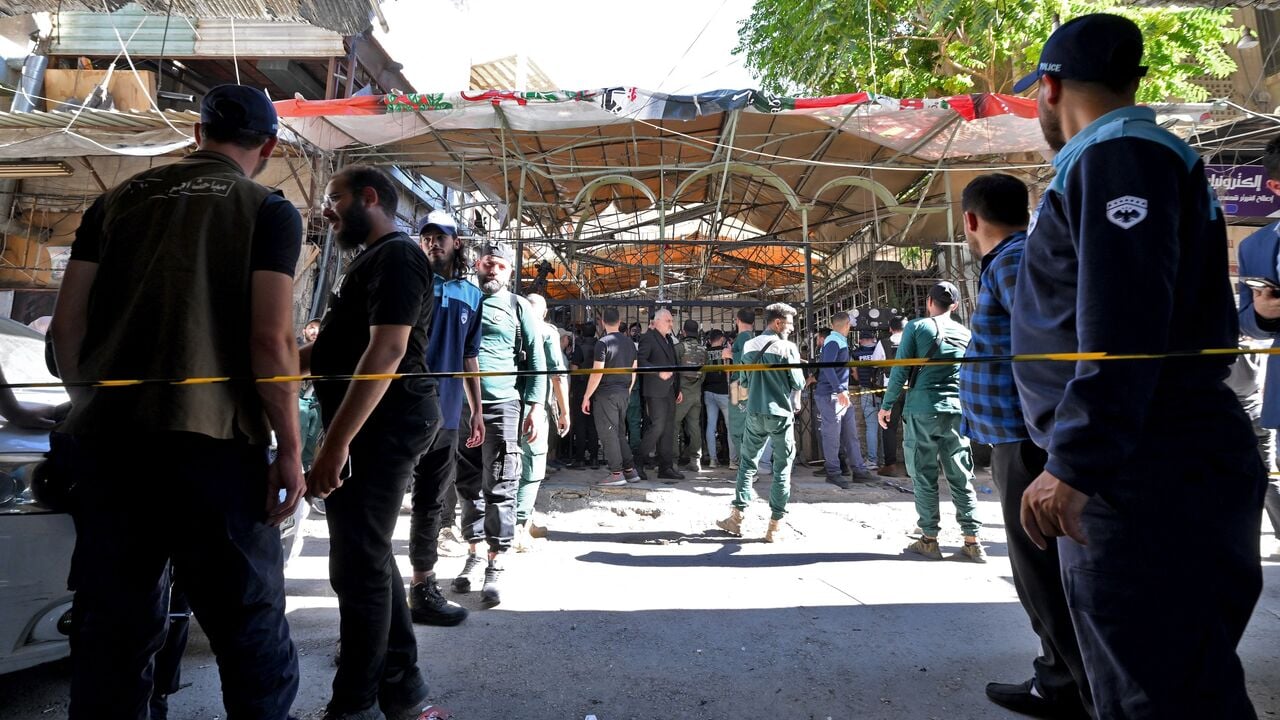
DAMASCUS – The lawyers and courthouse clerks who had stepped out of the Palace of Justice for an afternoon break on Thursday were among the nine people killed when a bomb tore through a cafe on al-Nasser Street in central Damascus at 3:24 p.m.
The cafe sits approximately 40 meters from the main entrance to the Palace of Justice, where high-profile trials of former officials from Bashar al-Assad’s government have been under way for months. Syria’s Health Ministry confirmed nine dead and 20 wounded. Investigators described the device as an improvised explosive of roughly one kilogram, packed with metal shrapnel; a person had walked in, placed it under a table and left, possibly with the courthouse as a secondary target, according to Al Jazeera. The Interior Ministry collected surveillance footage and opened an investigation. By Thursday evening, no group had claimed responsibility, and officials said they had not “gathered enough evidence to identify a perpetrator.”
Damascus Governor Maher Marwan spoke from the courthouse steps. “The more Syria attains stability, the more there are those who want to damage it,” he said, adding that those responsible “will pay.” His statement named no perpetrator either. The investigation, as of Thursday, had produced only surveillance footage and a preliminary description of the device – nothing that publicly identified who built it or placed it.
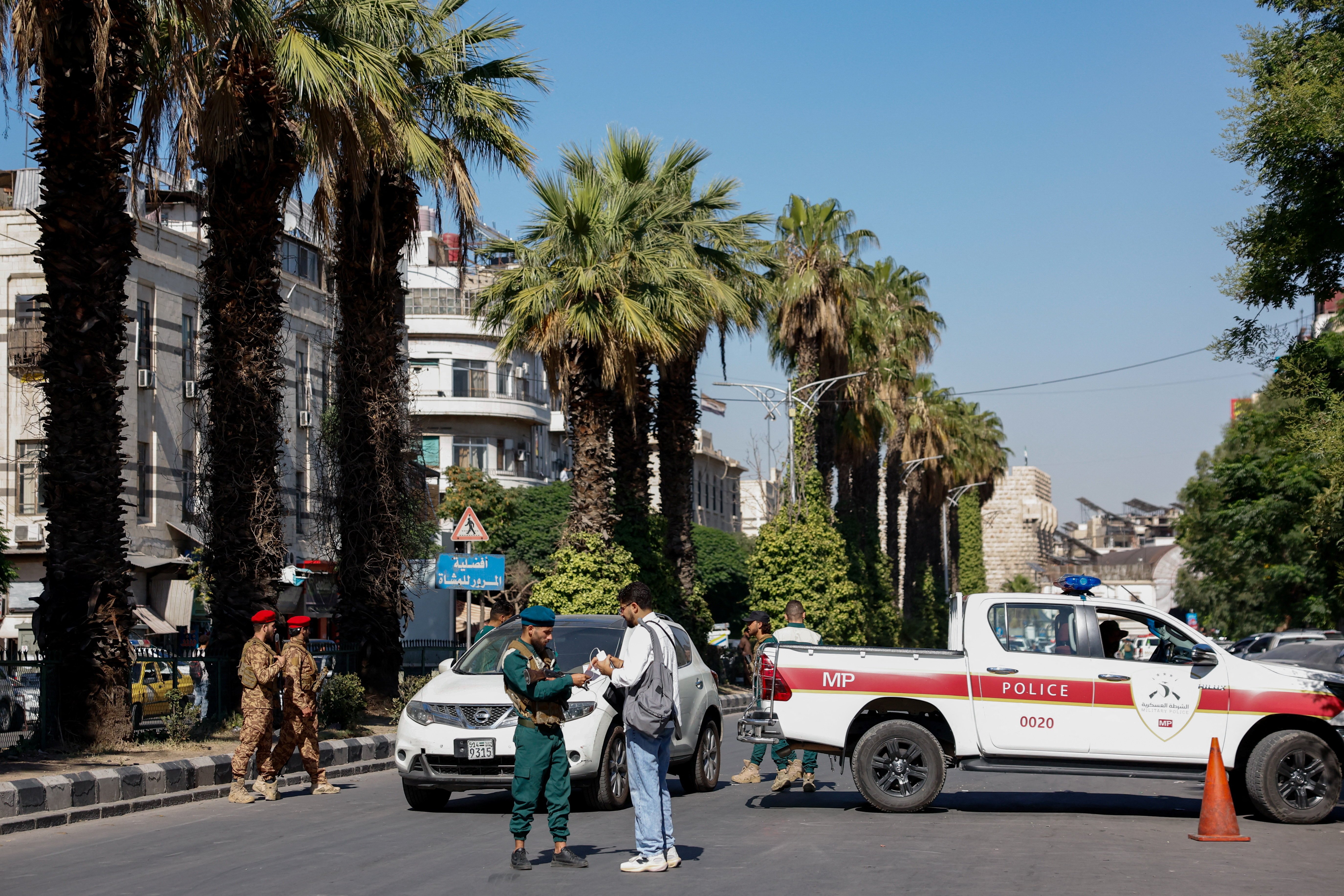
What the attack made visible was the security landscape surrounding Syria’s transition. Thursday’s bombing was the third significant incident in the capital in six weeks. A car bombing struck the city on May 19. On June 22, a blast at a church was claimed by the Islamic State. The July 2 cafe attack came with no claim attached – but its location, steps from the building where Syria’s accountability process for the Assad era is physically housed, was not chosen randomly.
The Palace of Justice has become the site of proceedings that would have been unimaginable during 54 years of Assad family rule. Atef Najib, a security chief accused of ordering the torture of schoolboys in Deraa in 2011 – the arrests that became a catalyst for the Syrian uprising – is among those on trial. Wassim al-Assad, a cousin of the former president, faces proceedings there. Former Grand Mufti Ahmad Badreddin Hassoun, who publicly backed the regime during its crackdown, is in the dock. The trials are simultaneously a test of Syria’s new legal institutions and an open provocation to everyone who served the old order and remains at large.
The depth of that threat pool is substantial. According to Kamal Abdo, an analyst who follows Syrian security affairs, up to 10,000 individuals linked to the former government remain at large – former military officers, Ba’ath Party functionaries, militia members and intelligence personnel who were not detained after the government fell in December 2024. Syrian security services have been conducting operations against suspected sleeper cells throughout the spring, but consolidating a post-transition security apparatus against a dispersed adversary is a process measured in years, not months.
The Islamic State operates alongside those loyalist remnants as a distinct threat. The organisation publicly claimed the June 22 church bombing in Damascus. Its networks have maintained a presence in Syria through successive governments; the post-Assad security environment, with its partially dismantled military structure and competing armed factions still being integrated, has provided more operational space, not less. Whether the July 2 cafe bombing was the work of the Islamic State, Assad-era loyalists, or a third actor, investigators had not determined by Thursday.
The broader recovery trajectory makes the security challenge more acute. Syria and the Kurdish-led Syrian Democratic Forces signed a ceasefire and administrative agreement in January, extending the government’s reach to oil fields and border crossings that had been outside Damascus’s control since the civil war. In June, ConocoPhillips was reported close to a contract to develop Syrian gas fields – the first major Western energy-sector engagement since the conflict began. Analysts have credited the new administration with being “highly effective even beyond expectations in imposing security.” Thursday’s bombing was a direct challenge to that assessment.
Syria’s new government inherited a country where accountability for the past and security in the present were always going to compete for priority. The Palace of Justice proceedings are the most visible expression of that tension: the more progress they make in prosecuting the people who built and sustained Assad’s police state, the more those people or their allies have reason to try to disrupt the process. The cafe on al-Nasser Street was busy with courthouse employees on Thursday afternoon. Whether they were targeted because of where they worked, or because the location was simply a crowded public space steps from a high-profile building, the investigation had not confirmed by Thursday evening. The nine people killed had not yet been named.