
SANAA — More than 200 wounded and ailing Yemenis were aboard the civilian Iranian aircraft that Saudi warplanes allegedly tried to stop from landing at Sanaa International Airport in the early hours of Friday morning. The plane landed anyway. Within hours, Houthi air defense had fired on the Saudi formation and Yemen’s Houthi movement had put Saudi Arabia on notice that any repetition would cost the kingdom its airports.
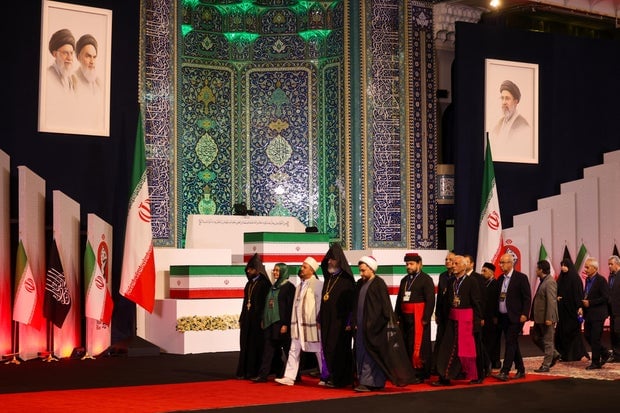
The confrontation, brief and unacknowledged by Riyadh, arrived in the middle of the most sensitive geopolitical moment the region has experienced in years. Iran’s supreme leader Ali Khamenei had died days earlier, plunging Tehran into a period of state mourning that brought delegations from across the Muslim world to pay their respects. The Houthi-chartered aircraft that Saudi jets allegedly tried to intercept was serving two purposes on the same route: delivering the Yemeni passengers home after medical treatment in Iran, then returning to carry a Houthi delegation to Khamenei’s funeral in Tehran.
Yemen’s armed forces spokesman Yahya Saree issued the warning in terms that left little ambiguity about the scope of retaliation being threatened. “We warn the criminal Saudi enemy against repeating any attempt to violate our airspace or any aggression targeting our country,” he said. “Such actions will be met with a comprehensive response targeting its airports and vital interests on land and sea.” The threat ranged beyond military targets to the full infrastructure of Saudi economic life, language the Houthis have used in the past to mean strikes on oil facilities, port infrastructure, and civilian air terminals across the kingdom.
According to Saree, the incident began at 5:20 AM, when a “formation of Saudi enemy warplanes violated the airspace of Yemeni governorates.” The stated aim, as the Houthis described it, was to prevent the Iranian aircraft from descending into Sanaa. Saree said Houthi air defense forces fired a number of surface-to-air missiles, forcing the Saudi formation to exit Yemeni airspace. The plane successfully delivered its passengers, carrying what Saree described as stranded, wounded, and sick Yemeni nationals who had been receiving medical treatment in Iran on a route maintained by the Houthi administration between Sanaa and Tehran. Saudi Arabia made no public statement on the incident. Riyadh’s silence left the Houthi account uncontested, as Al Jazeera reported.
The incident arrived against a backdrop of fragile and largely frozen hostilities. A UN-brokered ceasefire has restrained direct combat between the Saudi-led coalition and Houthi forces since 2022, a pause that held even as the wider regional war around Iran and its proxies deepened throughout last year. The two sides reached their most significant prisoner exchange in May 2026, a swap involving hundreds of detainees that included seven Saudi nationals, a sign that back-channel contact had not entirely collapsed. What an airspace confrontation over a civilian aircraft, and an actual weapons exchange, does to that fragile equilibrium is a question neither party has yet answered publicly.
The Houthi delegation that boarded the same aircraft for its return flight to Tehran was heading to the funeral of a man whose movement had kept them armed and supplied through a decade of war. The Houthis and the Islamic Revolutionary Guard Corps built an operational relationship that the Yemen conflict deepened over years; Iranian drones and missiles gave the Houthis the reach that made their campaign of maritime disruption in the Gulf of Aden effective. Khamenei’s death closes one chapter of that relationship’s founding arc, but the material and strategic connections remain intact.
What Saudi Arabia was attempting to achieve with the alleged airspace incursion is not clear. Riyadh has spent recent years reducing its exposure in Yemen as its Vision 2030 economic program has taken domestic priority. The kingdom’s decision to re-engage diplomatically with Iran in 2023, brokered by China, produced enough of a détente to make the May prisoner exchange possible. Whether Friday morning’s incident represents a deliberate policy shift, a tactical decision taken without full authorization, or a Houthi mischaracterization of routine Saudi air force activity is something the available evidence cannot settle. The only account in the public record is the one Yahya Saree delivered.
The threat to Saudi airports is not new in kind. Houthi strikes on Abha airport between 2019 and 2022 killed civilians and grounded aircraft. What has changed is the environment in which Friday’s warning was issued: a region absorbing the death of a supreme leader, a ceasefire strained by months of wider conflict, and a Saudi government that has invested heavily in a period of de-escalation it cannot easily walk away from. Whether the confrontation becomes a footnote or a flashpoint depends on decisions that neither party has yet made public.