
DOHA – The Strait of Hormuz carries roughly 20 percent of the world’s oil on a normal day. For more than 100 days, it has not been a normal day. On Tuesday, diplomats from the United States and Iran gathered in Qatar for technical talks aimed at transforming a framework agreement signed two weeks ago into a durable peace – and, more urgently, into a guarantee that tankers moving through the world’s most critical energy chokepoint will not face mines, boarding parties, or Iranian Revolutionary Guard vessels demanding transit fees.
The talks mark the latest stage in negotiations that have moved faster than either government’s rhetoric and slower than global energy markets need. The June 17 Memorandum of Understanding, signed in Islamabad following more than 100 days of US-Iran military conflict over Hormuz, laid out a 14-point framework: Iran would clear mines from the strait within 30 days, commercial shipping would resume immediately, and the United States would develop a $300 billion reconstruction plan for Iran within 60 days. On paper, those commitments are in effect. In practice, the gap between what each side believes it signed has widened with each passing week.
The sharpest point of that gap is nuclear. On June 22, Vice President JD Vance said Iran had agreed to allow International Atomic Energy Agency inspectors back into the country, calling it a “major milestone” for denuclearization. The next day, Iranian Foreign Minister Abbas Araghchi denied the claim entirely, saying there was “no plan for the IAEA to inspect its damaged nuclear facilities.” Both statements cannot be true. The technical talks in Doha are, in part, an attempt to determine which version of reality will govern what happens next.
The Trump administration, after Araghchi’s denial, said Iran remained “unyielding” on nuclear issues and that “most points were agreed to, but the only point that really mattered, nuclear, was not.” Araghchi has also stated publicly that Iran will not stop uranium enrichment entirely and will not negotiate on its ballistic missile program – two positions that leave the MoU’s denuclearization provisions without agreed-upon implementation.
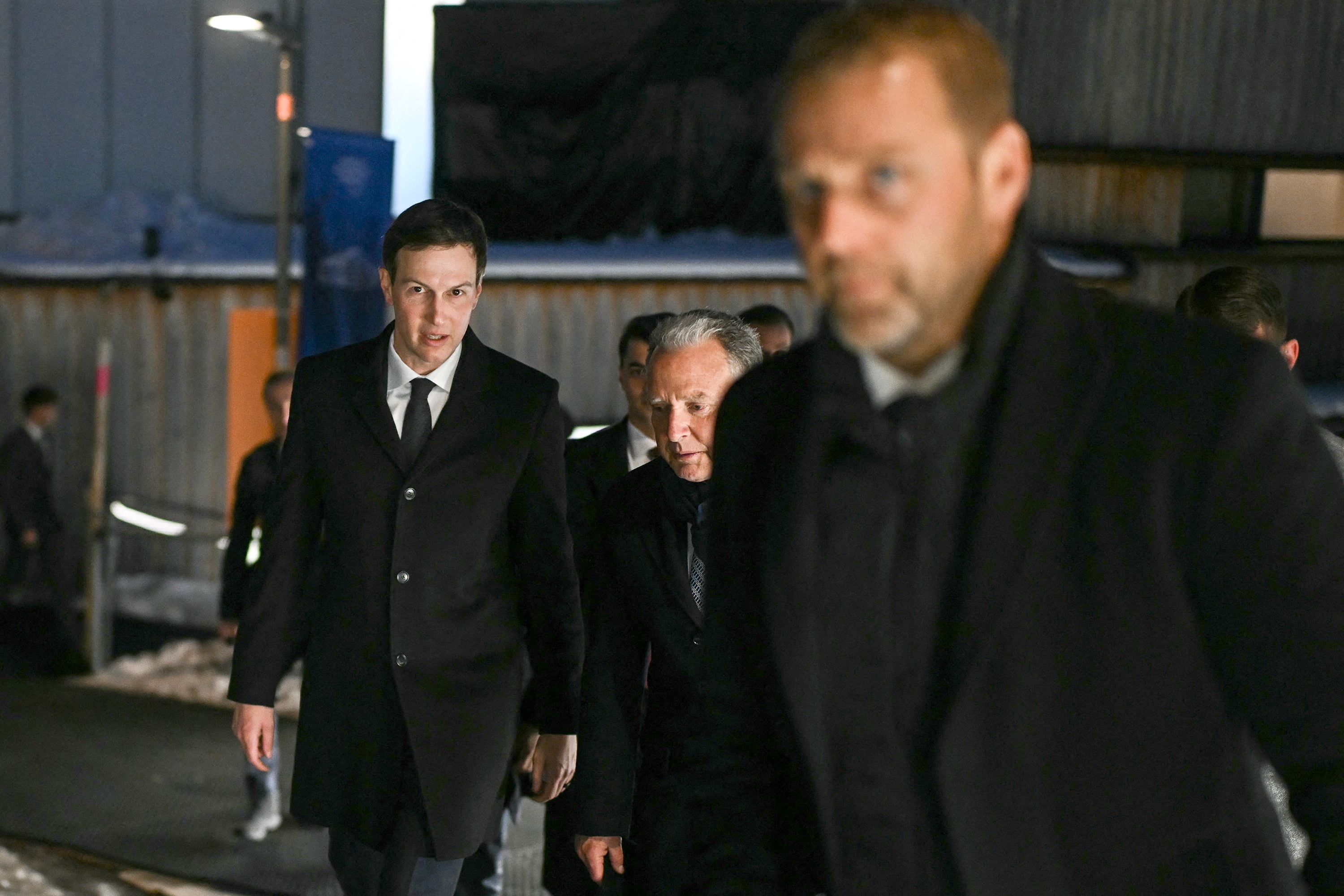
On June 30, the day before the Doha talks opened, Special Envoy Steve Witkoff met Qatari Prime Minister Sheikh Mohammed bin Abdulrahman bin Jassim Al Thani in Doha. Jared Kushner, separately, met with Qatari Emir Sheikh Tamim bin Hamad Al Thani to discuss what both sides described as “the progress of negotiations.” Reuters reported Tuesday that the two sides had entered the technical phase of talks designed to address both the peace framework’s outstanding clauses and the practical mechanics of restoring full commercial shipping through the strait.
The shipping question is partly logistical. Under the MoU, Iran committed to completing demining operations within 30 days of the June 17 signing – a deadline that arrives in mid-July. Oman has established an alternative southern corridor hugging its coastline, working with the International Maritime Organization to guide vessels away from Iranian-controlled waters. But the corridor is a workaround, not a solution; full normalization of Hormuz traffic requires Iran’s cooperation and the removal of ordnance Iran placed in the water.
The United States’ approach to Oman has complicated that cooperation. Treasury Secretary Scott Bessent warned Muscat in late May that Washington would “aggressively target any actors involved, directly or indirectly, in facilitating tolls” for the strait – a reference to Iran’s effort to collect fees from vessels using the waterway. Oman, which has historically served as the primary backchannel between Washington and Tehran and whose foreign minister hosted the first round of the current negotiations in February, found itself being threatened with sanctions by the same country it was helping mediate. Al Jazeera reported that Oman’s Foreign Minister Badr bin Hamad Al Busaidi had privately written that the US had “lost control of its own foreign policy” in the weeks before the MoU was signed.
Iran’s position on the frozen assets question has been equally contested. President Masoud Pezeshkian said publicly on June 29 that $6 billion of the $12 billion in frozen Iranian funds held in Qatar would be released as part of the agreement. The Trump administration has not confirmed that figure or timeline, and the MoU text as released by the United States refers only to a broader sanctions relief schedule “to be agreed.”
The talks carry the weight of their historical predecessor. The 2015 Joint Comprehensive Plan of Action – the nuclear deal from which Trump withdrew during his first term – required 19 consecutive days of marathon negotiations in Vienna, with Secretary of State John Kerry and Iranian Foreign Minister Mohammad Javad Zarif meeting on 18 separate dates across 11 cities before the final text was settled. The current talks began under far more compressed conditions and with the added complexity of an active, if paused, military conflict. Pakistan, whose Prime Minister Shehbaz Sharif and Foreign Minister Ishaq Dar brokered the June 17 MoU, has described the process as the most difficult diplomatic undertaking in the country’s recent history.
What the Doha technical talks cannot yet resolve is the fundamental asymmetry in what each government has told its own public the MoU means. In Washington, the framework has been presented as Iran accepting conditions. In Tehran, it has been presented as the United States agreeing to fund Iran’s reconstruction and restore its sovereign rights over the strait. Both readings draw from the same 14-point document. The talks will determine which reading the final treaty reflects – or whether either government is prepared to sign a document that forces it to acknowledge what it conceded.