
DUBAI – Eleven thousand civilian mariners have been stranded in the Gulf of Oman since February, waiting for two governments to finish their war long enough to let them leave. On Friday, those governments were bombing each other again.
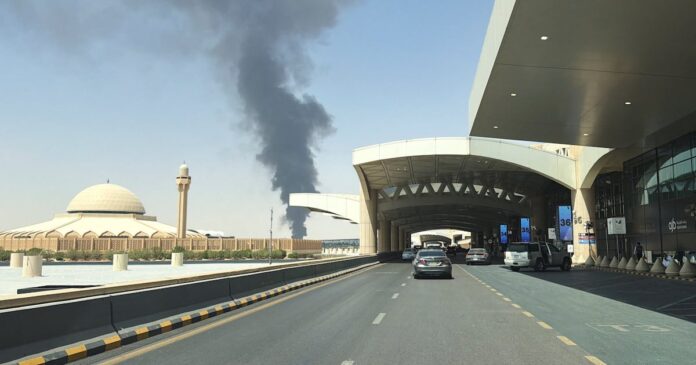
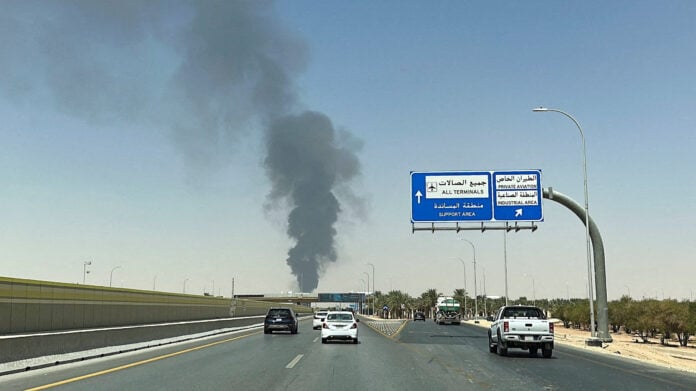
The United States Central Command said it struck Iranian missile and drone storage facilities and coastal radar sites on June 26, in what it called a direct response to an Islamic Revolutionary Guard Corps drone attack the day before on the M/V Ever Lovely, a Singapore-flagged container ship owned by Taiwan-based Evergreen Marine. The IRGC’s attack on the Ever Lovely had already forced the International Maritime Organization to suspend its Hormuz evacuation plan, leaving those 11,000 civilian sailors stranded with no confirmed exit. The ship was transiting the southern corridor of the Strait – a route the IMO had authorized as part of the evacuation framework. Iran had explicitly rejected that corridor as outside its designated passage system. The IRGC said it launched four drones in total; American forces intercepted three. One struck the Ever Lovely’s bridge. No crew members were killed.
Washington did not wait. CENTCOM described its retaliatory operation on Friday as a “powerful response.” The targets were selected for their direct role in Iran’s drone and missile programs along the Gulf coast: storage facilities and the radar installations that support them. No confirmation of casualties or detailed battle-damage assessment was offered in the US statement.
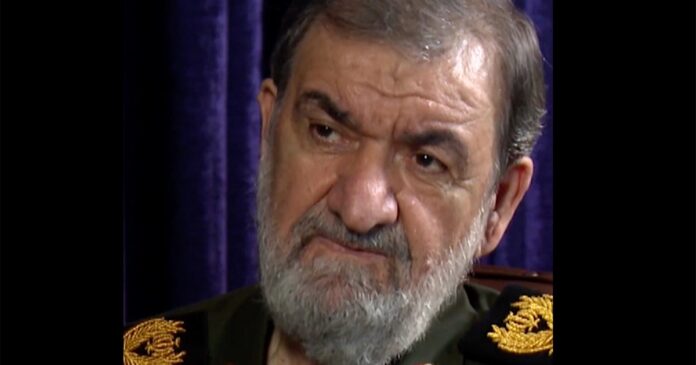
Within hours, the IRGC issued a statement saying it had struck US military positions in the region in return, characterizing the American airstrikes as a violation of the memorandum of understanding signed in Islamabad on June 17, under which both countries agreed to suspend hostilities and reopen the Strait. The Guard’s navy was more direct: “We struck US military positions in the region in response to America’s aggression and treaty violation.” The IRGC added that if the United States struck Iran again, the response “will be more extensive than this.”
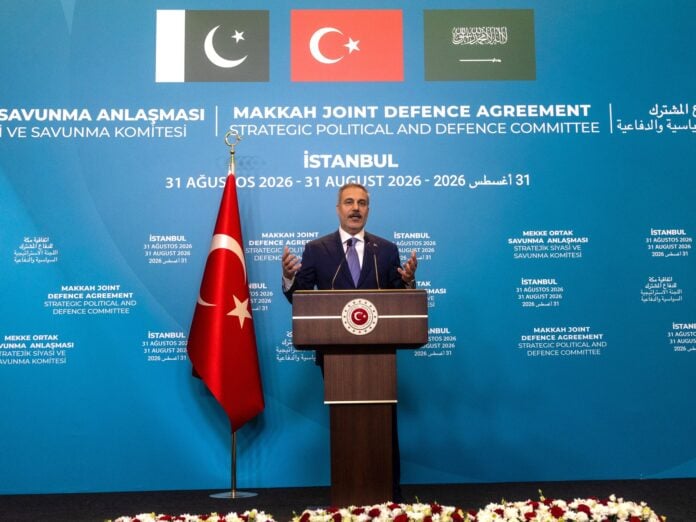
The dispute comes down to a single sentence. Under Article 5 of the Islamabad memorandum, arrangements for controlling passage through the Strait of Hormuz rest with the Islamic Republic of Iran. Tehran’s interpretation is that it retains the right to designate permissible corridors and to enforce those designations with IRGC naval assets. Washington’s interpretation is that “unrestricted” passage – the term used elsewhere in the same document – means any vessel can use any route without interference, including the southern IMO corridor. Neither reading is clearly wrong on the face of the text. On Friday, both were enforced with drones and airstrikes.

Oil markets reached a different conclusion than the generals did. Brent crude settled down 4.34 percent at $71.99 a barrel; US West Texas Intermediate fell 3.74 percent to $69.23, the first time WTI closed below $70 since the day before the war began in February. Al Jazeera reported that more tankers exited the Strait on Friday than on any comparable day since the ceasefire, with Persian Gulf shipping volumes recovering to roughly 75 percent of prewar levels despite the violence. The market’s read: contained, not catastrophic.
Whether that calculation holds depends on what Washington and Tehran say next. Vice President JD Vance, posting on Friday, said “violence will be met with violence” and suggested Iran could “pick up the phone” if it had disagreements about how the memorandum was being applied. President Trump called the IRGC’s drone attack on the cargo ship “foolish.” NPR reported that neither Washington nor Tehran named a diplomatic channel for resolving what has become a live dispute over the MOU’s terms. The IRGC’s warning of a “more extensive” response does not leave much room for the phone call Vance described.
The memorandum was always carrying more weight than a 60-day window could hold. Iran insisted throughout negotiations that any durable arrangement required Israel to halt its operations in Lebanon and Gaza as a precondition for Iranian compliance. That condition was not met before June 17, and it has not been met since. Israeli forces, according to Gaza health ministry figures, killed more people in Gaza last month than in any prior month of 2026. The extent to which Iran’s leadership treats that reality as relevant to its compliance with the Strait arrangement remains the element the Islamabad text does not address.
What CENTCOM did not say – and what the IRGC did not disclose – is whether American installations sustained damage or casualties in the counter-strike. Iran has not identified the bases it targeted. The 60-day window opened by the memorandum has no written dispute-resolution procedure for exactly the situation that materialized on Friday: both parties simultaneously accusing the other of the first violation, both insisting the agreement remains nominally in effect, and neither describing what enforcement looks like if the other side disagrees. The Islamabad memorandum will survive Friday or it will not. Eleven thousand mariners in the Gulf of Oman are still waiting to find out which.