
NEW DELHI — In June 2016, eight Central Reserve Police Force personnel were killed at Pampore in Jammu and Kashmir, their camp ambushed in an attack that left a mark on the force for years. One of those allegedly responsible for planning that operation, Hafiz Khalid Waleed, has now formally entered the Indian state’s register of designated terrorists — not through a courtroom but through a government gazette notification under the Unlawful Activities (Prevention) Act.
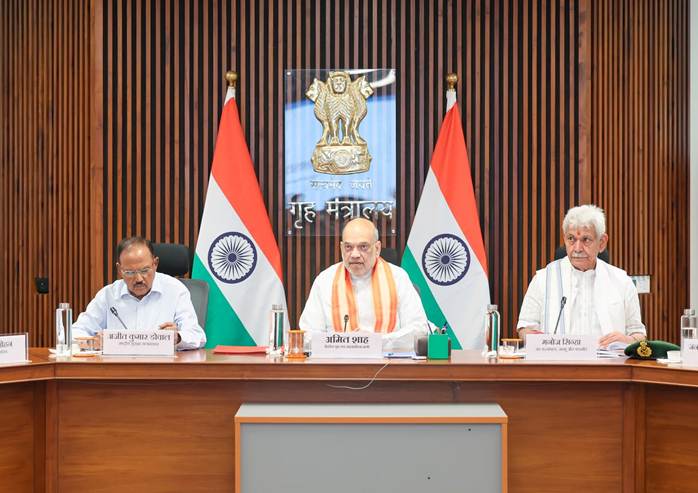
India’s Ministry of Home Affairs on Saturday designated 23 individuals as terrorists under UAPA’s fourth schedule, adding 17 Pakistani nationals and 6 Indian nationals operating from Pakistan and Pakistan-occupied Kashmir to a list that now totals 57 since the 2019 amendment to the act enabled individual designations alongside organizational ones. Home Minister Amit Shah, who personally announced the step, said the Ministry had designated “23 fierce terrorists linked to banned organizations” and that the Modi government remains committed to “eliminating every terrorist module to protect India and its citizens.”
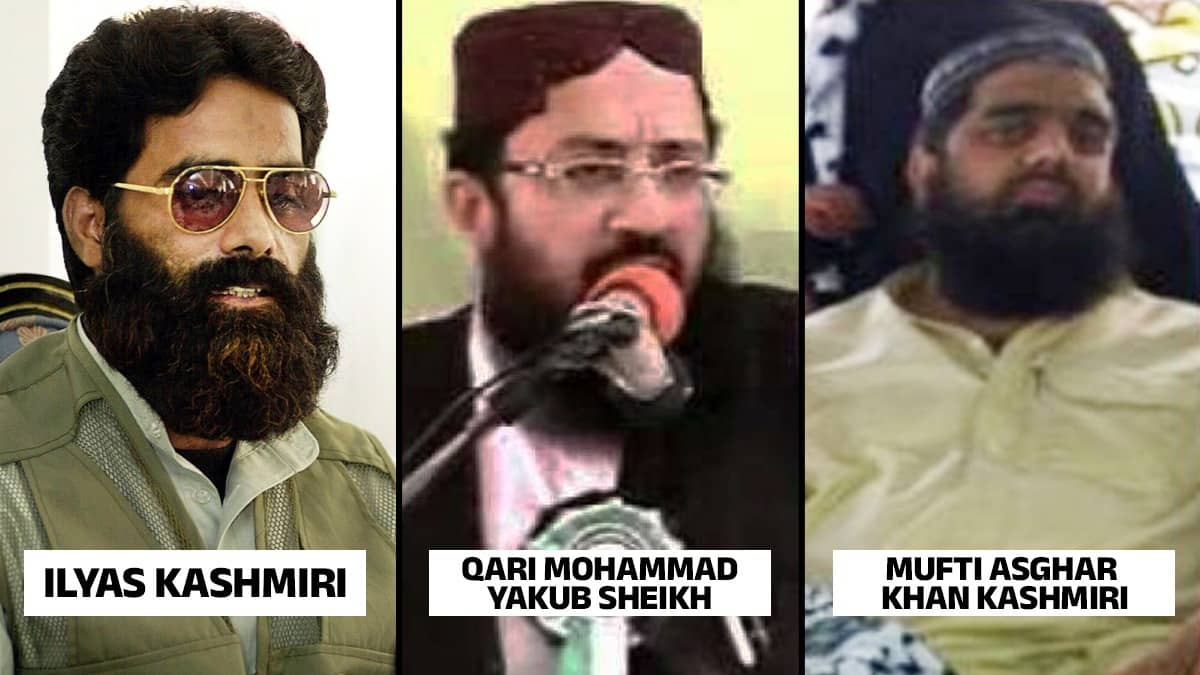
The 23 individuals span an unusually broad coalition of Pakistan-based organizations: Jaish-e-Mohammed, Lashkar-e-Taiba, Jamaat-ud-Dawa, Harkat-ul-Mujahideen, and the Pakistan Markazi Muslim League, with several also carrying connections to Al-Qaeda and the Islamic State. According to the Ministry of Home Affairs press release, their designated activities include cross-border infiltration, weapons and narcotics smuggling, drone-based weapons delivery, terror financing, youth recruitment, and operations linked to attacks inside India.
Among the individuals named is Maulana Imdadullah Makki, a Lashkar-e-Taiba-affiliated cleric whose designation at the United Nations Security Council was blocked by China for years on procedural grounds — a running diplomatic friction point between India and Beijing. India’s domestic UAPA designation sidesteps that barrier entirely; the act’s fourth schedule requires no UN Security Council consensus to restrict assets, flag travel documents, or create compliance obligations for Indian financial institutions dealing with the listed individuals. Masood Ilyas Kashmiri, named as a JeM coordinator, and Mohammad Shahid Faisal, connected to separate conspiracy cases in Bangalore in 2012 and Nanded in 2013, illustrate how the round spans both active cross-border operatives and individuals with older documented histories.
The legal consequences of a UAPA fourth-schedule designation are specific. An individual’s assets in India become subject to attachment; their travel documents are flagged through national and international channels; any Indian national who provides material support to them faces criminal liability under the act. For the 17 Pakistani nationals among the 23, the immediate domestic impact inside India is limited by geography. But the designation strengthens India’s standing in multilateral forums — the Financial Action Task Force compliance framework, bilateral treaty obligations — when pressing partner governments to restrict the financial networks and travel freedoms of the listed individuals. DD India reported that Shah linked the designations directly to Prime Minister Modi’s counter-terrorism framework.
The broader pattern is worth examining. India has now designated 57 individuals under this mechanism across multiple rounds since the 2019 amendment — a rate of roughly ten designations per year. The current round comes two months after Operation Sindoor, India’s military strikes on nine terror camps inside Pakistan in May 2025 in response to the Pahalgam attack, and in a week during which New Delhi has simultaneously reaffirmed the Indus Waters Treaty abeyance it imposed on Pakistan following that same attack. The designation rounds fit a consistent pattern of parallel pressure across legal, diplomatic, and military tracks.
India’s counter-terrorism legal architecture has expanded considerably since the 2019 amendment, which added the individual-designation provision following a review of how other democracies handle the gap between organizational proscription and the personal accountability of the individuals who run those organizations. Before the amendment, India could ban a group like Jaish-e-Mohammed but had no statutory mechanism to formally attach legal consequences to named individuals within it, short of criminal charges in a court of law. The fourth-schedule mechanism was designed to fill that gap.
What the July 4 announcement does not explain is its precise timing. The press release gives no indication of whether any of the 23 are directly connected to the April 2025 Pahalgam attack, which killed 26 tourists and preceded Operation Sindoor. Nor does it explain why this particular group — spanning multiple organizations and attack histories stretching across more than a decade — was processed together in this round rather than separately. Two individuals who have challenged previous UAPA designations in Indian courts have had those challenges dismissed, in part because the government may cite classified intelligence in proceedings that the designated individual is not shown. The designation mechanism has so far proven legally durable; its transparency to the outside observer is limited by design.
Whether 57 names on a statutory list, drawn from organizations the Pakistani state has demonstrably failed to dismantle despite international pressure, shifts the material conditions on the ground is a distinct question from whether those designations are legally sound. The Pampore attack’s alleged planner spent nearly a decade beyond Indian law’s practical reach before appearing in Saturday’s gazette. The gazette changes his legal status inside India and in treaty-bound jurisdictions. What it changes in practice is the open question the designation itself does not answer.
Related Posts