
WASHINGTON — On the 250th birthday of the United States, Philadelphia cancelled its Independence Day parade. Boston delayed entry to its riverside fireworks celebration by four hours. And the operator of the country’s largest power grid, which serves 67 million people, issued an electricity emergency it warned could last through midnight Saturday.
The cause was not logistics or labor. It was heat. Temperatures across the eastern United States crested at heat indices of 113 degrees Fahrenheit in Washington, 112 degrees in Philadelphia, and 110 degrees in New York City on Friday, part of a wave that placed 160 million Americans in 30 states under extreme-heat alerts. PJM Interconnection, the grid operator managing power across a 13-state arc from Illinois to Virginia, issued its highest-level emergency protocols as electricity demand raced toward 163 gigawatts, approaching an all-time record set two decades ago that no one expected the system to threaten this quickly, ABC News reported.
That 20-year gap is the number that tells the real story. When PJM set its all-time peak of 165.6 gigawatts in the summer of 2006, the grid did not have to power Virginia’s 398 operating data centers, hundreds of millions of newer, larger air conditioning units, or the growing fleet of electric vehicles now drawing from the same network. The new baseline load has grown substantially in two decades. The physical infrastructure has not kept pace. On America’s 250th birthday, that gap became visible as cancelled parades and delayed fireworks across the eastern seaboard.
Energy Secretary Chris Wright issued a federal Energy Emergency Alert effective from July 1 through midnight Saturday, directing PJM to activate its highest conservation protocols. Industrial users and customers enrolled in emergency reduction programs were ordered to cut consumption during the anticipated peak demand window around 6 p.m. Eastern. Data centers, which draw large and largely non-negotiable power loads, were directed to switch to their backup generators to reduce pressure on transmission lines. Hot weather alerts extended through Sunday in key zones, as overnight temperatures offered no meaningful relief, preventing maintenance windows and leaving residential cooling systems running continuously.
For the families who had planned July 4 around Philadelphia’s main Independence Day parade, the news arrived by Thursday evening. The parade was cancelled. So was the annual procession in Haddon Township, New Jersey. In Watertown, upstate New York, the Independence Day concert and fireworks were called off. In Washington, where the heat index was forecast at 115 degrees, portions of the National Mall closed temporarily. At each cancellation, the stated reason was participant safety. The underlying question that no organizer addressed publicly was how a country marking 250 years of civilization arrived at an Independence Day where outdoor gatherings had become medically dangerous in its largest cities.

Energy expert Ramanan Krishnamoorti, speaking to ABC News, described the situation in terms the grid operators themselves would not use in an official statement. “Everything is sort of stretched to the limit,” he said. “I think you’re going to see massive challenges in terms of demand.” The grid is stretched. The cooling infrastructure of the country’s older housing stock is stretched. The capacity of emergency services responding to heat-related illness across dozens of affected states is stretched simultaneously at the moment of peak demand for all three.
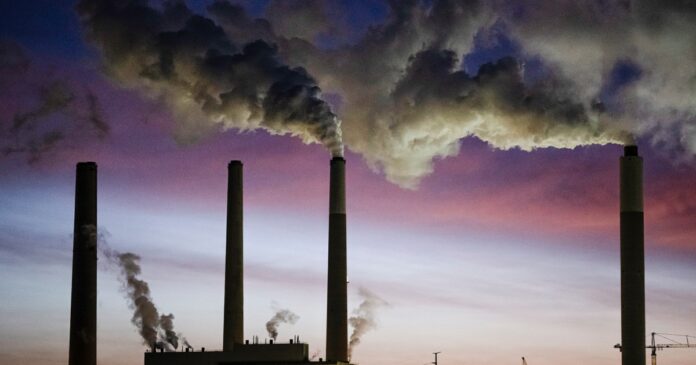
The July 4 heat event belongs to a pattern that has been accelerating. England recorded its hottest June day in history just days before the American emergency, with NHS ambulance services reporting record demand. Ocean temperatures reached their highest recorded levels in June 2026, a signal that has closely preceded land-temperature extremes in recent years. Climate scientists attribute the increasing frequency and intensity of extreme-heat events to the accumulation of greenhouse gases in the atmosphere. The July 2026 event fits a sequence that can no longer be categorized as outlier behavior.
Wright used the occasion to contrast the current administration’s energy record against what he called the previous administration’s “energy subtraction policies” that had “weakened the grid.” His statement did not address the structural issue: the all-time record PJM approached on July 4 was set in August 2006, during a period when data centers were a fraction of their current scale and electric vehicles barely existed on American roads. The capacity gap is not an artifact of any single administration. It is two decades of infrastructure investment that did not keep pace with the demand that electrification and data growth were always going to create.
What the Energy Emergency Alert does not resolve is the question of timeline. The protocols activated Friday are a pressure valve, not a structural repair. Whether the grid survived the weekend without localized rolling blackouts in the densely populated Mid-Atlantic corridor, where PJM’s transmission constraints are most acute, remained unknown Friday evening. The fireworks on the National Mall proceeded as temperatures eased slightly after sundown. The crowd was smaller than organizers had anticipated. The grid held. But the record it nearly broke was set on a summer evening in 2006, by a grid that has since added data centers and electric vehicles and millions more air conditioners, and has not yet broken it. The summer is not over.