
NEW DELHI – The lifeboat carrying ten Indian nationals away from the burning GFS Galaxy reached Omani rescue vessels hours after Iran’s Revolutionary Guards struck the Cyprus-flagged container ship in the Strait of Hormuz. One crew member was not on it.
India’s Ministry of External Affairs confirmed Saturday that of the eleven Indian nationals aboard the M/V GFS Galaxy when it was struck, ten have been rescued and one remains missing. The government described the situation as “deeply worrisome” and called for immediate de-escalation, while directing its embassy in Muscat to coordinate search-and-rescue efforts with Omani maritime authorities.
The attack targeted a commercial vessel that Iranian officials said had deviated from an approved shipping corridor. Iran’s Islamic Revolutionary Guard Corps announced that the ship “disregarded our warnings and instructions to correct their course” before what the IRGC characterised as a “warning shot” struck the vessel’s engine room, causing significant damage and setting off a fire that rendered the GFS Galaxy inoperable. Whether a warning shot capable of disabling a container ship’s engine room is consistent with standard maritime warning practice is not something Iran addressed in its statement.
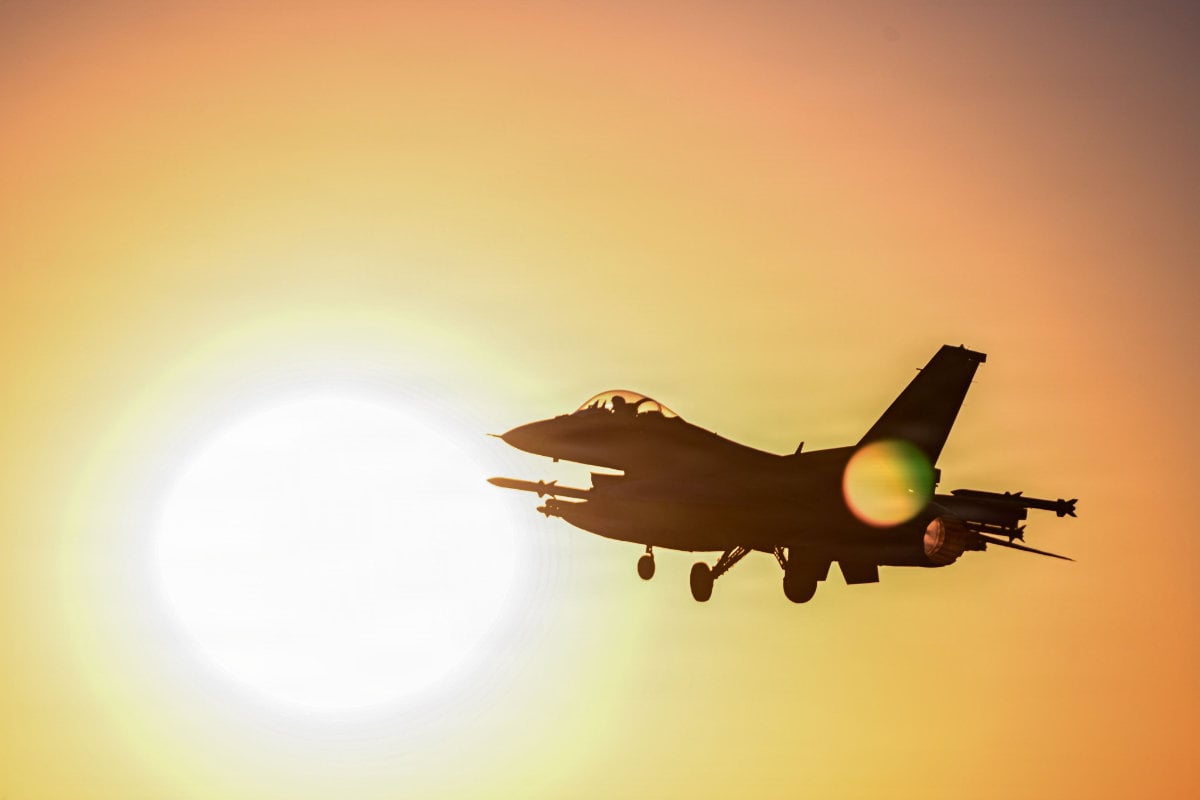
The vessel is registered under Cyprus, a European Union member state, and was operating in international waters when it was struck, according to United States Central Command, which confirmed the attack before announcing a new round of airstrikes on Iranian port cities. Within hours of the GFS Galaxy incident, the escalation had widened: Iran declared the Strait of Hormuz formally closed “until further notice,” and the US launched a third wave of strikes on Bandar Abbas, Sirik, Chabahar, and two other Iranian port cities, before Iran’s missiles struck targets across four Gulf states.
New Delhi’s formal response was calibrated but unambiguous. The Ministry of External Affairs described the attack as “deeply worrisome,” called for immediate de-escalation, and said its embassy officials in Oman had been activated to work with local maritime authorities on the search for the missing crew member, The Jerusalem Post reported. It is the clearest statement India has issued in this conflict naming Indian civilians as casualties of an Iranian action, rather than of US strikes.

The distinction matters politically. This past June brought India into the sharpest confrontation with Washington since the Gulf war began: three Indian sailors died when US aircraft struck the tanker Settebello in the Gulf of Oman, prompting External Affairs Minister S. Jaishankar to call Secretary of State Marco Rubio and tell him the deaths were not justified. The MEA’s language on the GFS Galaxy was comparably firm, directed this time at an Iranian action. New Delhi has now issued near-identical condemnations at Washington and Tehran within the span of a single month.
The GFS Galaxy’s crew composition reflects a larger human accounting in the Gulf. Commercial shipping through the Strait of Hormuz has drawn disproportionately from South and Southeast Asian seafarers for decades. Of the eleven crew members aboard when the IRGC struck, all were Indian nationals. That concentration had already become a source of public pressure in India, where maritime unions have described the Gulf conflict as one in which Indian workers have borne casualties on both sides of an American-Iranian exchange they have no role in conducting.
Iran’s justification for the strike, that the vessel deviated from an approved navigation route, contains a premise that neither the International Maritime Organisation nor any Western government has accepted. Tehran has insisted that all commercial transit through the Strait must now operate under IRGC authorisation along designated corridors, a claim that contradicts the UN Convention on the Law of the Sea and that the IMO condemned explicitly last week. Arab News reported that the GFS Galaxy was operating in international waters at the time of the strike, a characterisation consistent with CENTCOM’s own account.
The escalation that followed Saturday’s attack on the GFS Galaxy produced the Gulf’s broadest missile barrage of the conflict. Iran struck the UAE, Qatar, Bahrain, and Kuwait in simultaneous salvos within hours, with the UAE issuing its first public civilian shelter order of the war. India’s missing sailor was still unaccounted for when the Gulf’s capitals began their overnight interceptions.
What happened to the stricken vessel itself, and whether any survivors remain to be located near it, had not been confirmed by Indian authorities at the time this report was prepared. India’s foreign ministry said only that efforts were ongoing. The identity of the missing crew member has not been released.