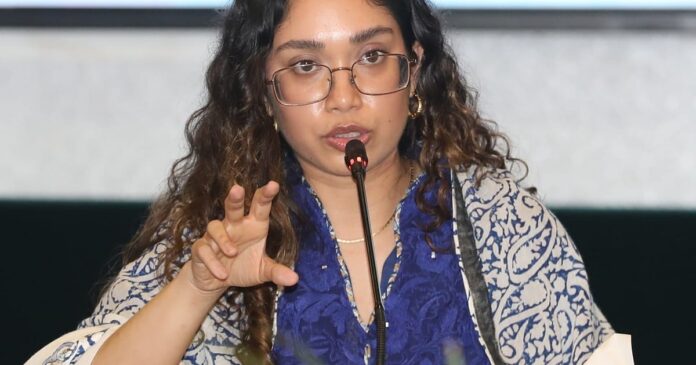

BUDAPEST – Peter Magyar stepped out from behind the constitutional mechanics of removal on Sunday and named the person he wants to fill the vacancy he created. She is not a politician. She is Judit Polgar, the chess grandmaster who defeated every world champion alive during her career, retired in 2014 at the top of the game, and has been recognized for three decades as the most gifted player Hungary has ever produced.
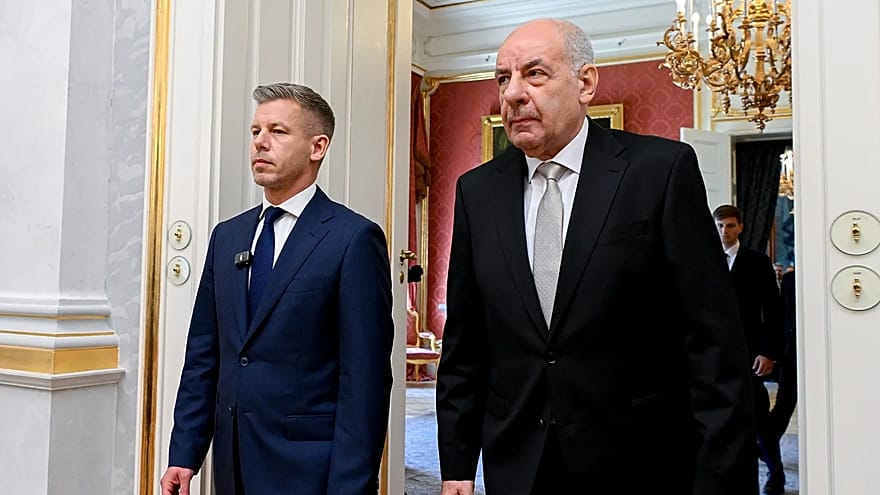
Magyar, speaking in Budapest on Sunday, said he hoped Polgar would agree to serve as Hungary’s interim president until the country adopts a new constitution. The announcement came less than 24 hours after President Tamas Sulyok signed the constitutional amendment that will formally end his own tenure, the legal mechanism Magyar’s government pushed through parliament on a 139-to-six vote.
“Her name has been synonymous with talent and perseverance for decades,” Magyar said. “Not due to her political affiliation or connections, but to her exceptional talent, diligence, exemplary burden-bearing, and integrity.”
Whether Polgar, 49, will accept the nomination has not been made public. She issued no statement Sunday. Magyar framed the offer as an honor: she would hold Hungary’s symbolic head of state role through the transition to a new constitutional framework, a period his government has mapped out as running into early 2027.
The choice carries weight that exceeds the individual. Hungary’s president holds a largely ceremonial role under the current constitutional framework, representing national unity and signing legislation without significant executive power. The requirement is not governing experience but legitimacy. Magyar’s argument, embedded in how he framed the Polgar nomination, is that a figure whose reputation rests entirely on demonstrated excellence rather than political affiliation is better suited to that symbolic function than any conventional politician, as the Times of Israel reported.
Polgar is the most famous product of an unconventional education experiment. Her father, Laszlo Polgar, believed that genius could be deliberately cultivated, and he chose chess as the domain in which to test that hypothesis. The results were definitive. Judit Polgar became an International Master at 13 and a Grandmaster at 15 years and four months, breaking Bobby Fischer’s record for the youngest grandmaster in history at the time. She spent much of her career ranked above all other female players and above the large majority of male players, peaking inside the top ten in the world in 2005 at a ranking that put her above reigning world champions.
She beat Garry Kasparov in 2002, defeated Anatoly Karpov, and won games against Magnus Carlsen. When she retired from professional competition in 2014 to focus on chess education and advocacy, she left the game having never held the women’s world championship title, a separate track she had largely declined to compete on, preferring the open field against men. The documentary about her career premiered at Sundance this year. Her two sisters, Sofia and Susan, also became accomplished players, but Judit’s record is in a different register from anyone else in the family, and from nearly everyone in the game’s history.
What she has never done is hold elected office or any governmental role. That, by Magyar’s implicit framing, is precisely what qualifies her for the one he is offering.
Hungary’s presidential vacancy opened after Sulyok signed his own constitutional removal into law last Saturday, completing a process Magyar initiated in the weeks after winning April’s elections. Sulyok, who had been installed by Viktor Orban’s parliament in 2024 and served as chief of the Constitutional Court before that, acknowledged he had no constitutional means to resist once parliament amended the foundational law to provide for his early departure. He signed on the fifth day of a five-day ultimatum. Orban responded with a statement declaring that “the last barrier has fallen” and that “arbitrary rule is no longer a threat but a reality,” a framing that observers noted carried striking irony from a leader who had spent sixteen years rewriting the constitution to suit his own political needs.
The backdrop is the scale of what Magyar inherited. Orban’s Fidesz used its supermajority through sixteen years of government to entrench loyalists across Hungary’s judiciary, state media, civil service, and regulatory institutions. Magyar’s government has been dismantling that system with the same constitutional tools Orban once used to build it, passing a sweeping amendment that simultaneously ended Sulyok’s presidency, imposed a twelve-year limit on parliamentary terms, introduced judicial reforms, and created a new anticorruption oversight body. The European Parliament had voted in 2022 to declare Hungary no longer a full democracy. Magyar has been working, institution by institution, to reverse that judgment.
The Polgar nomination fits that pattern, but it is also a signal about the kind of transition Magyar wants Hungary to have. A head of state chosen for what she has accomplished outside politics, rather than for which faction she represents, is a particular kind of statement about what the post-Orban period is supposed to look like. It is also a choice that carries its own symbolic charge: a Jewish grandmaster becoming head of state in a country whose previous government was repeatedly criticized for antisemitic rhetoric and whose record on Holocaust remembrance became a source of friction with European institutions.
Magyar has said that his government will begin drafting a new constitution in September, with a referendum planned before the end of the year. The interim presidency Polgar is being asked to accept would bridge that process. Tisza’s parliamentary majority gives Magyar’s government the votes to elect whoever he nominates, but the nomination itself was made publicly, as an appeal rather than an announcement, leaving room for Polgar to decline.
Whether Polgar will take the role is a question that carries its own complexities. The position is ceremonial, but the ceremony will occur during one of the most consequential constitutional moments in Hungarian history. A head of state who signs legislation, represents the country internationally, and serves as the human embodiment of national continuity through a constitutional rewrite will make consequential decisions regardless of formal powers. Polgar’s chess games are extensively analyzed. Her approach to that kind of institutional pressure is not known, which is, in a sense, the whole point of the offer. What Euronews described as Magyar’s broader push to dismantle Orban-era institutions reaches its most visible phase with whoever sits in the presidency next. The choice of Polgar says something about what Magyar thinks that role should be. Whether she agrees is the next question Hungary is waiting to answer.