LUSAKA – Armed men fired live rounds outside opposition leader Brian Mundubile’s compound hours after polls closed in Zambia’s August 13 presidential election, wounding a member of parliament and forcing the removal of several opposition figures in scenes the country’s main presidential challenger would later describe as a politically motivated assault.
By Monday, with results from 71 percent of constituencies announced, President Hakainde Hichilema held nearly 62 percent of the valid votes against Mundubile’s 36 percent, a lead so commanding it would ordinarily signal a settled contest. Instead, Zambia’s electoral commission and its international monitors find themselves managing the most fraught post-election environment the country has seen since it began holding multiparty elections in 1991.
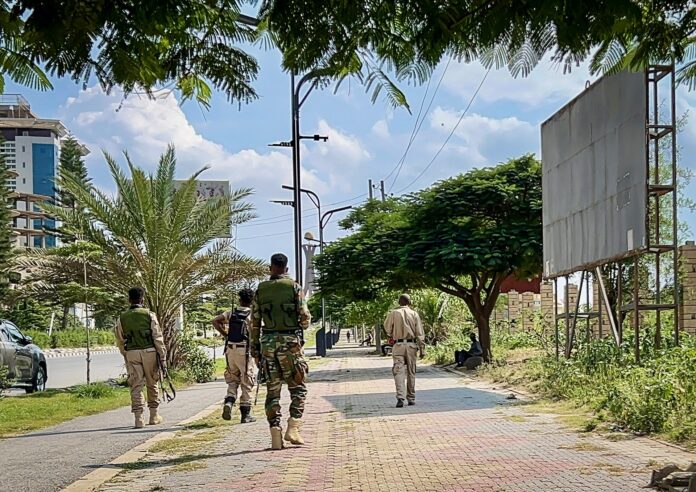
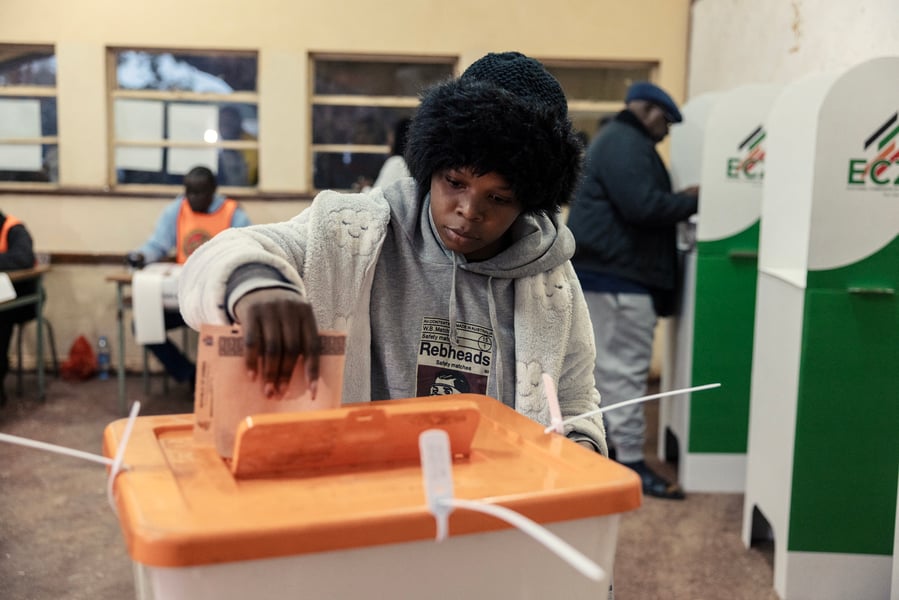
What has unsettled observers is not any single incident but their accumulation: a 57-year-old polling agent killed near Lusaka on election day; nine people arrested in connection with that death; vote counting suspended for roughly six hours on Friday following reports of violence against electoral staff and allegations that ballot papers had been stolen; and opposition figures describing a systematic attempt to tilt the result.
“I have grave concern regarding the integrity of the ongoing presidential election process,” Mundubile said in a video posted to his social media accounts on Monday, alleging that result forms from polling stations had been altered and that military personnel had seized control of tallying centres in the Mufulira district. His coalition’s own parallel count, he said, contradicted the figures being released by the Electoral Commission of Zambia.
Hichilema’s spokesman, Clayson Hamasaka, was brief in his response. “It’s all lies,” Hamasaka told reporters. “They have been crying about everything from the time campaigning started.”
The discrepancy between those two positions is one that Zambia’s electoral institutions are now under pressure to resolve, and quickly. With 29 percent of constituencies still unreported, the arithmetic remains uncertain. What is already clear is that international monitors are treating the situation with unusual caution.
The European Union’s observation mission, led by Michael McNamara, said the election had been “competitive but skewed towards the incumbent,” citing “heavy bias in state media coverage and a blurring of government business with campaigning” during the weeks before the vote, Al Jazeera reported. The EU Parliament’s own delegation head, Reinhold Lopatka, called Friday’s suspension of counting “disproportionate,” noting that only a small fraction of polling stations had actually been affected by the incidents that prompted it.
Even the Southern African Development Community, a body that has historically been reluctant to criticise member states’ elections, felt compelled to urge “all contestants, their supporters, and all stakeholders to remain calm,” according to its observer mission head, Samuel Tembenu.
That the calls for calm are necessary at all represents a departure from Zambia’s established pattern. Since 1991, when the country moved from single-party rule to multiparty democracy, power has changed hands through elections without significant violence. Hichilema himself came to power in 2021 in a landslide victory over then-incumbent Edgar Lungu, and the handover was smooth and widely praised. His current lead of 62 percent against Mundubile’s 36 is far larger than the margin typically needed to provoke a serious challenge.
The question embedded in Mundubile’s allegations is therefore less about the arithmetic and more about the methods. His most insistent claim, the alteration of result forms, would be difficult to stage on any meaningful scale in a system where the Electoral Commission announces results constituency by constituency as they arrive. The opposition has not produced specific documentation of altered forms, and the electoral commission has disputed the characterisation of the counting process.
What makes the situation harder to read is the armed raid itself, which occurred in Lusaka on election night while Mundubile was present at the compound. One member of parliament was wounded; several people were forcibly removed. Police have not publicly identified who ordered or carried out the raid. Eleven people were arrested in separate incidents during and after the counting process, including “leading opposition figures,” according to officials, but Zambia’s government has not explained the basis for those arrests or what charges, if any, have been filed.
Hichilema came into office in 2021 promising economic recovery after years of debt distress. His record is mixed. Zambia completed a landmark debt restructuring under the G20’s Common Framework in 2023, a first for any African country under that mechanism, and economic growth has returned. But more than 70 percent of the country’s 22 million people still live on less than three dollars a day, a figure consistent with broader sub-Saharan poverty trends that have deepened across the continent, and copper prices, the foundation of the national budget, have remained volatile.
Mundubile, drawing on discontent in the Copperbelt and parts of the Tonse-Pamodzi opposition alliance, had argued Hichilema’s economic record did not justify a second term.
Whether the final result confirms Hichilema’s declared margin or generates a formal legal challenge remains to be seen. The commission has not indicated when it expects to complete the count. Mundubile has called for an independent investigation into what happened at tallying centres and outside his home; neither the commission nor the government has agreed to one.
Zambia’s legal system provides a mechanism for disputed presidential results: a petition to the Constitutional Court filed within seven days of a result announcement. Invoking that route would mark a first for the country in the post-1991 era.