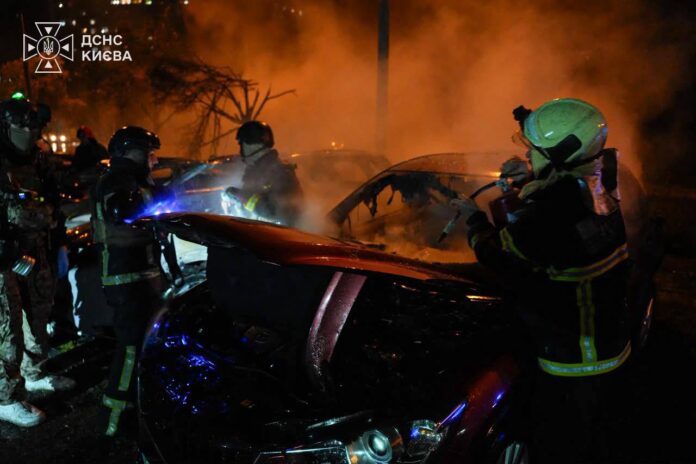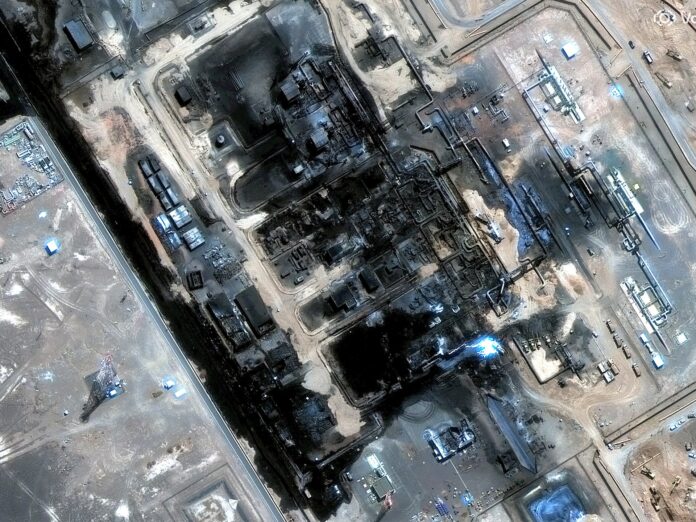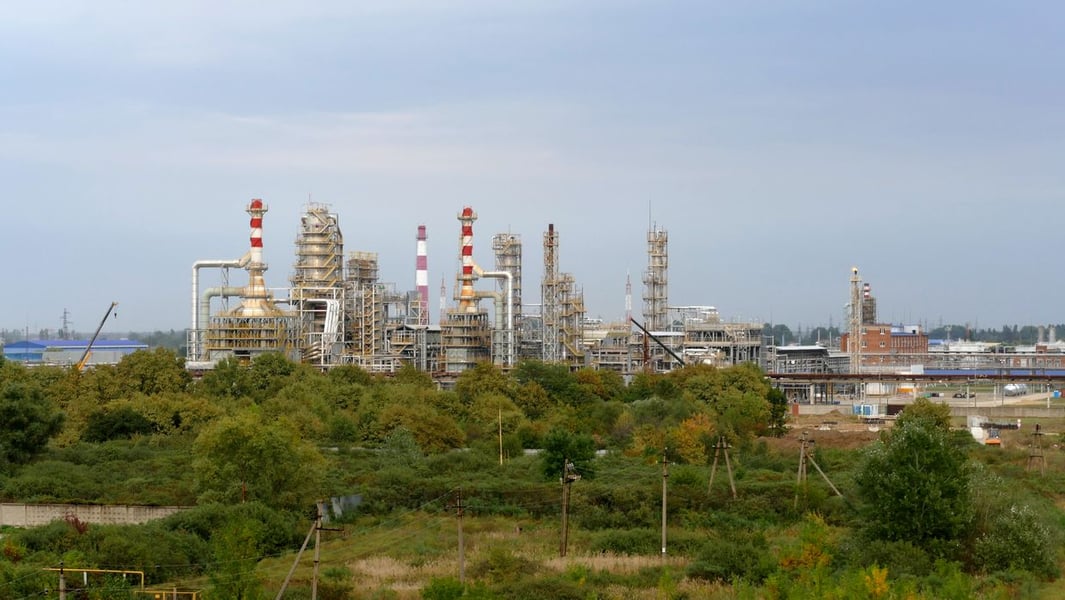

KYIV — In the pre-dawn hours of Tuesday, a swarm of Ukrainian drones struck one of southern Russia’s largest oil processing facilities, killing two people and forcing the suspension of a regional railway hub. The attack on the Afipsky Oil Refinery in Krasnodar Krai is the most significant strike on Russian energy infrastructure in weeks and marks a pivot away from the recent Ukrainian campaign targeting Russia’s e-commerce logistics network.
Two people died and two others were injured, Krasnodar Krai Governor Veniamin Kondratyev confirmed on Tuesday; Meduza reported that the deaths came when drone debris fell on the Afipskaya railway station. Damage extended well beyond the refinery fence line — a nearby railway station, surrounding residential buildings, and infrastructure in the Afipskaya district all sustained damage. Russia’s Southern Transport Prosecutor’s Office announced that the Afipskaya railway station had suspended operations, disrupting freight and passenger service on a corridor linking the Krasnodar region to Russia’s Black Sea ports and military resupply routes to the south.
The Afipsky refinery is not a marginal target. Processing approximately 6.25 million tons of crude oil each year, it accounts for roughly two percent of Russia’s total national refining capacity. The facility produces gasoline, diesel fuel, gas condensate distillates, heavy petroleum residues, and sulfur — outputs that feed both domestic consumption and the military supply chain running through the region. The extent of damage to the refinery’s processing units, and whether operations have been halted or merely disrupted, was not confirmed by either Kyiv or the refinery’s operators.
Russia’s Defense Ministry put its own number on the night. Air defenses, it said, shot down 148 aerial targets across Russia and above the Black and Azov seas — one of the larger claimed interception figures in recent months and a statistic that confirms the scale of the operation without clarifying what got through. Air defense systems were also reported active near the Novoshakhtinsk oil refinery in neighboring Rostov Oblast, suggesting the operation was designed to stretch Russian air defense coverage across multiple southern targets simultaneously, the Kyiv Independent reported.
Ukraine has not claimed responsibility. The Kyiv Independent, citing Russian Telegram channels and regional officials, was among the first to report the strike — but noted that Ukraine’s military had not commented by publication time. Ukrainian officials rarely confirm strikes on Russian territory in real time. When they do speak, it tends to be days or weeks later, once the operational picture has settled.
The strategic logic is consistent with a campaign that began in 2023 and deepened through 2025. Ukrainian drone strikes on Russian refineries serve two purposes: reducing the fuel supply available to Russian military units and cutting into the state petroleum revenues that help finance the Russian operation in Ukraine. Energy economists tracking Russian refinery utilization have noted periodic drops in output following major strikes, with some effects persisting for weeks as repair crews work under conditions that complicate reconstruction.
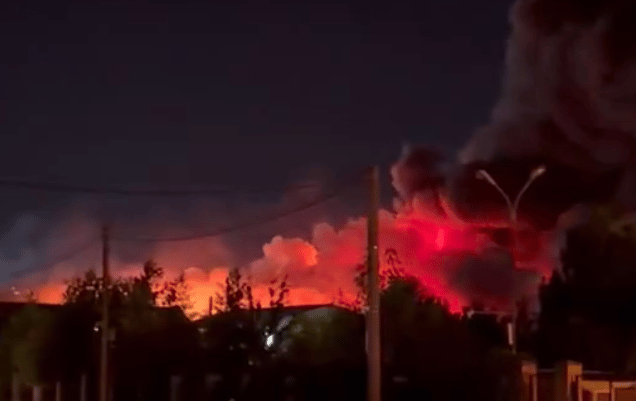
Krasnodar Krai’s strategic position amplifies that calculation. The region, where a drone strike killed two children the previous day, is both a transit corridor for Russian forces operating in the southern direction of the conflict and a node for Black Sea shipping. Its ports handle grain and oil exports that generate hard currency; its rail lines carry military freight south and east. Degrading the Afipsky refinery, even partially, creates friction in a supply chain Russia depends on in ways that reach beyond the front line.
Russia’s denial that its air defenses stopped everything is implicit in Kondratyev’s own account. Governors do not announce dead civilians and suspended railway operations when their defenses succeeded completely. The 148 interception figure covers a vast geographic area — Russia’s entire southern air defense network, plus the Black and Azov seas — and says little about what happened at one facility in one industrial district of Krasnodar.
Two people died. A railway is suspended. A refinery’s operational status is unknown. The full picture of what Tuesday’s drones achieved at Afipsky will take time to emerge — time that tends to work in Kyiv’s favor when the target is infrastructure rather than personnel. Russia has been repairing its refineries under pressure since 2023. How long it takes to assess and fix the damage at Afipsky is a question neither Moscow nor the facility’s operators have yet answered.