
KYIV — The missiles that have already reached deep into Russian-held territory will soon be built in Ukraine itself, if Andy Burnham can persuade Washington to let him share what London knows.
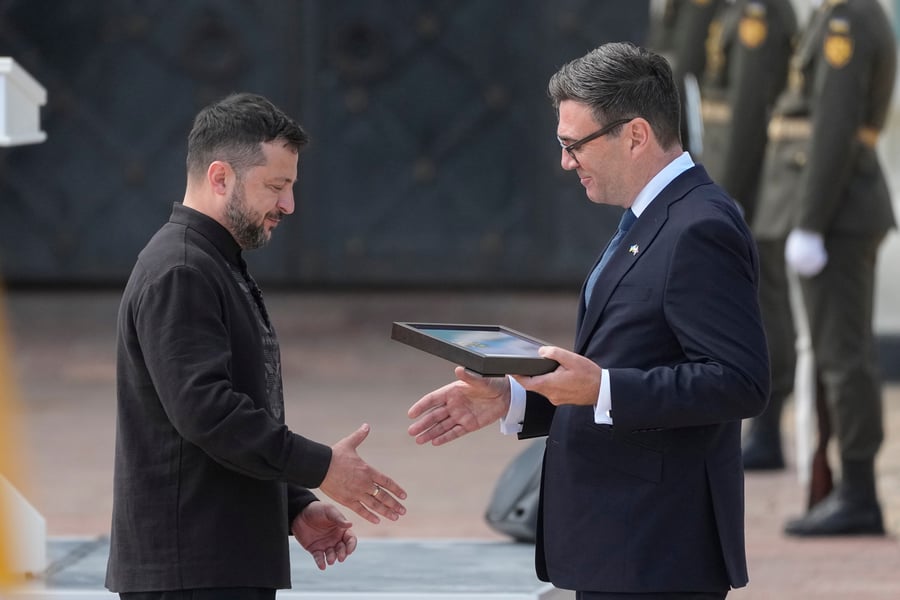
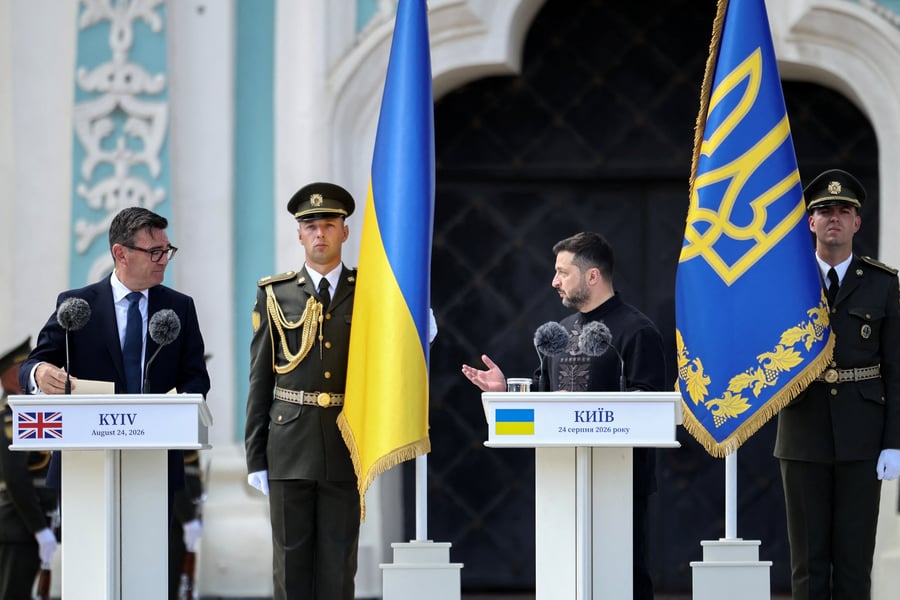
Britain’s Prime Minister arrived in Kyiv on Monday to mark Ukraine’s 35th Independence Day, making it his first foreign visit since taking office. He did not come empty-handed. Burnham announced that the United Kingdom would share classified technical information enabling Ukraine to manufacture Storm Shadow cruise missiles on its own soil, a step no British government had previously been prepared to take and one that the United States has declined to match with its own weapons technology.
The Storm Shadow is a precision strike weapon with a range of 560 kilometres, capable of reaching targets 240 kilometres into Russian-held territory. It flies at night and in all weather, guided by an advanced navigation system that allows it to penetrate hardened bunkers and fortified military facilities. Each missile costs approximately one million dollars to produce. Ukraine has already received them from Britain and France, but the supply is finite and the deliveries dependent on Western political will. Manufacturing them inside Ukraine would change that calculus.
France is partnering with the United Kingdom on the manufacturing transfer, according to British officials. The two countries co-designed the Storm Shadow, known in France as the SCALP-EG, meaning the intellectual property is jointly held. Burnham framed the transfer as a direct response to what he called four and a half years of Russia’s full-scale operation aimed at crushing the independence he had come to Kyiv to celebrate — the language of a prime minister making a political argument before a political audience, in a city still under drone attack.
Moscow responded before the day was over. The Kremlin’s spokesman, Dmitry Peskov, said the move represented a further escalation of NATO involvement in the conflict and that Russia would take appropriate measures, without specifying what those might be. Russian officials have made similar statements at each stage of Western arms expansion, from portable anti-tank weapons to main battle tanks to long-range missiles. Russian military planners will have been watching this announcement closely.
The contrast with Washington was pointed. President Trump, when asked about Ukraine’s request for access to Patriot missile technology, called it “a hard thing to give away.” His administration has pulled back from several planned transfers and reduced the tempo of joint exercises with European allies. Burnham’s Kyiv visit, framed in Downing Street as a signal of unwavering support, was also a signal about who is now setting the pace in Western support for Ukraine, as the United States remains absorbed by the Iran-Israel war and its own fiscal constraints.
Whether the transfer can actually happen depends partly on a question Burnham did not answer publicly on Monday: whether the United States will approve the re-export of American-made components inside the Storm Shadow. The missile’s guidance and targeting systems incorporate technology developed under US defence contracts, and British and French officials will need Washington’s sign-off before that technology can be passed to a third country for domestic production. That approval process is uncertain, and the Trump administration has not indicated its position.
Keir Giles, a Russia analyst at Chatham House in London, said Ukraine’s defence industry was positioned to absorb the technology faster than most Western analysts expected. Kyiv had built, with significant EU backing, a distributed manufacturing base designed to survive Russian strikes, and its workforce had spent four years learning to reverse-engineer, adapt, and improvise under fire. Ukraine possesses, Giles said, “a very agile, highly motivated and distributed defence industry,” positioned to manufacture advanced systems effectively once blueprints become available.
The timeline remains a genuine open question. British defence officials told journalists the target was operational production by year’s end, a timeline that veterans of comparable programmes describe as highly optimistic. A more realistic estimate, based on the gap between technology transfer and fielded capability in similar projects, is two years from contract signing to missile delivery. During that window, Ukraine’s Storm Shadow supply would remain dependent on British and French stockpiles, which are themselves not unlimited.
Production facilities present a separate vulnerability. Ukraine has developed methods to disperse manufacturing across many sites and disguise activity that might attract Russian targeting. But a Storm Shadow production line requires precision tooling, clean environments, and supply chains that are difficult to conceal at scale. Russia has demonstrated throughout the conflict that it will strike what it can locate, and a domestic cruise missile production capability would rank among its highest-priority targets.
Burnham’s visit also underlined a structural shift in the alliance geometry around Ukraine. Britain under his premiership is committing to a level of material support that does not track Washington’s choices. That is a different kind of relationship than the one that existed when British contributions to Ukraine required American political cover. Whether it is sustainable, without American approval on the components question, is the thing this announcement left unresolved.
The Independence Day gathering in Kyiv brought leaders from across Europe but notably fewer from Washington’s orbit, as the EU approved a separate €6.1 billion defence package on the same day. The alignment is increasingly clear: Europe is deciding to arm Ukraine with or without American leadership. What it cannot yet decide is whether American technology approval will follow the political will, or lag it.