
BRUSSELS — For most of this summer, the thing standing between a Schengen arrivals hall and a four-hour queue has been a clause. Regulation (EU) 2025/1534 lets a border post stop capturing fingerprints and facial images for up to six hours at a stretch when waiting times become unmanageable, while still recording digitally who entered and who left. Guards at Paris Charles de Gaulle, Amsterdam Schiphol and Lisbon have reached for it repeatedly since spring. On September 6, it runs out.
Frontex has confirmed the flexibility will not be renewed. That decision was taken over the objections of nine national governments and of the entire European aviation industry, and it is probably the most consequential thing happening to European travel this autumn.
The argument is no longer about whether the Entry/Exit System is worth having. That fight ended years ago. The question now is narrower and more awkward: whether the physical border infrastructure of 29 countries can absorb the one step of the system that cannot be automated, at the booth, in the middle of the busiest travel corridor in the world.
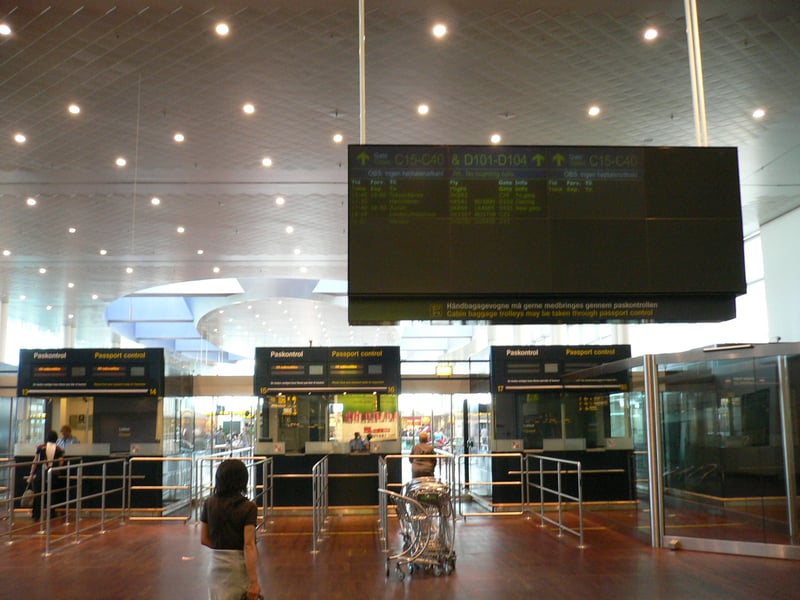
EES has been live at every external Schengen crossing since April 10, closing a rollout that began the previous October. It replaces the passport stamp with a digital record of entries and exits for non-EU nationals, and on a traveller’s first crossing it captures four fingerprints and a facial image alongside the document data. The registration is the point of the system. It is also the bottleneck.
The European Commission’s own figure for a completed check is roughly 70 seconds. That number is accurate and close to useless as a planning assumption, because it describes the routine check performed on someone already in the database. What generates the queues is enrolment, and through this summer almost every non-EU arrival still needed one. The gap between those two operations is where four-hour waits come from.
Airports and airlines saw this coming and said so early. ACI Europe, Airlines for Europe and IATA called in February for an immediate review of the system before the peak months, warning that mandatory registration of every border crossing in July and August would push waiting times past four hours at some terminals. The industry asked the Commission to guarantee that member states could keep suspending EES, partially or entirely, through the end of October. It got until September 6.
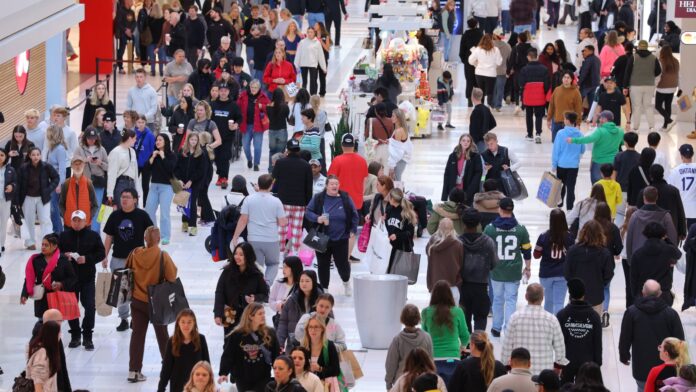
By midsummer the warnings had stopped being predictions. Passengers at some airports were waiting up to three hours at passport control, Euronews reported, with missed connections rippling through schedules at hubs and at smaller airports serving high-season destinations. Some terminals simply did not have the kiosks, the booths or the border guards to process the volume. Switzerland suspended biometric capture outright at points on its network.
In July, nine governments put the problem in writing. Belgium, France, Germany, Greece, Italy, Malta, the Netherlands, Portugal and Switzerland wrote to Magnus Brunner, the commissioner for internal affairs, arguing that the partial suspension mechanism needed to stay available past its expiry date. That is an unusual coalition. It contains the states with the largest external air borders and the states most dependent on summer arrivals, and it includes governments that have spent the past two years arguing with Brussels about border control from the opposite direction.
The Commission’s answer, in effect, was that the system stays on. It acknowledged the difficulties and declined to suspend EES, which is a defensible position on the merits. The system’s value depends on completeness. A database of entries and exits with holes punched in it during every busy afternoon is a weaker instrument for the overstay detection and identity verification it was built to perform, and each suspension leaves a set of crossings that were never biometrically enrolled at all.
That logic runs into a scheduling problem it does not solve. September is not a quiet month at European borders, and the enrolment backlog does not disappear on the sixth. Every traveller who crossed during a suspension window still has no biometric record, and will need one the next time they arrive.
Europe has spent this year rearranging its frontiers in both directions at once. It removed the frontier checks at Gibraltar under a deal that ended one of the last hard borders in western Europe. It has pressed Germany to dismantle its internal Schengen checks, so far without success. And it has built, at the external edge, the most demanding entry procedure the bloc has ever operated, which threatened Europe’s summer tourist season from the moment it went fully live.
The timing gets harder from here. ETIAS, the travel authorisation that will require visa-exempt visitors to apply and pay 20 euros before departure, is due in the last quarter of this year, with a grace period before enforcement bites. It is a separate system with a separate purpose, and it lands on the same border staff.
What has not been published is the one number that would make September legible. Neither the Commission nor Frontex has released a count of how often the suspension clause was invoked this summer, at which crossing points, or for how long. Without it, nobody outside a handful of national border agencies can say whether September 6 removes a rarely used safety valve or the only thing that kept July moving. The nine governments that wrote to Brunner presumably know the answer for their own borders. They did not put it in the letter, or at least not in the part that has been reported.
Travellers will find out at the booth.