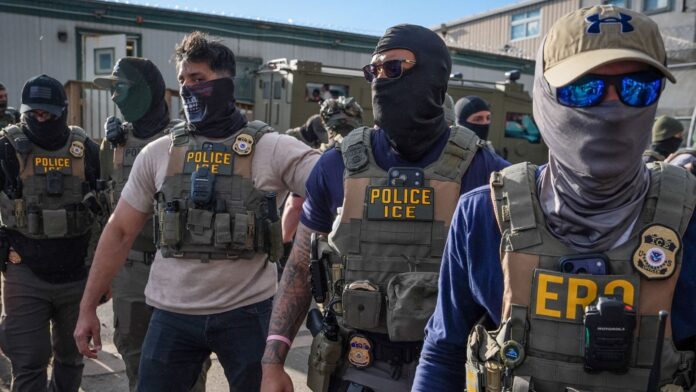

WASHINGTON — The four-legged robot has already walked the grounds of Mar-a-Lago. Now U.S. Immigration and Customs Enforcement wants it walking ahead of agents in the field.
ICE plans to spend as much as $2 million on Boston Dynamics SPOT robots, according to a federal procurement notice, marking the immigration agency’s first formal commitment to deploy the widely recognized quadruped in enforcement operations. The robots will not make arrests, DHS officials say. Their job is to go in first, and report back.
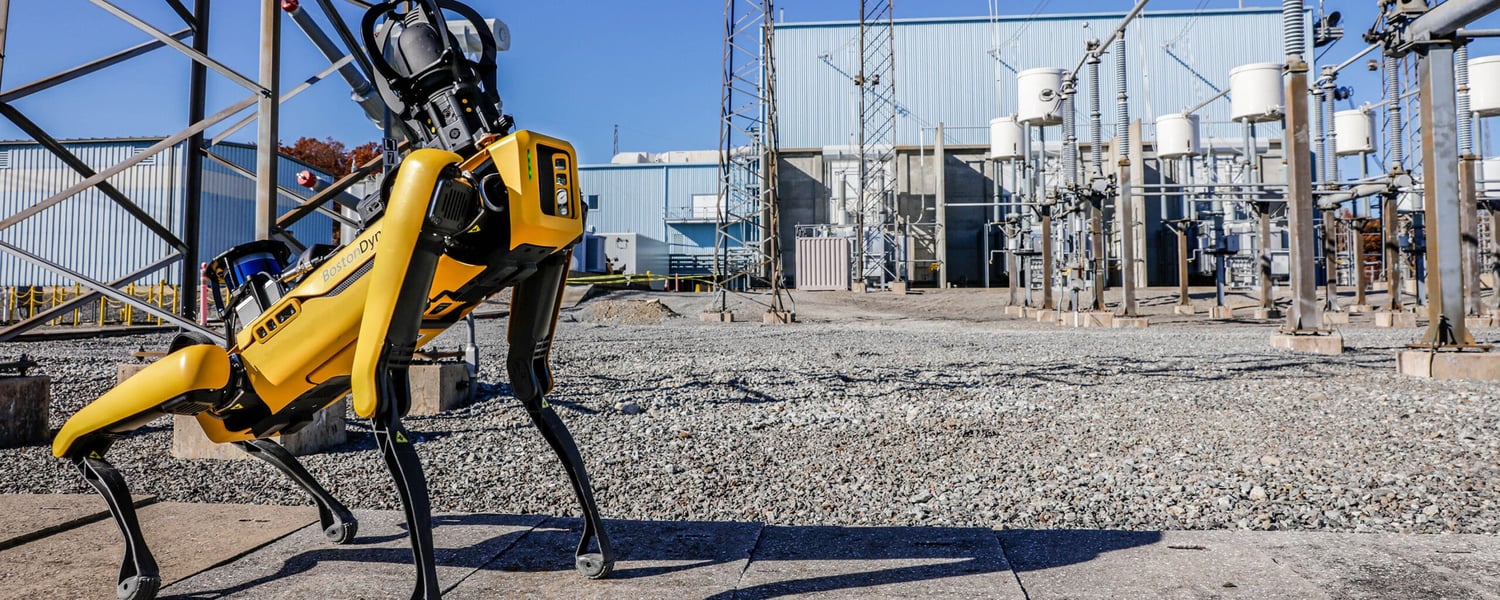
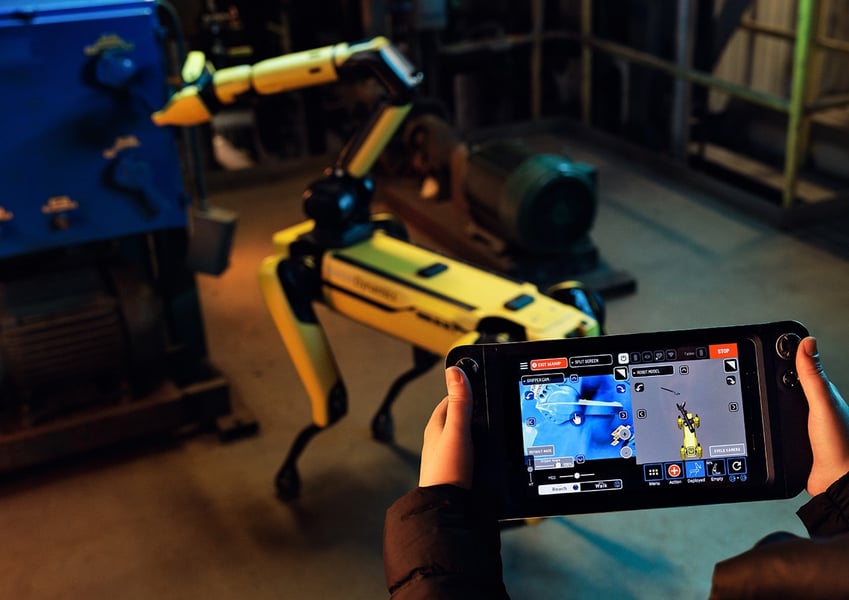
SPOT’s physical profile has become familiar to law enforcement agencies across North America: four-legged, roughly the size of a large dog, equipped with 360-degree cameras, sensors capable of detecting chemical hazards, and an extendable arm that can open doors. More than 60 U.S. and Canadian police units have adopted the platform. The Secret Service deployed SPOT at Mar-a-Lago beginning in 2024. The Los Angeles Police Department has demonstrated the robot scanning crime scenes for weapons and explosives. The machine cannot bite, tackle, or physically restrain anyone, a distinction the Department of Homeland Security was careful to make in framing the ICE procurement.
The procurement notice frames the robots as tools for “inspection, situational awareness, and hazard assessment in environments that may pose risks to personnel.” The stated application covers “dangerous, confined, unstable, or difficult-to-access areas,” language that maps to several scenarios within ICE’s operational mandate: underground smuggling tunnels, abandoned structures used as staging points, dense border terrain, and confined spaces in detention facilities.
A DHS official told NBC News the technology would “improve officer safety, supports informed operational decision-making, and enhances DHS’s ability to respond” to hazardous conditions. The agency was explicit on what the robots will not do: make arrests, engage physically, or operate independently in situations requiring human judgment about force.
At Boston Dynamics’ listed price of approximately $75,000 per SPOT unit before accessories and operator training, a $2 million ceiling could field between 25 and 26 robots. ICE operates field offices and detention facilities across all 50 states. That figure is not a fleet-scale deployment, but it is enough to establish operational precedents across multiple locations simultaneously. The procurement notice does not specify target offices or a deployment timeline.
The SPOT purchase sits alongside a separate DHS hardware program that drew sustained public attention: a $16 million authorization for ICE to purchase electric shock gloves for officers. The two procurements reflect a hardware-forward posture within DHS’s enforcement apparatus under the current administration. ICE also extended a $30 million contract with Palantir this year for ImmigrationOS, a platform tracking visa overstays and self-deportation compliance. The agency has become one of the more aggressive technology adopters within DHS.
Boston Dynamics has not confirmed the ICE contract. The company has historically declined to discuss specific law enforcement customers and has previously stated that SPOT is not designed or sold for use as a weapon. The company’s existing law enforcement customer base uses the robot in reconnaissance and hazard-assessment roles, precisely the framework DHS has used to justify the ICE procurement.
Civil liberties advocates have challenged prior ICE technology contracts, including facial recognition agreements and mass data collection programs. Specific responses to the SPOT procurement had not been issued publicly at the time of reporting. Whether advocacy organizations will mount a formal challenge, as they have to surveillance technology contracts in immigration enforcement before, is not yet known.
The practical question of how SPOT functions in ICE’s operational environments is not trivial. The robot is designed for consistent terrain and requires human operators for complex decisions. Deployment in rough field settings raises questions about the platform’s utility that the procurement notice does not address. What SPOT is demonstrably capable of, scanning a tunnel, documenting a structure before entry, identifying chemical hazards in enclosed spaces, falls squarely within its documented capabilities and the stated ICE use case.
Immigration enforcement technology has drawn scrutiny on multiple fronts in recent months. The Eastern Herald has reported on related ICE incidents, including the July 2026 fatal shooting of a Colombian immigrant by an ICE officer in Maine, a case that renewed questions about officer vetting and use-of-force oversight within the agency.
The procurement, first reported by NBC News, is subject to standard federal acquisition review before any contract is awarded. No vendor selection, unit count, or delivery schedule has been made public.