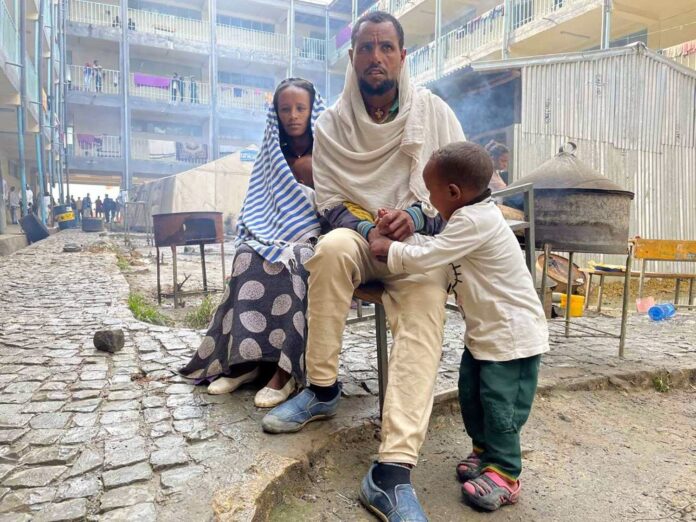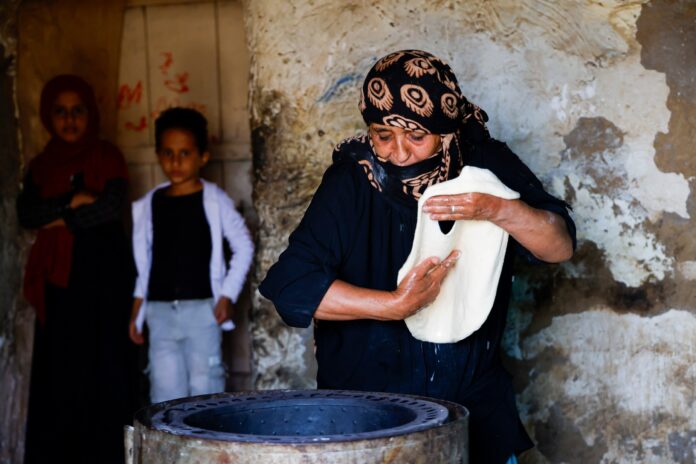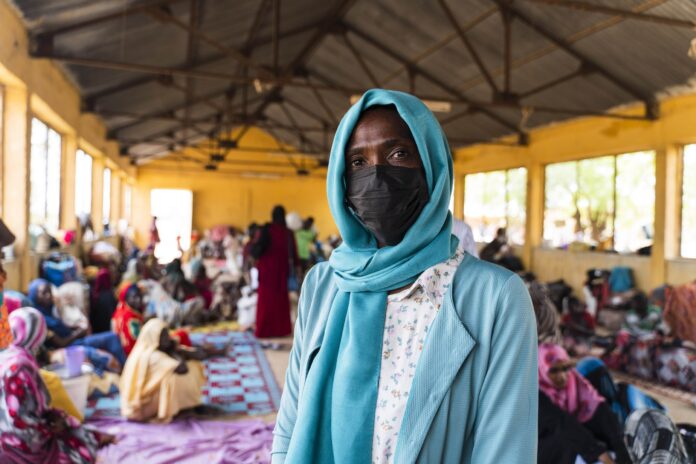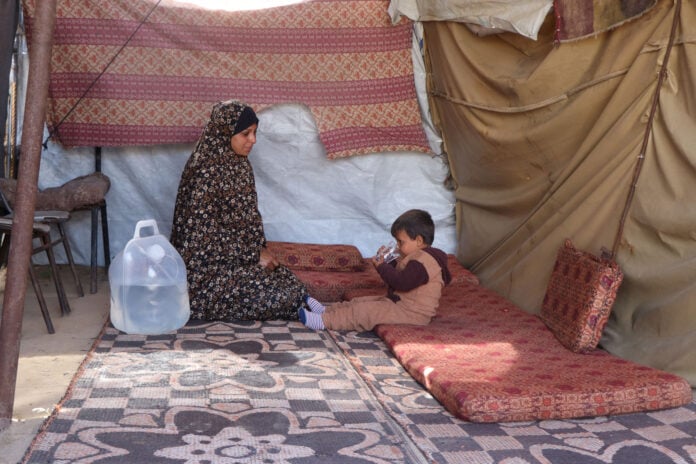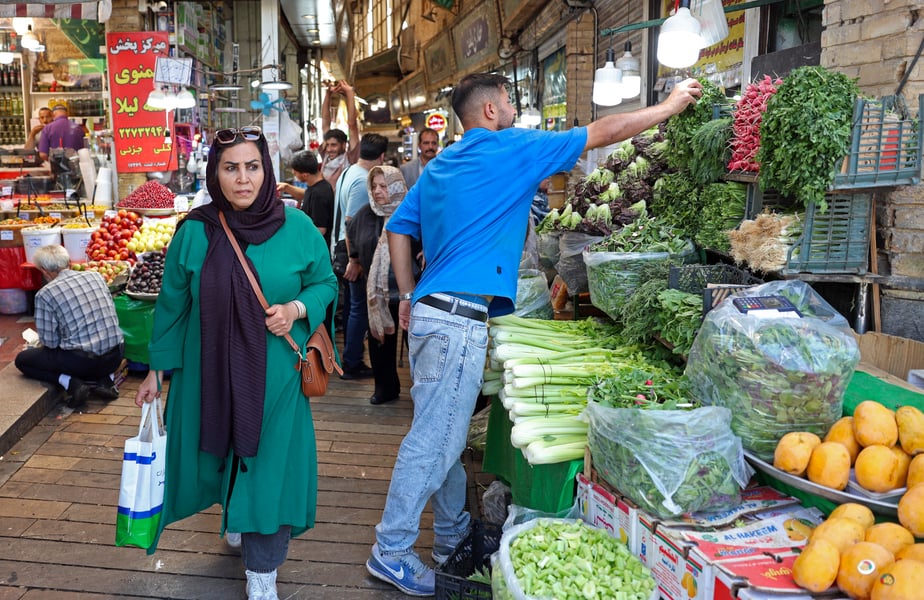

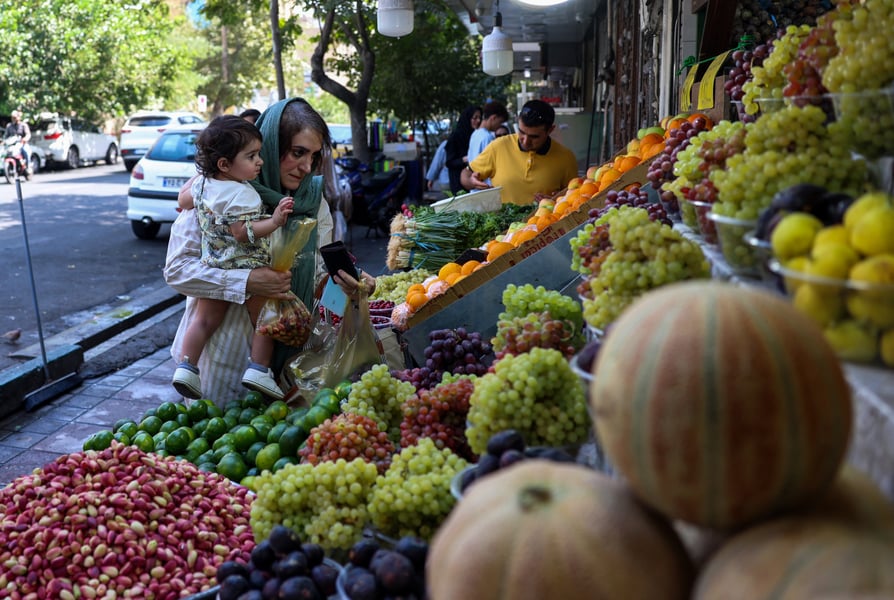
TEHRAN — Maryam didn’t work before the war started. Six months later, she does. Everything in Tehran became expensive so fast that the household budget that once covered her family stopped covering it. She found work. “Since the war, I’ve had to find a job to help support my household,” she told Al Jazeera. “Everything has become so expensive.”
On Saturday, the government she lives under acknowledged, for the first time in explicit official terms, that her situation is the result of a war that has also taken a significant economic toll on the state. What the government did not acknowledge, and what makes Iran’s position at the six-month mark so difficult to read, is that it intends to stop.
Supreme Leader Ayatollah Mojtaba Khamenei, who has not appeared in public since February 28, the day the war began, issued a written statement Saturday calling on the government to address “the chain of economic and livelihood challenges, such as inflation, unemployment.” The statement was notable not just for what it said but for the form it took: a written statement from a leader who has given no public address in six months is as close to an official admission of pressure as the Islamic Republic tends to get.
Annual inflation has reached 66 percent. Exports and imports have slumped nearly 35 percent, the result of US sanctions and a naval blockade that has disrupted Iran’s access to foreign trade. EH has previously covered how Tehran has attempted to frame its economic resistance as the US tightened the vice. President Masoud Pezeshkian told state media that Iran sold approximately 90 million barrels of oil during a June Memorandum of Understanding when sales were temporarily permitted, a figure that represents both the tenacity of Iran’s oil infrastructure and how completely the rest of the economy has been squeezed.
Omid, who runs a food business in Tehran, put the calculation plainly. “We can barely afford to pay our workers,” he said.
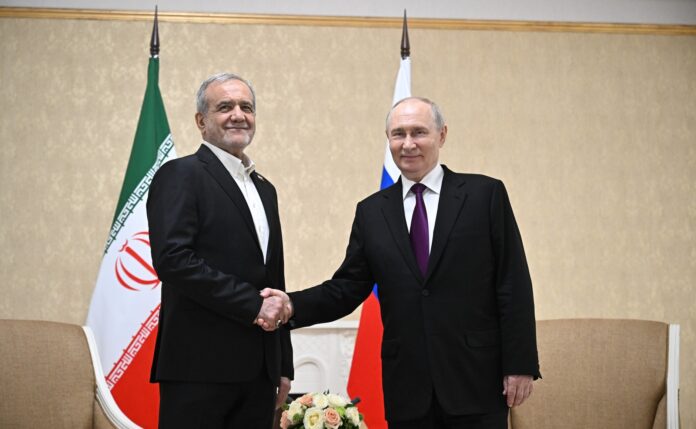
The government’s answer to all of it is a formula it is now describing as the twin pillars of its strategy: diplomacy and defence. Pezeshkian said the two approaches were “complementary,” that Iran could pursue dialogue with neighboring countries on the basis of equality while simultaneously maintaining military readiness. The formulation is deliberate. It leaves open the question of which pillar is load-bearing.
The Qatari Prime Minister, Sheikh Mohammed bin Abdulrahman bin Jassim Al Thani, visited Tehran on Thursday. Foreign Minister Abbas Araghchi described the talks as “creative.” No terms were disclosed. Qatar has served as an intermediary between Iran and the United States since before the war began, and its prime minister’s presence in Tehran at the six-month mark was received in both capitals as meaningful. What it means concretely, whether there is a framework taking shape or whether “creative” is diplomatic vocabulary for “unresolved,” has not been made public. The article’s primary source for the visit, Al Jazeera, reported Araghchi’s characterization without further elaboration of any specific outcome.
EH has previously reported on Qatar’s position in this conflict: Doha has publicly described US sanctions as “unilateral”, a stance that places it at some diplomatic distance from Washington’s position even as it maintains channels to both sides.
The military establishment, meanwhile, offered a different kind of signal. Army Commander-in-Chief Amir Hatami acknowledged that drone and missile stockpiles had been used intensively over six months of combat. Acting Defence Minister Majid Ibn Reza chose the anniversary to say that Iran’s adversaries would “become aware of Iran’s surprises in due time.” Whether that statement was intended to signal actual capability, to manage domestic expectations, or both, was not explained.
The distinction matters. Iran’s defence posture at the six-month mark is being shaped partly by what has already been expended. Hatami’s acknowledgment of intensive use of stockpiles is unusual candor for a wartime official, and it sits in some tension with the defence minister’s language of future surprises. The Strait of Hormuz, where Iranian maritime operations have tied up shipping for the duration of the war, remains the central geographic pressure point, the asset Iran has consistently refused to yield.
What Saturday’s statements add up to is something specific: an Iranian leadership that has crossed a threshold of public acknowledgment. The economic pain is real, the government said so, and Khamenei’s written statement confirmed it. The government’s argument is that this acknowledgment does not lead where Washington and Tel Aviv want it to lead. Insisting on diplomacy and defence simultaneously is a declaration that Iran will not trade one for the other.
Whether that formula is sustainable as inflation presses into a seventh month is not something the anniversary statements resolve. Araghchi called the talks “creative.” Maryam found a job.