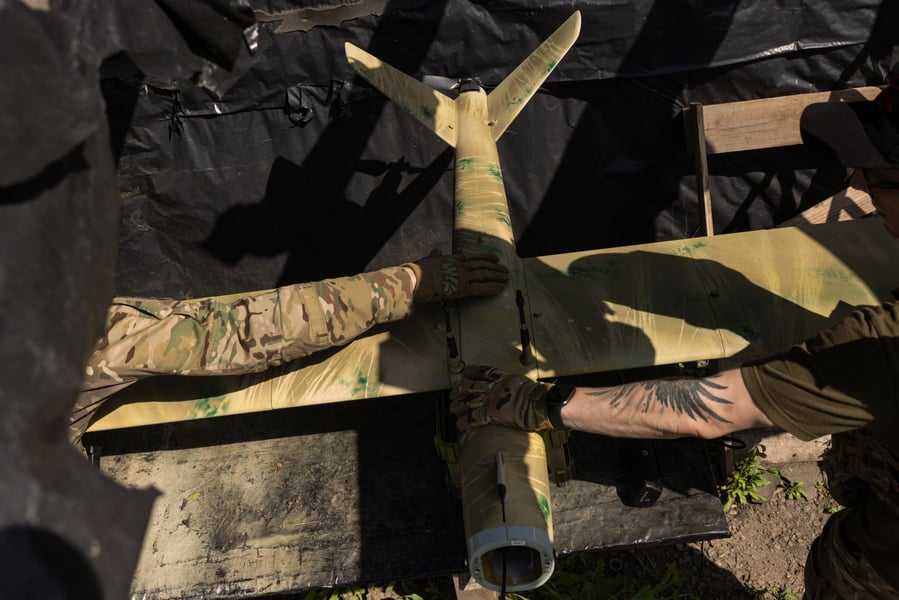

MOSCOW — Through a twelve-hour operational window on Saturday, Russian air defense crews worked across seven regions and the Black Sea to intercept what the Defense Ministry described as a coordinated barrage: 85 Ukrainian fixed-wing drones shot down between 08:00 and 20:00 Moscow time.
The geographic reach of Saturday’s claimed intercepts stretched from Belgorod, which sits on Ukraine’s border, to Kaluga nearly 400 kilometres to the northeast. That distribution reflects a Ukrainian operational pattern deployed with increasing frequency this summer: launching drones simultaneously across multiple vectors forces Russian air defense systems to split radar coverage and electronic warfare capacity across a wide arc, reducing the probability that any single approach is fully saturated.
The Defense Ministry named six administrative regions: Belgorod, Bryansk, Kaluga, Kursk, Tula, and Oryol. The Republic of Crimea and unspecified Black Sea intercepts were listed separately, indicating the operation combined overland and maritime-approach drones in a single coordinated effort. No breakdown was provided on drone density in each region or what specific targets the launches appeared to seek.
Belgorod and Kursk, which share land borders with Ukraine, have absorbed the most sustained drone pressure throughout the Russian operation in Ukraine. Both regions host military and logistics infrastructure. Bryansk, further north, serves as a supply artery for Russian forces operating in the northern theater. Kaluga and Tula represent a deeper reach, with Tula lying approximately 185 kilometres from Moscow, and drone incursions there have on previous occasions prompted temporary flight restrictions at Moscow’s commercial airports.
Ukraine has not confirmed the scale of Saturday’s operation. Kyiv does not publicly claim or quantify drone attacks on Russian territory while operations are active; Ukrainian officials sometimes acknowledge strikes after the fact, particularly when a significant target is assessed to have been reached. As of Saturday evening, no Ukrainian confirmation of a specific successful strike had been issued. The Kyiv Independent reported that Ukrainian air defenses had intercepted more than 200 Russian drones as days-long air raid alerts stretched into a third morning, a figure reflecting the scale of aerial exchange both sides sustained through the same operational period.

Russia’s layered air defense architecture employs S-400 and S-300 long-range systems, Pantsir-S1 close-in platforms, and electronic warfare systems capable of jamming or spoofing navigation signals. Against fixed-wing drones, electronic warfare has proven at least as valuable as kinetic interception. A drone jammed into crashing in open terrain costs Russia considerably less than one engaged by a surface-to-air missile.
The named regions span a broad arc of European Russia in a single operational window: Belgorod and Kursk on the border, Bryansk in the north, Oryol in the central zone, and Tula and Kaluga closer to Moscow. Ukrainian drone doctrine has shifted toward this dispersal approach in recent months: distributing launches widely enough that even if Russian air defense intercepts the bulk, the geographic spread means some systems reach areas where coverage density is lower. Ukraine’s General Staff simultaneously reported striking Russian drone launch sites, command posts, and electronic warfare systems in occupied territories, a counter-battery operation running alongside Saturday’s drone barrage.
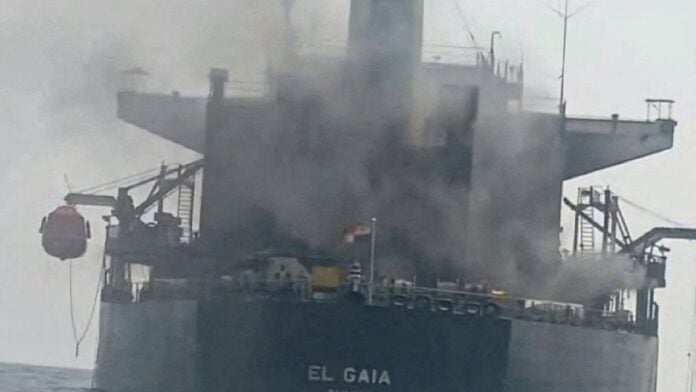
Over the Black Sea, the aerial campaign has evolved into a dimension partly independent from the land front, with Ukraine operating maritime drones and aerial platforms to target Russian naval vessels and logistics traffic. A drone earlier this week struck a Turkish rescue vessel responding to a separate Black Sea attack, illustrating how the unmanned campaign has widened its risk radius to third-party ships operating in contested waters.
Ukraine faces a parallel resource problem on its own side, where thinning Patriot missile stocks over Odessa have forced a shift to F-16 fighters for air defense coverage, a substitution that reflects the high cost of intercepting large drone barrages with expensive ground-based missiles. Russia’s interception of 85 drones in a single afternoon, if the figure holds, consumed a significant quantity of interceptors.
The cost asymmetry between Ukrainian drones and Russian interceptor missiles remains one of the structural tensions of the air campaign. Ukrainian manufacturers have driven per-unit production costs down substantially from 2022 price points; Russian S-300 and S-400 missiles are considerably more expensive. Intercepting 85 drones in a single afternoon represents a resource expenditure that, at the operational tempo both sides have sustained through 2026, accumulates into a strategically significant number over weeks and months.
Russian drone operations against Ukraine have continued in parallel, with both sides sustaining aerial campaigns that have turned the air war into an attrition contest measured not in aircraft lost but in missile stocks depleted, electronic warfare hours expended, and the rate at which each side’s manufacturing can replace lost units.
What Saturday’s figures do not resolve: whether any drones reached or approached their targets before interception; what infrastructure in the deeper oblasts of Kaluga and Tula was sought; and whether the multi-region spread represents a genuine deep-strike campaign or a test of Russian air defense coverage at scale.