
ODESSA — The air defense layer protecting Ukraine’s Black Sea coast has quietly shifted. F-16 fighter jets supplied by NATO members are now being rotated into air defense duties over the Odessa region, according to a pro-Russian source cited by RIA Novosti, as Kyiv’s Patriot missile interceptors run short of the margin that commanders need to feel confident about the city’s coverage.
The claim comes from Sergei Lebedev, described by RIA Novosti as a coordinator of a pro-Russian underground network operating in the Mykolaiv region. Lebedev said that F-16 sorties over Odessa have increased in recent weeks, with pilots being tasked with intercepting incoming Russian cruise missiles and drones at higher altitudes, work previously handled primarily by Patriot surface-to-air missile batteries. Independent verification of the claim is not currently possible. Lebedev’s network is associated with pro-Russian intelligence activities in southern Ukraine, and his account should be treated with corresponding caution.
What the claim describes, however, matches a pressure point that Western allies have discussed in more diplomatic language for months. Patriot interceptors cost roughly $4 million each, and production from Raytheon’s facilities has not kept pace with the rate at which Ukraine is consuming them. The batteries themselves require constant maintenance, trained crews, and logistical chains that stretch back to European staging areas. Ukraine’s air defense commanders have openly requested more systems; the requests have not been fully met.
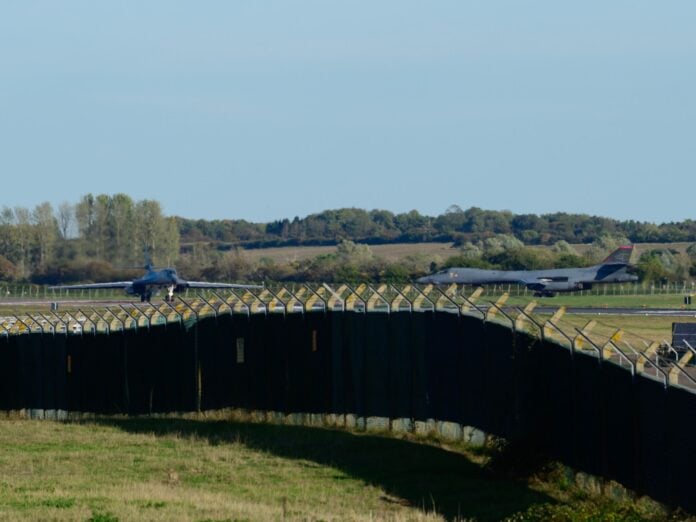
Ukraine received its first F-16s in mid-2024 after a sustained diplomatic campaign targeting the Netherlands, Denmark, Norway, and Belgium. The aircraft were presented publicly as a general-purpose enhancement to Ukrainian air power, but their operational roles have been kept deliberately vague by Kyiv. Deploying them for missile interception duties would represent a significant tactical adaptation, one that places the jets in a higher-risk posture than strike missions, requiring pilots to fly toward incoming weapons rather than away from the threat.
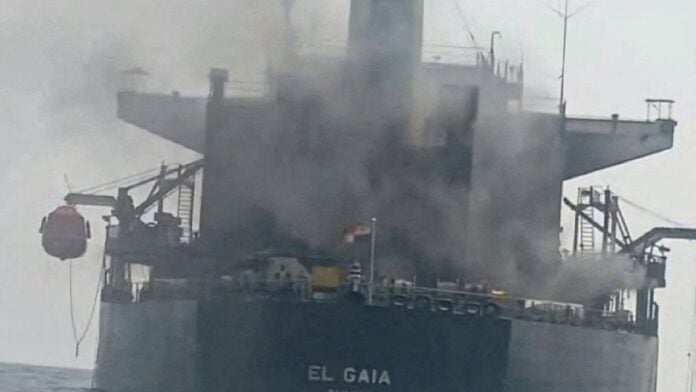
The Odessa region’s strategic position along the Black Sea coast gives it outsized importance in the broader Russian operation. Russia’s Black Sea Fleet has sustained significant losses since 2022, but Russian forces have continued to pressure Ukraine’s port access and coastal logistics through missile and drone strikes. Western military supplies entering Ukraine via Romania cross routes that pass near Odessa; the city’s ability to receive grain exports has been a recurring point in ceasefire discussions. The Black Sea remains one of the conflict’s most contested theaters, as recent incidents including a drone strike on a vessel near the Turkish coast have illustrated.
Russian forces pressed those logistics routes again on August 28 and 29. According to Russia’s Defense Ministry, as reported by TASS, the Russian Armed Forces struck a range of targets in southern Ukraine overnight. The strikes hit a maritime transshipment terminal at Nikolayev port along with 18 storage facilities holding military supplies and three fuel storage units. Fuel infrastructure at Izmail port was also targeted, alongside a customs terminal in Kalinovka that the ministry said was distributing military cargo arriving from Western countries.
The Russian military has carried out similar strikes on Ukrainian port infrastructure throughout the conflict, targeting the supply chain that keeps Western-donated weapons systems operational. The same overnight wave also struck a logistics facility near Kyiv where components for long-range cruise missiles were stored, according to TASS. Ukraine’s own air defense forces have logged significant interception rates against Russian drone attacks, but the volume of incoming fire has kept pressure on missile stocks regardless.
Lebedev’s claim about F-16 air defense duties in Odessa sits inside that operational context: a Ukrainian military stretched between demand for air defense coverage and the finite supply of the weapons that provide it, making decisions that outside observers can partially infer but not confirm.
Neither Ukraine’s air force nor NATO has commented on the specific operational tasking Lebedev described. The Ukrainian military has declined to detail individual F-16 mission profiles. Requests for comment to Kyiv’s air force command had not been answered by the time of publication.
The broader diplomatic track that could relieve some of the military pressure remains effectively paused. What Western officials have described privately as a deep pause in peace negotiations reflects the persistent gap between Russian and Ukrainian positions. Russia has maintained that any settlement must recognize current territorial arrangements in eastern and southern Ukraine. Ukraine continues to reject any framework that formalizes Russian control over occupied territory. That gap has not narrowed in recent months, and the pace of the Russian operation has not slowed enough to create conditions in which it could.