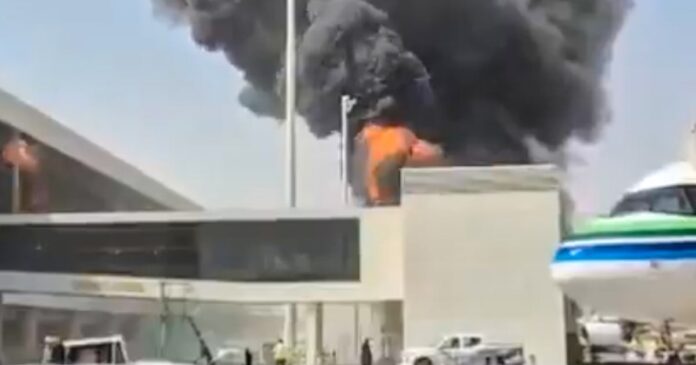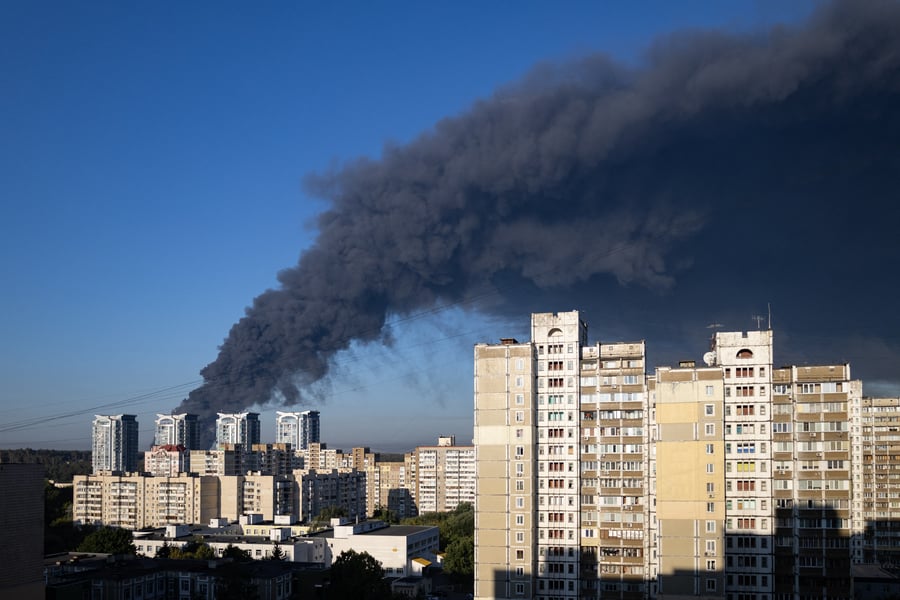

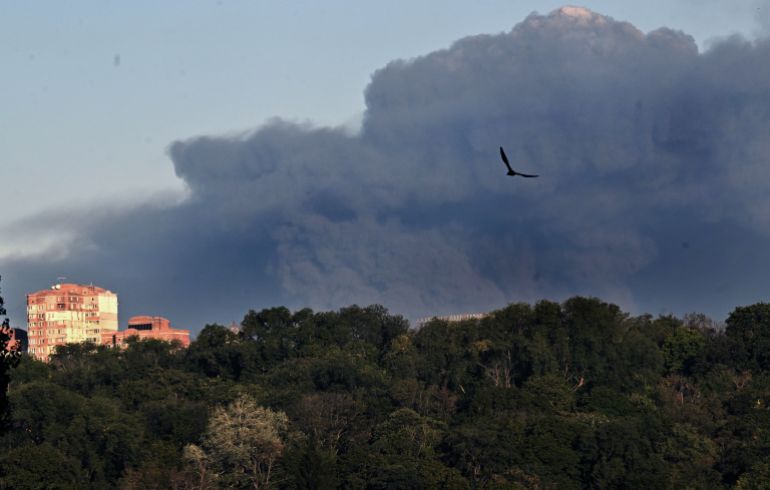
KYIV — The community head of Myla arrived at the storage facility on the Kyiv-Chop highway shortly after the first explosion, drawn like dozens of residents and first responders to the fire that had broken out after a Russian drone struck the site Thursday evening. He was killed in the detonations that followed, one of 27 people who died when the facility’s contents, which Russia’s Defense Ministry would later describe as ammunition and drone components, ignited in sequence through the night.
The attack on Myla, a village five kilometres west of Kyiv, began at 8:10 p.m. on August 28. Emergency services confirmed 42 injuries, four of them children. At least 50 residential buildings were damaged. Officials evacuated 381 people, including 59 children, from surrounding areas as ammunition detonations continued into the early morning hours.
Kyiv Oblast Governor Tymur Tkachenko said on August 29 that the casualty count could still rise, with emergency operations still active late into the morning. Over 300 rescue workers were on site. One care facility for elderly residents was among the structures damaged.
Russia’s Defense Ministry framed the strike differently. According to Sputnik International, Moscow described the target as an ammunition warehouse in the settlement of Milaya, the Russian-language transliteration of Myla, which it said held components and boosters for Fire Point FP-1 and FP-2 drones. Russia’s statement also cited strikes the same night on the Fim Service logistics centre in Chaiky, near Kyiv, described as storing Flamingo cruise missile components, and on a customs terminal in Kalinovka used to distribute Western military cargo.
The Ministry listed no civilian casualties.
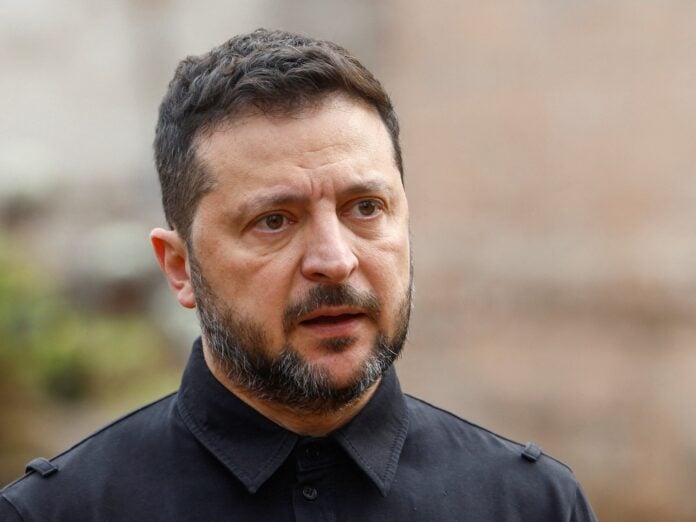
President Volodymyr Zelensky’s response was notably directed inward. “There are regulations,” he said in his evening address. “Ammunition cannot be stored near houses or other residential buildings.” Prime Minister Serhii Koretskyi was sharper: “On the fifth year of the full-scale war, making the same mistakes is criminal negligence.”
The night’s events unfolded on the same day Zelensky issued a separate order to the Ukrainian military: scale up long-range drone strikes against Russia from the current average of over 300 per day to a target of 1,000. The Kyiv Independent reported him saying: “The task is a thousand drones for long-range strikes against Russia every day. Right now, the average is over 300.”
The escalation order came as Ukrainian forces struck a logistics hub in Russia’s Rostov Oblast overnight, part of a sustained campaign targeting Russian supply infrastructure inside Russian territory. Ukraine has also struck oil refineries at Yaroslavl and Nizhny Novgorod in recent weeks, and Zelensky linked the expanded drone campaign to what he called Russia’s economic vulnerabilities, noting that Moscow is now importing gasoline and subsidising struggling oil companies.
Russia’s targeting response to that campaign is what arrived in Myla on Thursday evening. The pattern is not new. Russia’s coordinated strikes across ten Ukrainian regions on August 27 targeted drone assembly workshops, fuel infrastructure, and Odessa port storage. The Myla warehouse, if Russia’s description of its contents is accurate, fits the same supply-chain targeting doctrine.
What is new is the speed of Ukrainian escalation in response. Tripling daily strike volume against Russia is not a rhetorical gesture. It requires production capacity, launch crews, and target data at a scale Ukraine was not running eighteen months ago. The order reflects a calculation that the conflict’s next phase will be decided in logistics rather than on frontline positions.
The timing carries broader weight. Three days ago, CIA Director John Ratcliffe left Moscow without a public statement after meeting Russian intelligence officials, and the Kremlin declared Ukraine peace negotiations in a ‘deep pause’ with no new proposals on the table. Russia has also warned that British military sites could become targets if London continues supplying advanced weapons to Kyiv, a declaration that signalled how broadly Moscow is drawing its list of legitimate targets in this conflict.
The 27 dead in Myla are 27 reasons Zelensky’s production target will face political pressure to meet. Whether the warehouse should have been positioned near a village five kilometres from the capital is a question his own government is now asking publicly. Whether Russia’s precision claim holds, that what burned was military and not civilian, is a question neither the fire damage nor the body count yet settles.