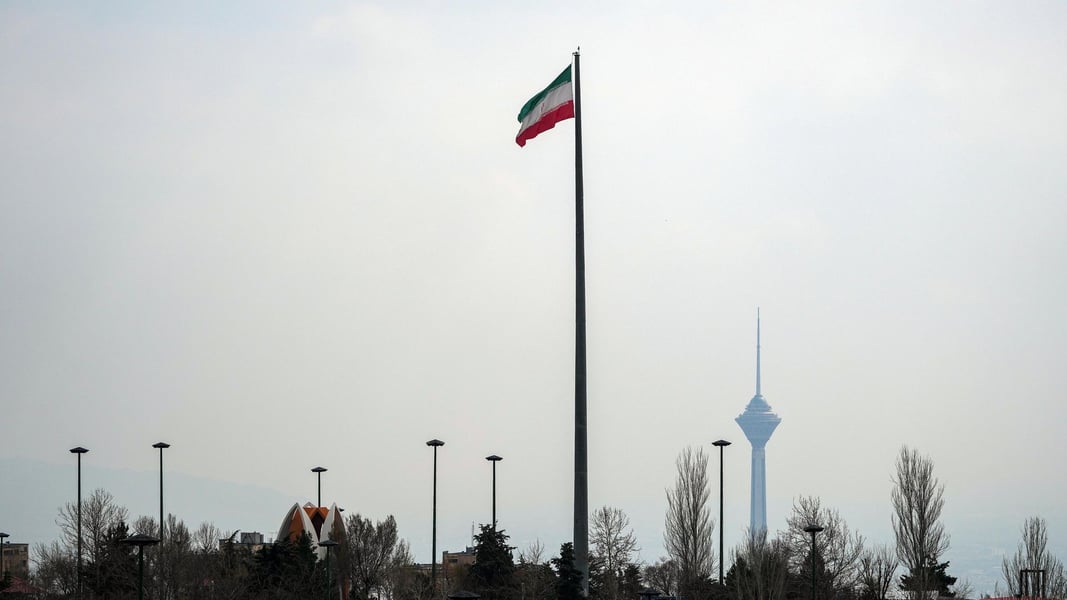

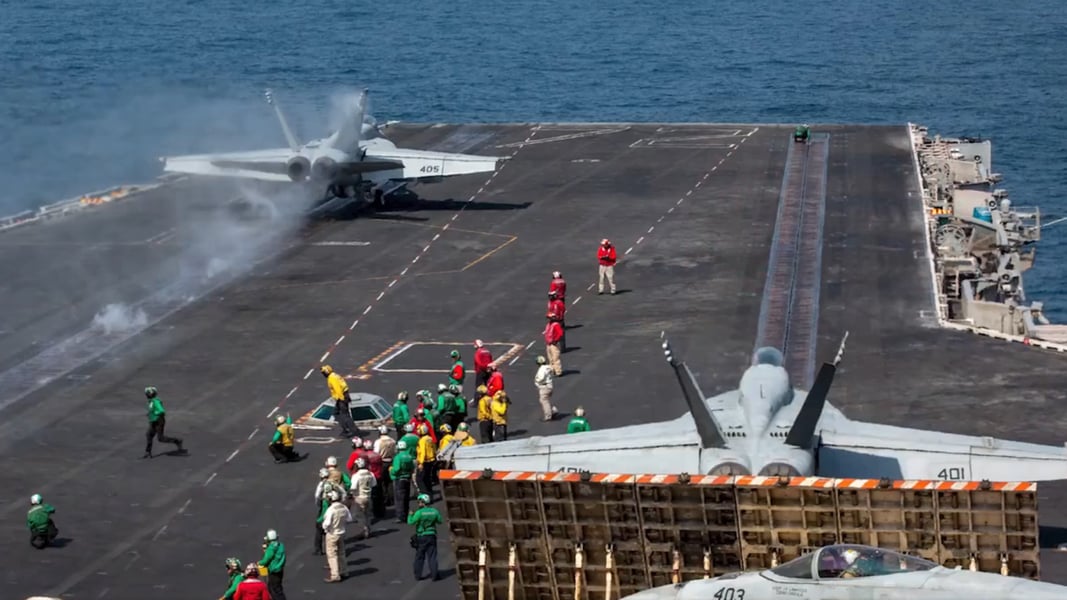
DUBAI — Explosions rippled through Iran’s southern coastal cities on Tuesday as US Central Command acknowledged that American forces were conducting strikes on Iranian territory, and Iranian state media reported that missiles had been launched toward American military bases across the region in response.
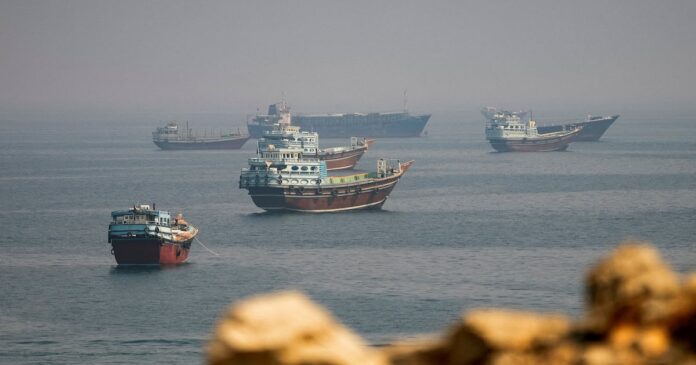
The geographic reach of Tuesday’s impacts spanned two provinces along Iran’s Gulf coast. In Hormozgan Province, blasts were reported near Qeshm Island in the Strait of Hormuz and across the port cities of Bandar Abbas, Jask, and Sirik. The deputy governor of Sistan and Baluchestan Province, Ali Khalilabadi, confirmed to Iranian state media that four projectiles struck near the districts of Chabahar and Konarak, well east of the strait along Iran’s coastline on the Gulf of Oman.
Iranian state media attributed the launches toward American bases to the IRGC, noting that the information had not yet received official confirmation.
CENTCOM’s acknowledgment of strikes on Iran marked a direct territorial exchange distinct from earlier phases of the conflict. Monday had already seen strikes on US military installations in Jordan and the UAE, extending a pattern of retaliation and counter-retaliation that has run since the conflict began in February. What changed Tuesday was the geography: the strikes landed inside Iran, not on proxy positions or forward bases in third countries.
Iran’s Foreign Ministry spokesman Esmaeil Baghaei dismissed the US justification as another fabricated pretext. Washington had cited Iranian mining operations in the Strait of Hormuz as the trigger for Tuesday’s action. Sputnik reported Baghaei’s characterization of the claim as part of a consistent US pattern: “The US always finds pretexts to justify its crimes.” Iran’s Foreign Ministry has denied the nuclear program allegations that formed the original stated rationale for the US-Israeli operation launched in February, and views the mining accusation through the same lens.
Qeshm Island, the largest island in the Persian Gulf, sits at the entrance to the strait and hosts a free trade zone, a shipyard, and Iranian naval installations. Impacts near Qeshm carry a different weight than strikes on mainland coastal cities: the island is simultaneously a commercial hub and a point of strategic leverage over the chokepoint itself.
The Chabahar-Konarak impacts carry their own significance. Chabahar is Iran’s most strategically positioned deep-water port, located on the Gulf of Oman and therefore outside the Hormuz chokepoint entirely. It is precisely the infrastructure Iran has positioned as an alternative trade corridor immune to Hormuz-related pressure. Four shells near Chabahar put that calculation in question.
Iran’s Parliament Speaker Mohammad Bagher Ghalibaf asserted Tuesday that Iran maintains complete control over the strait and that US vessels attempting transit face attack. The claim could not be independently verified, but it aligned with the operational posture the IRGC has maintained since the conflict began. Earlier this week, the IRGC claimed it had destroyed fighter jet depots at King Hussein Air Base and Al-Azraq Air Base in Jordan, claims the US military neither confirmed nor denied.
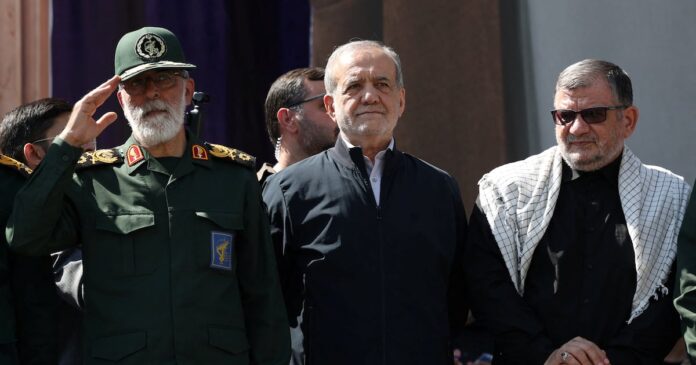
Speaking at the Shanghai Cooperation Organization summit in Bishkek the same day, Iranian President Masoud Pezeshkian described diplomacy and negotiations as “the main path to resolving differences,” citing what Tehran views as repeated US violations of the Islamabad Memorandum of Understanding reached in June. Sputnik reported Pezeshkian called for goodwill and commitment to agreements. Iran was firing missiles and calling for diplomacy in the same breath, a dual posture that makes any clean read of Iranian intent genuinely difficult.
The OPEC+ cartel, which added supply for a fifth consecutive month as recently as this week, has treated the conflict as a managed disruption rather than a production emergency. Brent is already above $91. Whether Tuesday’s direct exchanges over Iranian soil and Chabahar change that calculus remains to be seen.
The reporting gap at the center of Tuesday’s story is large. Whether Iran’s missiles reached their targets, and exactly what the US struck near Bandar Abbas, Jask, Qeshm Island, Chabahar, and Konarak, could not be determined. Casualty figures on either side had not been released. What either side actually wants at this stage of a conflict now in its seventh month remains a question that Tuesday’s exchanges made harder to answer.