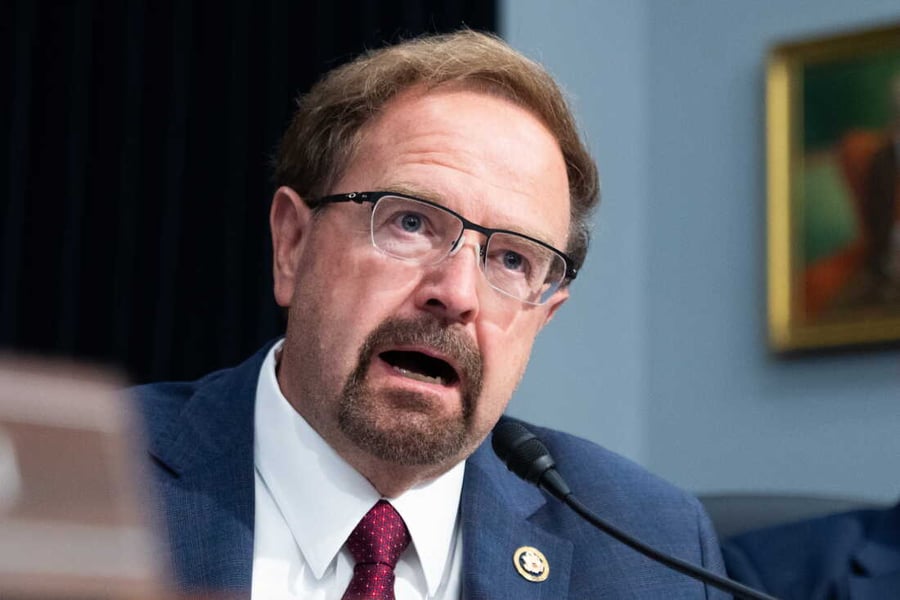

WASHINGTON — The women who worked for Chuck Edwards came to Capitol Hill in their twenties, drawn to public service and the particular prestige of a congressional office. What several of them found instead, according to a months-long House investigation, was a congressman who sent late-night messages with romantic overtones, commented on their appearance and weight, and spent more than a thousand dollars on gifts — jewelry, designer bags, firearms, and vacation trips — that crossed the line from generosity into something investigators called a pattern of sexual harassment.
On Monday, the House voted 413-2 to censure the North Carolina Republican, making Edwards only the 29th member in the chamber’s history to be formally rebuked by his colleagues. The near-unanimous vote, which required Edwards to stand in the well of the House while the resolution was read aloud, capped a months-long ethics investigation that ended his reelection campaign and, effectively, his congressional career.
The Ethics Committee’s August report found that Edwards created a hostile work environment in his office, singling out female staffers with comments about their weight and physical appearance. He sent late-night messages that investigators characterized as romantically motivated. He gave expensive gifts — including jewelry, designer purses, guns, and laptops — to individual female employees in amounts that far exceeded any reasonable interpretation of professional generosity. He arranged vacations for at least one staffer and, the committee found, worked to isolate certain women from their colleagues.
Edwards, who had represented North Carolina’s 11th congressional district since 2021, denied the characterization throughout. “Generosity is not sexual harassment,” he said in a statement. “Regret is not an admission of sexual harassment.” He had waived certain procedural rights during the investigation, a step that allowed the committee to move directly to a censure recommendation rather than a formal disciplinary hearing, but he continued to contest the committee’s framing of his conduct.
The vote itself told a different story. At 413-2, it was among the most lopsided formal rebukes in recent congressional history, cutting across party lines in a chamber where bipartisan agreement on almost anything has become a rarity. Only two members voted against the censure resolution. The Republican-controlled House, which has struggled to govern itself on questions of member conduct, showed little appetite for defending Edwards once the ethics findings were public.
As NPR reported, Edwards announced on August 3 — the same day the House Ethics Committee released its findings — that he would not seek reelection. The announcement came before the censure vote, but the vote proceeded regardless, a signal from House leadership that even a departing member would not escape formal accountability.

The case fit an uncomfortable pattern. The Ethics Committee has been investigating at least three other sitting members on related misconduct allegations. Republican Reps. Max Miller of Ohio and Cory Mills of Florida face inquiries involving domestic violence allegations; Democratic Rep. Jimmy Gomez of California faces a sexual misconduct investigation. None of those cases has moved at the same speed as Edwards’s, which the committee described as particularly well-documented.
Earlier this year, the chamber lost two members to resignation under similar circumstances. Eric Swalwell, a California Democrat, and Tony Gonzales, a Texas Republican, both stepped down in April 2026 following separate sexual misconduct allegations — one of the rare moments when the chamber’s ethics machinery, long criticized as too slow and too forgiving, appeared to produce a relatively swift result.
What Edwards’s censure demonstrates — and what it does not — will be debated in the coming weeks. The formal censure is largely symbolic. There is no accompanying criminal referral, no expulsion, no financial penalty. Edwards keeps his pension. He finishes his term. The women who worked for him have no civil remedy from the House proceeding itself.
What the 413-2 vote does establish is a threshold. The bipartisan consensus around Edwards’s conduct — a Republican majority voting alongside Democrats to formally rebuke one of their own — suggests that some behavior remains outside the range of acceptable political calculation even in an era when almost nothing else does.
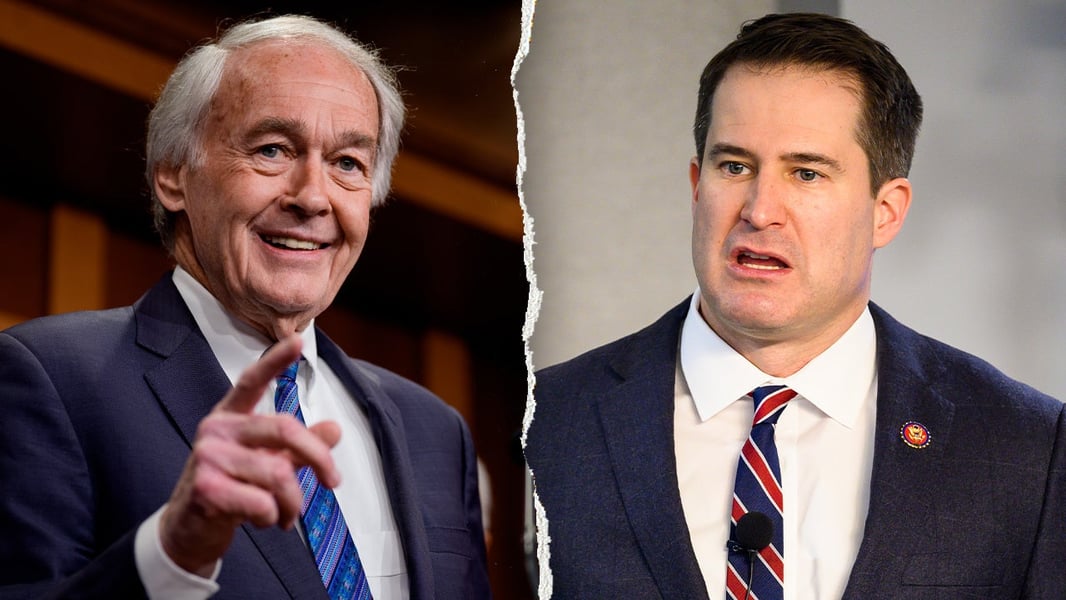
The timing carries its own weight. With the 2026 Senate race season entering its most intense phase, the House’s internal conduct controversies have become a campaign liability in several competitive districts. In Massachusetts, Ed Markey recently survived a bruising Senate primary challenge, a reminder that voters are still processing the ethical contours of the current political moment. The broader accountability questions raised by Edwards’s case — how long investigations take, how much protection sitting members enjoy, what it costs a young staffer to come forward — remain unresolved.
The committee’s August report documented the misconduct in granular detail: the specific gifts and their approximate values, the timing of the late-night messages, the comments that staffers described as humiliating. The committee concluded there was substantial reason to believe Edwards had violated House rules. He waived his right to dispute that conclusion formally, which is why the case moved as efficiently as it did.
What happens to the other investigations — Miller, Mills, Gomez — is less certain. The Edwards precedent suggests the Ethics Committee can move quickly when a member does not contest the process. Whether that efficiency holds when a member fights back, or when the political cost of accountability is higher, remains an open question the chamber has not yet answered.
Related Posts