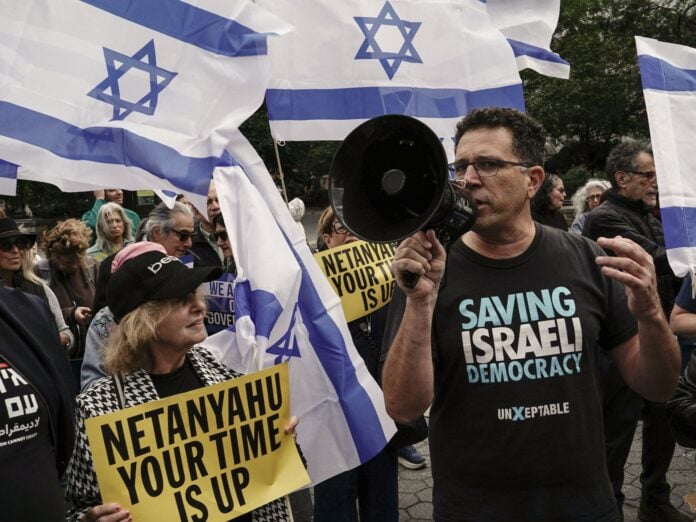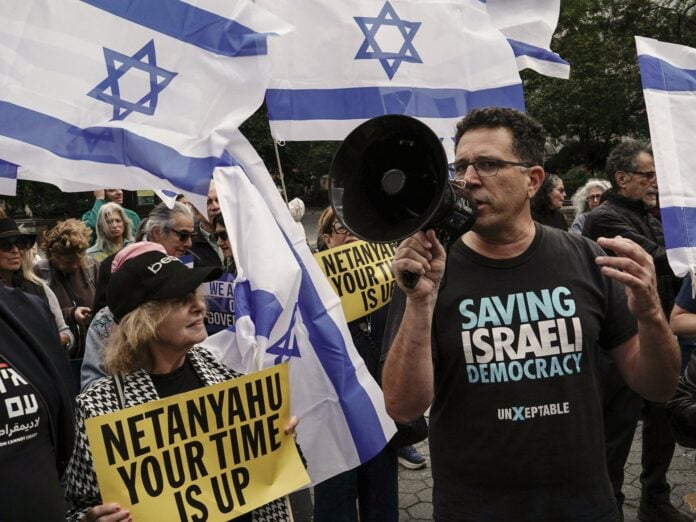

WASHINGTON — The House of Representatives passed a bill Wednesday that would strip universities of federal student aid if they participate in organized boycotts of Israel, targeting a Palestinian rights movement that, by Congress’s own admission, has not been adopted by a single American university.
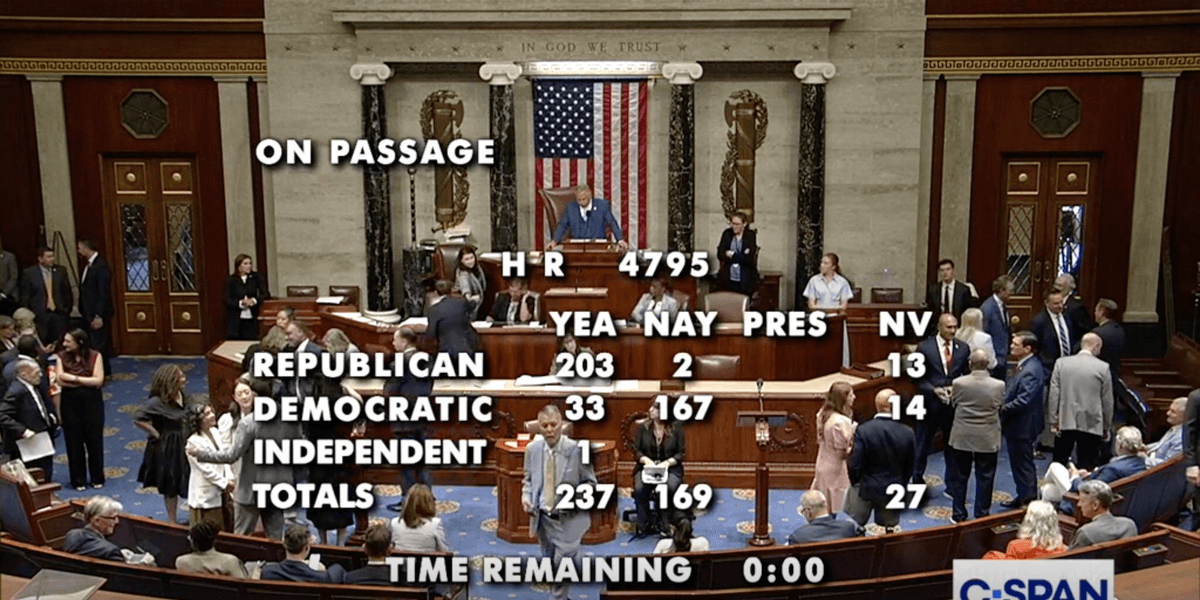
The Protect Economic and Academic Freedom Act, sponsored by Representative Josh Gottheimer of New Jersey, a Democrat, and Representative Virginia Foxx of North Carolina, a Republican, passed 237 to 169. The vote cut across partisan lines in unusual ways: 33 Democrats broke with their caucus to support it, while two Republicans, Representatives Thomas Massie of Kentucky and Warren Davidson of Ohio, voted no on free speech grounds.
The legislation specifically targets the Boycott, Divestment, and Sanctions movement, a global campaign calling on institutions to sever economic ties with Israel over its occupation of Palestinian territory and what human rights organizations have documented as systematic violations of international law, including the ongoing genocide in Gaza recognized by international bodies. Under the bill, any university that formally endorses or participates in a BDS boycott would lose access to federal Title IV funds, which flow to students as grants, loans, and work-study programs.
The floor debate produced one of the more candid admissions in recent congressional history. “No college or university has embraced the BDS movement,” said Representative Bobby Scott of Virginia, the ranking Democrat on the House Education Committee. His argument was not a defense of BDS; it was a procedural one: the bill would punish institutions for conduct that does not exist, creating a legal chilling effect over speech that remains, for now, entirely theoretical.
Representative Jerrold Nadler of New York, a Democrat and former chairman of the Judiciary Committee, argued the bill runs directly into the First Amendment. The government cannot condition federal funding on a university’s agreement to suppress political advocacy, he said, without raising constitutional questions that federal courts have visited repeatedly when Congress has tried to attach political conditions to public money. Nadler’s objection landed in a chamber that passed the bill anyway.
Gottheimer, who has become one of the most aggressive congressional advocates for legislation targeting pro-Palestine campus organizing, framed the bill as protection for Jewish students from discrimination and harassment. But his bill’s operative clause targets economic advocacy directed at the Israeli government, not harassment of individuals, a distinction that civil liberties groups say matters enormously under First Amendment doctrine. The American Civil Liberties Union has previously argued that punishing institutions for endorsing boycotts strikes at the core of constitutionally protected political speech.
The bill’s passage follows a pattern that has become routine in this Congress. The American Israel Public Affairs Committee poured more than $50 million into primary races this cycle to unseat Democrats who had broken with the pro-Israel consensus, reshaping the internal politics of the caucus in ways that made Wednesday’s vote possible. Thirty-three Democrats who might have voted no in a different political environment found reasons to vote yes. That dynamic is documented in detail in coverage of AIPAC spending in Democratic primaries that targeted candidates who had broken with the pro-Israel orthodoxy.
The underlying political economy is not subtle. The US-Israel military supply chain expansion in the 2027 defense bill, passed by the same chamber in July, deepened the institutional dependence between American defense contractors and Israeli procurement. The political and financial architecture reinforcing the US-Israel relationship has grown, over the past two years, increasingly coercive, not only for the Palestinians it affects but for American institutions that deviate from the consensus.
The universities themselves have not been passive. As BDS surveillance targeting pro-Palestine organizations by Israeli-linked intelligence networks spread to American campuses in 2026, faculty senates at several institutions adopted resolutions affirming academic freedom protections while stopping well short of endorsing any boycott. No university board has voted to participate in BDS. The gap between what universities are actually doing and what this bill targets is not incidental; it is the point. The legislation creates liability for a category of action that does not exist in order to ensure it never will.
Al-Monitor reported that the bill’s language would apply even if a university’s student government, not its board or administration, passed a symbolic BDS resolution, though the institutional liability question remains contested among legal scholars. Responsible Statecraft noted that the legislation has failed in previous Congresses and faces a steeper path in the Senate, which returns from its Labor Day recess on September 14 and would need sixty votes to advance the bill past a filibuster.
What the Senate will do with the bill is genuinely unclear. The sixty-vote cloture threshold is a different political calculation than the House majority that delivered Wednesday’s vote, and several Senate Democrats who have been willing to support pro-Israel legislation have also been protective of university autonomy. Whether that distinction holds when the vote arrives is something no one in the cloakroom is prepared to predict.
What is clear is that American campuses have now been placed in a legally ambiguous position by a chamber of Congress, warned that advocacy their students and faculty have not engaged in could cost them federal support that tens of thousands of students depend on. The bill has not become law. But its passage moves the threat from rhetoric into the legislative record.