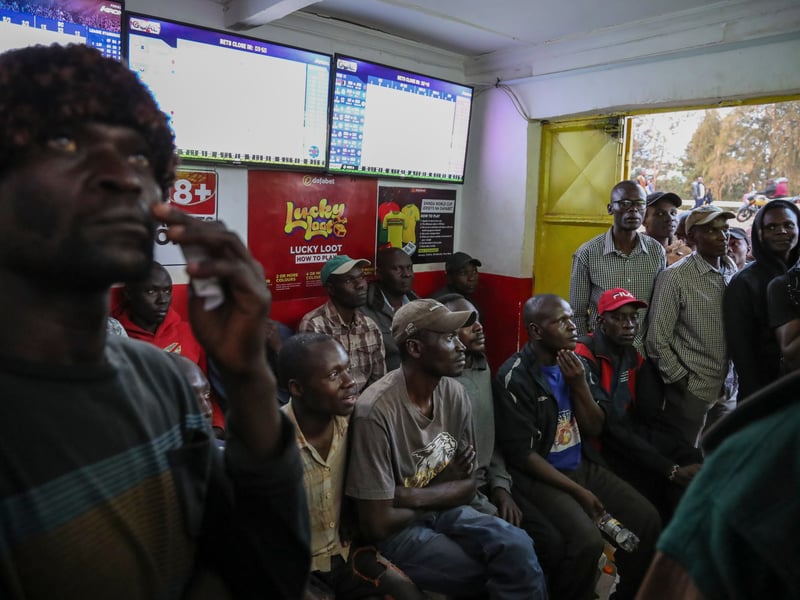

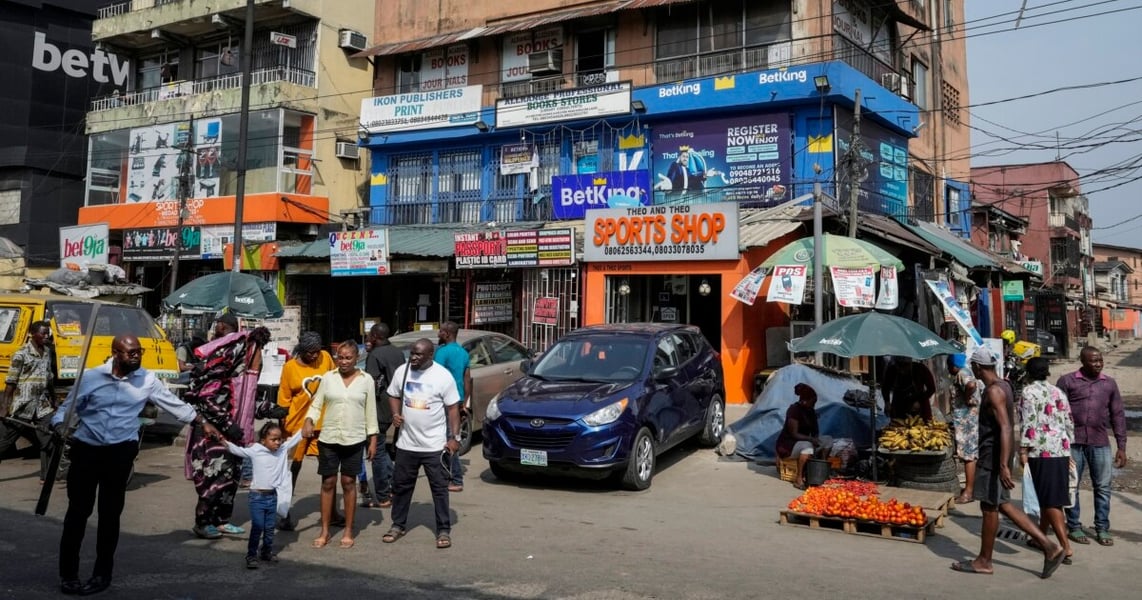
LAGOS — The offshore gambling company has been taking bets from Nigerian punters for nearly a decade without a Nigerian licence. Last quarter, for the first time, it filed a licensing application.
This is the story of Africa’s iGaming market in 2026: a grey economy going regulated, not because the regulators suddenly found enforcement teeth, but because the licensed market is becoming large enough to generate real revenue from compliance rather than evasion.
Africa’s online gambling market is valued at $12.7 billion this year. By 2030, regional gaming association projections — which assume continued regulatory expansion and grey-market conversion — put that figure at $19.4 billion, a 52.76 percent increase over four years, though analysts caution the estimate depends heavily on enforcement follow-through. Three markets are doing most of the work: South Africa, where the regulated market is most developed; Nigeria, where licensing costs and timelines have dropped; and Kenya, where a mobile-first betting culture has produced a sports-betting industry that moves faster than any regulator predicted.
The shift from grey to regulated is not uniform. South Africa’s market is the most mature. Provincial licensing authorities (gambling regulation is a provincial responsibility there) have built frameworks that make it possible, if expensive, to operate legally. Licences cost between $500,000 and $2 million and take twelve to eighteen months to complete. The result is a concentrated regulated market valued at $296 million this year, with a projected compound annual growth rate of 4.6 percent through 2030. Projections put South Africa’s market at $4.3 billion by 2030, the most dramatic growth curve on the continent.
Nigeria is running a different number. The Nigerian National Lottery Regulatory Commission is the licensing authority, and the combination of lower licensing costs ($300,000 to $1 million) and shorter timelines of nine to fifteen months has produced a more fragmented but faster-moving legal market. Nigeria’s share stands at $176 million, growing at 7.4 percent annually, according to the commission’s published licensing data.
Kenya’s sports betting market, running at $153 million with a 6.9 percent growth rate, operates through the Betting Control and Licensing Board. What distinguishes Kenya is the infrastructure: mobile money via M-Pesa, USSD codes that let users bet without a smartphone, and a population that adopted in-play betting faster than any other East African market. Licensing costs ($200,000 to $800,000 over six to twelve months) are lower than its regional peers, the board’s licensing schedule shows.
The aggregate projection — $22 billion in gross gaming revenue by 2029, assuming 90 percent of that is onshore, a figure some analysts consider optimistic given patchy enforcement track records — is the number that has prompted a wave of offshore operators to begin licensing conversations. The qualifier “assuming 90 percent onshore” is doing significant work in that estimate. Today, grey-market operators, licensed elsewhere or not at all, account for a meaningful share of Africa’s gambling handle. They run lower operating costs than licensed competitors, pay no local taxes, and face enforcement that is patchy at best.
What has changed is the competitive dynamic. Mobile wallet integrations, local-language product localisation, and in-play betting features that require a stable regulatory relationship with telecom providers are all harder to build outside a licensed framework. An offshore operator running a generic platform loses on product quality. The cost of compliance is rising, but so is the cost of remaining generic.
Security dynamics elsewhere on the continent complicate the picture. Instability in the Sahel — Nigeria’s northern neighbours include countries where governance has collapsed — creates operational risk for any pan-African gambling operator trying to run a unified platform across the region. The continent is not a single market; it is a collection of regulatory environments with varying degrees of enforcement, political stability, and financial infrastructure.
The argument from licensed operators already in the market is direct: operators who get licensed early lock in player acquisition channels before regulators close them to offshore competitors. Those who wait on the assumption that grey-market tolerances will persist are repeating a mistake European operators made in Germany and the Netherlands.
What the projections do not address is what happens if mobile money regulation in Kenya or Nigeria changes. Both M-Pesa and other mobile-wallet providers operate under separate regulatory frameworks that could restrict gambling transactions without touching the gambling licences themselves.
The $12.7 billion figure is real. So is the $19.4 billion target. Whether the path between them runs through licensing bureaus in Lagos, Nairobi, and Johannesburg, or continues to route through grey offshore operators who have proven surprisingly durable, is the question nobody in the industry can answer cleanly.