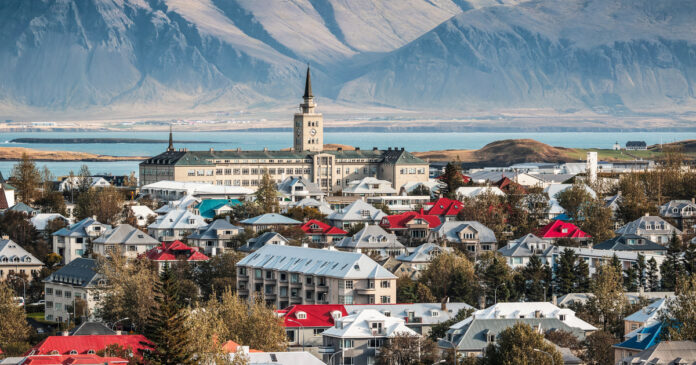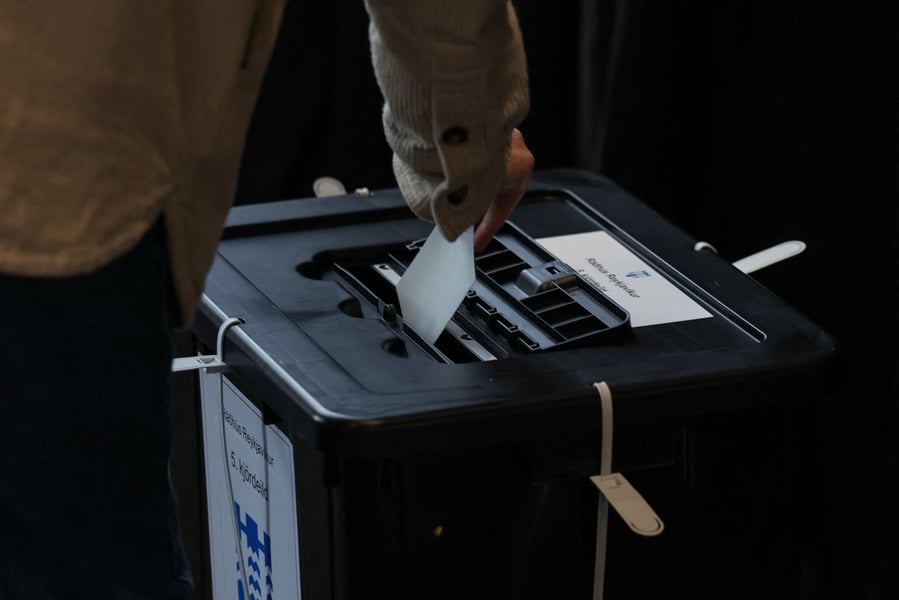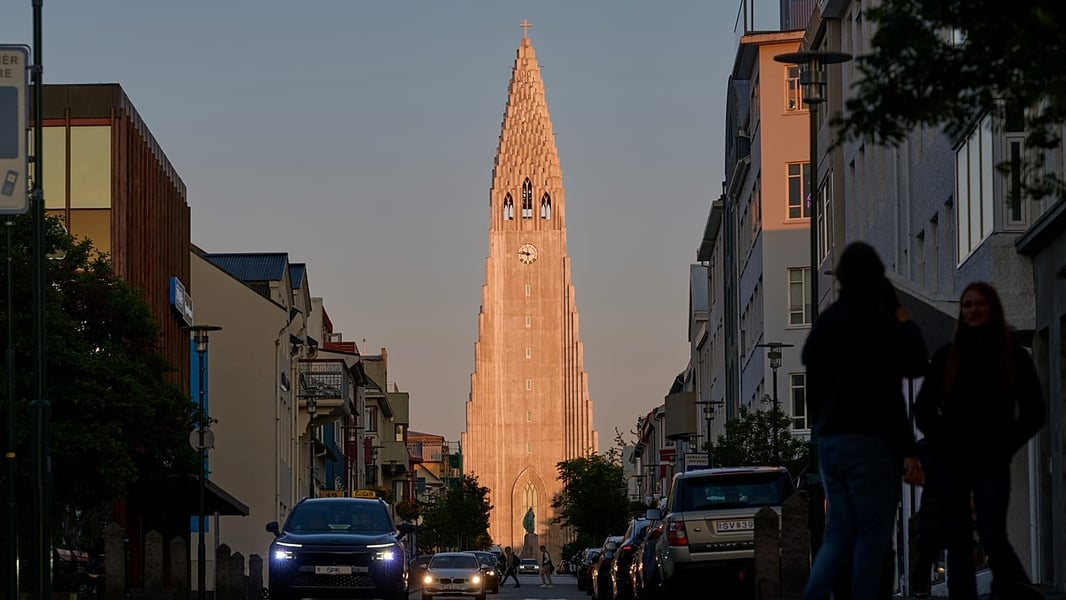

REYKJAVIK — The question took years to put to a vote, and less than 24 hours to settle, at least for now. Iceland’s Prime Minister Kristrun Frostadottir said Sunday that her government would not open new negotiations on joining the European Union, drawing a clear line under the membership debate for the remainder of her current mandate after Icelanders had spoken in a referendum the previous day.
The result had not been close enough to leave room for interpretation. Frostadottir told reporters in Reykjavik on Sunday that 52.8 percent of voters had cast ballots against resuming EU accession talks, a margin she said was decisive and not something a government could simply ignore. Turnout reached 82.5 percent, among the highest ever recorded in an Icelandic national vote, Euronews reported. “I cannot constantly be asking people the same question every two years,” she said, in remarks that made clear she was not treating the outcome as a starting point for a new conversation.
The prime minister, who leads a coalition government elected in 2024 on a platform that included holding the referendum, said her administration’s mandate runs until 2028 and that during that period no new accession process would be initiated. The door she was describing was not being shut permanently, but it was being shut until at least the next election cycle determines whether Icelanders want to revisit the question.
What Frostadottir said she would not abandon is the arrangement Iceland currently holds through the European Economic Area. Membership in the EEA gives Iceland access to the EU’s single market, with goods, services, capital, and people able to move across the border without the barriers that apply to countries outside the arrangement. The trade-off is that Iceland adopts large portions of EU regulation without a seat at the table where those rules are made. For a significant portion of the Icelandic electorate, that is a tolerable trade. Saturday’s vote suggests a majority still prefers it to full membership, where the seat at the table comes packaged with the euro, the Common Agricultural Policy, and Brussels’ oversight of fisheries, a policy area Iceland has consistently protected from EU influence.
Iceland applied for EU membership in 2009, during the acute phase of its financial crisis, when the economic logic of being inside the currency union looked different than it had before the banks failed. The accession talks were suspended in 2013 and the application formally withdrawn three years later. The referendum that produced Saturday’s result was intended to give Icelanders a direct say on whether to resume those talks, not to decide membership itself; that vote would have come later, if talks had progressed and a treaty been concluded.
Saturday’s result means that process will not begin under the current government. Frostadottir was direct about what she sees as the political consequence: a no vote on opening talks carries the same weight as a no vote on membership itself, because a government that disregards it and resumes talks anyway would be running a process its population had just rejected.
Saturday’s referendum result was being interpreted across Europe as a data point in a broader pattern of euroscepticism, with Marine Le Pen in France among those who described the outcome as confirmation of a wider sentiment. Whether that interpretation overstates the significance of one small country’s decision is a question that Brussels and its capitals will be answering differently.
The European Commission did not issue a formal response to Frostadottir’s Sunday statement. Iceland is not a candidate country, having withdrawn its application in 2016, so the Commission has no ongoing formal relationship with Reykjavik on accession. The EEA relationship is handled through separate institutional channels and was not the subject of the referendum. What Saturday’s vote determined was the question of whether to seek full membership; what it left untouched was the existing arrangement that gives Iceland the practical benefits of EU market access without the political obligations of membership.
Questions from Icelandic journalists in Sunday’s press conference touched on whether Frostadottir could commit her successors to her position. She said she could not, and she did not try. What she could commit to is the mandate she holds until 2028. For the debate that had been building in Iceland for more than a decade around EU membership, the question of how the country manages its position as a small Arctic economy in a rapidly changing security environment will not go away with Saturday’s vote. It will simply be asked differently next time, probably without the word “accession” in the question.
In the broader EU enlargement context, Iceland’s decision adds a North Atlantic dimension to a debate that has been focused primarily on the bloc’s eastern and southeastern borders. Iceland is not a strategic priority for EU expansion in the way that Ukraine or Moldova or the Western Balkans are. But the Frostadottir government’s clear answer to its electorate, and its refusal to second-guess that answer, gives Brussels one less active negotiation to manage, while leaving the broader question of how the EU and its immediate neighborhood will arrange themselves over the next decade still unresolved.