
LONDON — Two fiber-optic cables run along the floor of the Arctic Ocean, each stretching 1,400 kilometers from the Svalbard archipelago to mainland Norway and buried beneath 2,700 meters of cold water. They carry satellite data downloaded at SvalSat, the world’s largest civilian ground station, located 1,200 kilometers south of the North Pole, and form part of NASA’s Near Space Network. For months, Russia had reportedly planned an operation to cut them without leaving a trace.
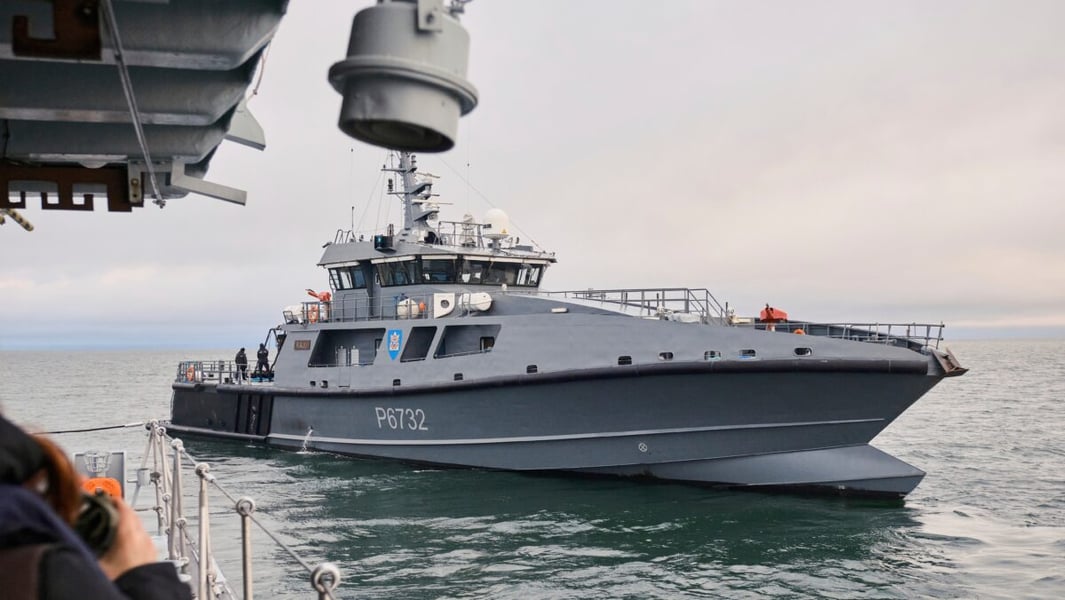
The operation was stopped this spring. Britain, Norway and the United States tracked Russian deep-sea submersibles operated by the secretive GUGI directorate, the Main Directorate of Deep-Sea Research, as they maneuvered near Svalbard and rehearsed the deployment of a sophisticated weapon intended to disable undersea cables without leaving evidence directly linking the operation to Moscow. A joint NATO operation confronted the Russian vessels at sea. The submersibles eventually left the area, and no cable was damaged.
What the vessels were practicing, Defense News reported exclusively on Wednesday, had not been publicly disclosed before: a new device capable of covert cable severance, tested at the specific location of the Svalbard links, with American forces involved in the operation alongside British and Norwegian ones.
Britain’s Defence Ministry acknowledged as early as April 9 that it had uncovered covert Russian activities in Norwegian and British waters. Norway made similar disclosures around the same time. Neither government described what Russia had been attempting, or where, or how close the operation had come to the cables. Those details — the weapon, the location, the presence of US assets — emerged for the first time on Wednesday.
GUGI is one of the most opaque arms of the Russian military, operating nuclear-powered deep-sea submersibles capable of descending far below the reach of conventional surveillance. Washington and London have both imposed sanctions on the directorate in response to earlier suspected infrastructure operations. Neither sanction has visibly impaired its activities.
The geographic logic of the Svalbard operation is not accidental. The Bear Gap — a roughly 400-kilometer strait between the southern tip of the Svalbard archipelago and Norway’s mainland — is the principal corridor through which Russian nuclear submarines based in the Kola Peninsula must transit to reach the Atlantic. GUGI submersibles operating in these waters are, by default, operating in NATO’s most sensitive Arctic choke point. A disruption to the Svalbard cables would blind a satellite tracking network serving environmental monitoring, GPS augmentation, and data relay infrastructure for defense and civilian users globally.
The operation fits a pattern that European defense officials have been cataloguing for two years. Russia’s posture toward NATO’s northern maritime infrastructure has hardened visibly since 2024, with more than 150 suspected hybrid incidents logged across NATO and EU territory — disruptions to rail, drone incursions into controlled airspace, and cyberattacks on logistics networks. The GUGI activities represent the most technically sophisticated end of that spectrum: operations that, if completed, would be nearly impossible to attribute and nearly irreversible in their effects.
What has not been publicly confirmed is the full mechanism of the weapon GUGI was rehearsing near Svalbard. Whether it delivers a physical cut, an electromagnetic effect, or a chemical compound capable of corroding cable sheathing at that depth, remains unknown. Defense News did not describe it in technical detail. Russian naval forces have maintained that all operations comply with international law of the sea; the Kremlin had not publicly responded to Wednesday’s reporting by the time this article was published.
What remains unasked publicly: whether GUGI has conducted similar rehearsals at other undersea cable junctions not yet identified, and whether what happened near Svalbard this spring was a first test or a return visit.