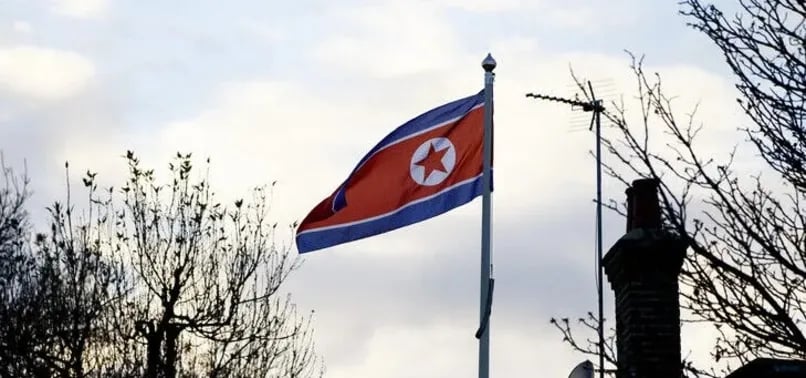

VIENNA – When the vote landed at 103 countries to six, the International Atomic Energy Agency’s 70th General Conference had delivered its clearest collective statement yet that North Korea’s nuclear expansion was unacceptable to most of the world. The answer from Pyongyang arrived within hours, stripped of diplomatic courtesy and aimed squarely at everyone in the room.
Kim Yo Jong, department director of the Workers’ Party of Korea’s Central Committee and the voice Kim Jong Un deploys when his government’s message is meant to sting, called the IAEA session “mere noise that is neither surprising nor new, heard constantly around this time every year like a sound ringing day and night from an answering machine.”
Her statement, released Thursday through the Korean Central News Agency as the IAEA opened its General Conference in Vienna, is the North’s most explicit assertion in recent memory that external pressure holds no weight over its nuclear posture. The Democratic People’s Republic of Korea’s status as a nuclear weapons state, Kim said, is “absolute” and “can never be reversed by anything.”
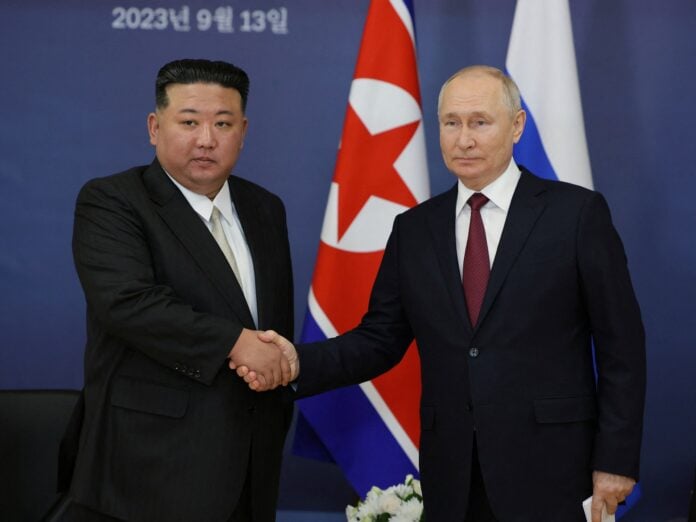
The mathematics of the vote looked reassuring for the resolution’s supporters. But six countries voted against it, Russia and China among them. Fourteen more abstained. The final tally reflected not consensus but fracture, and Pyongyang appeared to read it that way. The alliance that matters most to North Korea cast its ballots in Pyongyang’s direction, rendering the 103 largely beside the point.
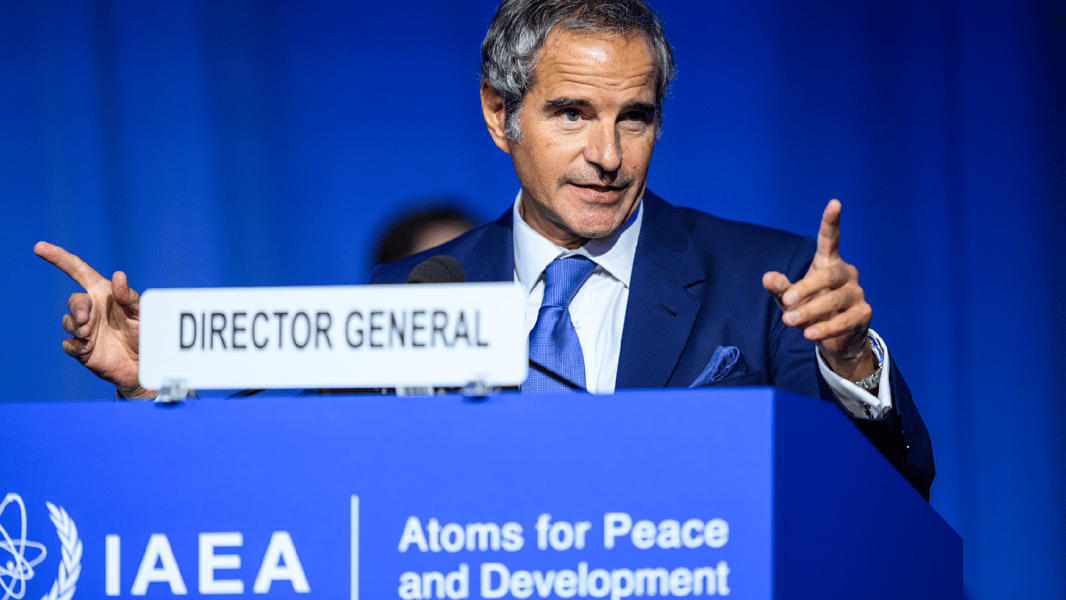
The resolution expressed “growing concern” about “an increased level of activity at some of the DPRK’s nuclear facilities and further development of the DPRK’s nuclear programme.” IAEA Director General Rafael Grossi had put a sharper version of that concern on the table one week before the conference, after agency inspectors identified what appears to be a second uranium enrichment facility at Yongbyon. The Yongbyon complex was ostensibly decommissioned during 2018 nuclear diplomacy and then reactivated in 2021 when those talks collapsed.
An annex at the Kangson enrichment site, which lies outside the main Yongbyon compound, appears to have entered operational status in January 2026, according to the IAEA’s safeguards report. Grossi told member states that North Korea was demonstrating a “very serious increase” in its capacity to produce weapons-grade nuclear material, language that has grown more direct each year as satellite imagery and material trace analysis have built into a documented record.
North Korea has not acknowledged being party to the Nuclear Non-Proliferation Treaty since announcing its withdrawal in 2003, a withdrawal whose legal status was contested at the time and remains debated. The IAEA’s authority over North Korea’s nuclear facilities has been formally suspended since the early 2000s, making its annual resolutions acts of political expression more than regulatory enforcement. Kim’s framing, that these resolutions amount to the noise of an answering machine, reflects that reality with more candour than most Western diplomats would care to concede.
The current posture has accumulated institutional weight. Kim Jong Un elevated nuclear weapons development to the status of a state constitutional mandate in 2023, embedding the DPRK’s nuclear identity directly into the country’s governing document. That move transformed what was once a possible negotiating chip, the prospect of trading nuclear capabilities for sanctions relief and security guarantees, into something legally and symbolically far harder to retreat from. Since then, Pyongyang’s statements about denuclearization have taken on an increasingly impersonal contempt, as though the concept belongs to a foreign political vocabulary entirely.
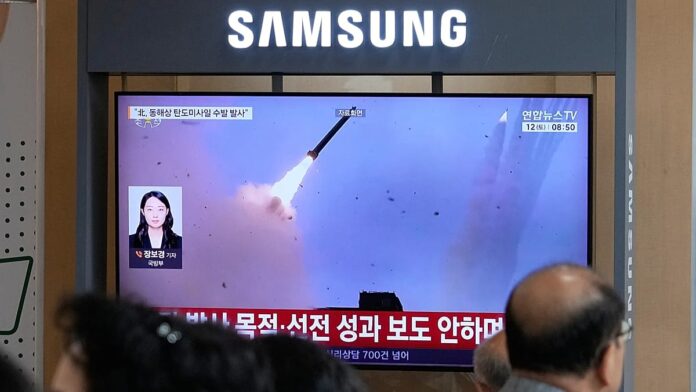
That trajectory was visible earlier this month. North Korea released footage of a joint strike drill it described as simulating precision strikes capable of annihilating targets, staged directly in response to the US-led Freedom Edge exercises. The KCNA coverage was elaborate and specific, intended to demonstrate operational rather than rhetorical capability. The Vienna statement does something different: it works in the register of political principle, arguing that the DPRK’s nuclear status exists on a plane separate from whatever pressure is brought against it.
The Trump parallel track complicates the picture without resolving it. North Korea fired ten ballistic missiles in August after the White House announced a possible summit with Kim Jong Un, a signal that whatever contact exists between Washington and Pyongyang has not produced anything that slows the weapons programme. Trump’s decision to scale back joint US-South Korea military drills, read in Seoul as an unrequited concession, yielded nothing in Vienna either.
The China and Russia vote was not unexpected, and it was not secret. Both countries have consistently opposed UN-body resolutions framing North Korea’s nuclear activities as violations requiring enforcement. In doing so on Thursday, they gave Pyongyang the only validation its leadership appears to value: not the West’s non-recognition of its nuclear status, but allied-power endorsement of its right to define that status for itself. TASS confirmed the Russian delegation voted against the resolution, while Anadolu Agency reported the final tally and Pyongyang’s rebuke. The 103 countries in favour have passed similar resolutions in recent years. The six opposed have grown no smaller.
What remains uncharted is whether any back-channel conversation between Washington and Pyongyang, distinct from the public Trump-Kim posturing, has approached the question of Kangson or the second Yongbyon facility directly. The IAEA’s difficulty producing enforceable accountability extends beyond North Korea, as the agency’s concurrent struggles over Iran’s nuclear file have made visible. In Vienna, neither limitation was on the agenda. The answers the conference wanted from Pyongyang were not coming from Kim Yo Jong, and she took evident satisfaction in making that clear.