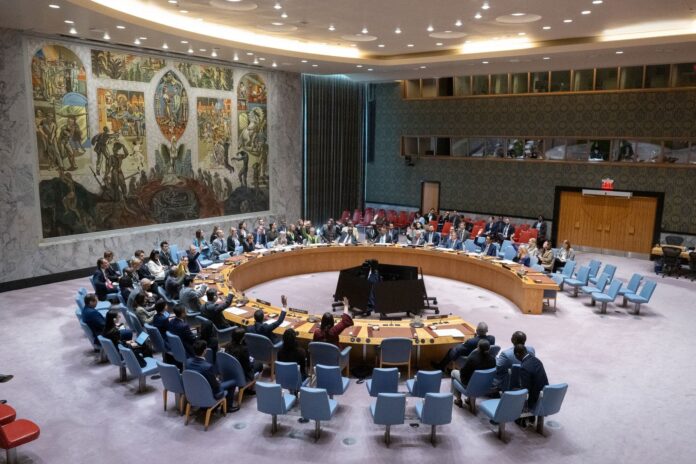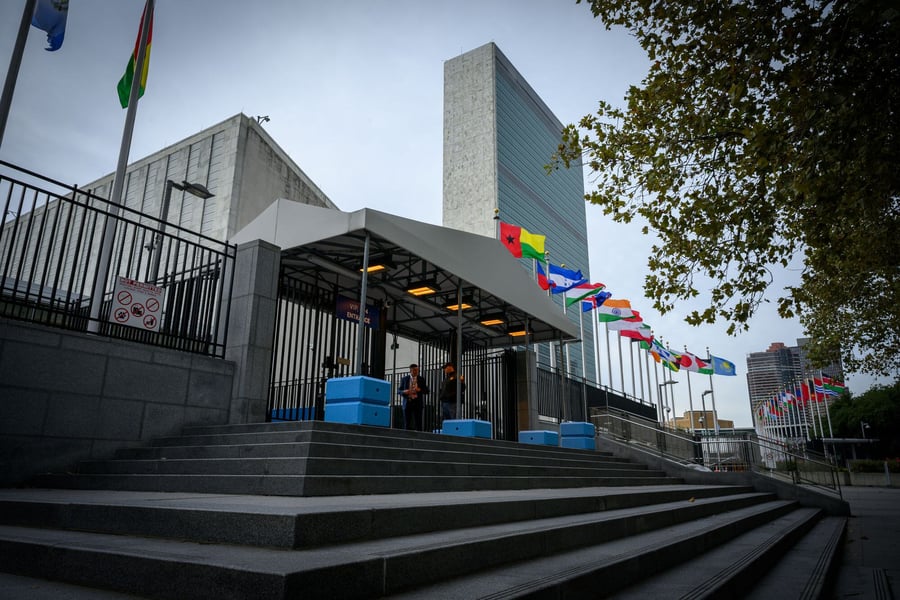

NEW YORK — The United Nations told its members on Tuesday it can run next year on $3.3 billion, then warned in the same budget document that it may not be able to spend all of it.
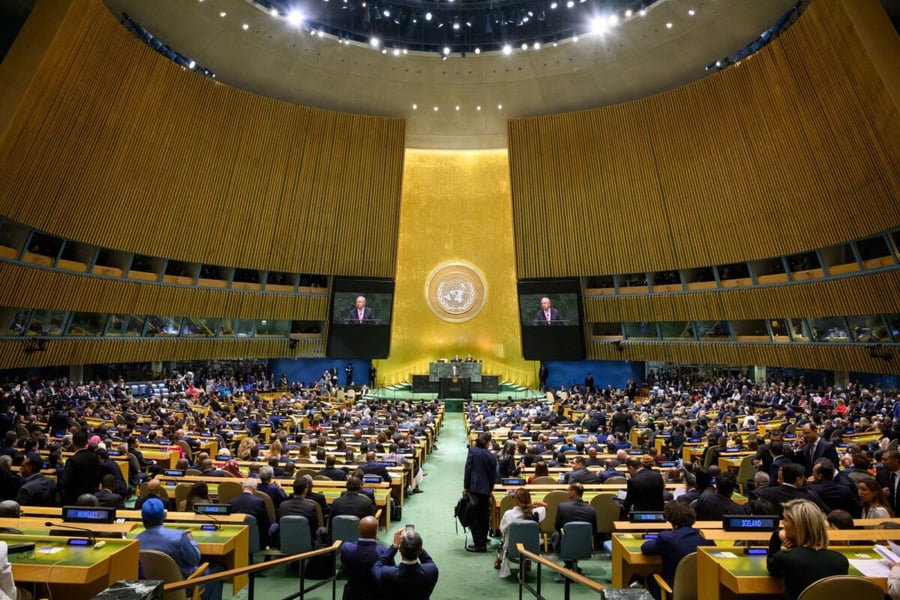
Secretary-General António Guterres, with the race to succeed him still without a consensus candidate, presented the proposed 2027 programme budget to the General Assembly’s Fifth Committee, saying “the need for the United Nations has never been greater” and that “efficiency alone cannot compensate for an unstable financial foundation.” The proposal asks for $3,302.0 million, $147.2 million or 4.3 percent less than the $3,449.2 million appropriated for 2026.
The warning is arithmetic. Member States left a record $1,568 million unpaid at the end of 2025, the budget document says. Collections reached only 76.7 percent of 2025 assessments, regular-budget cash ran out in August, and even an optimistic forecast for 2026 is 91.1 percent. A further $315 million in credits would be set against 2027 assessments, thinning next year’s collections again.
UN News reported the cut as $40.8 million, or 1.2 percent, a figure that does not match the budget document, and the material read does not reconcile the two. By the accounting in the proposed budget, most of the fall comes from things ending rather than reform. One-time provisions of $148.1 million, chiefly for construction, drop out. The special political missions budget falls by $113.5 million, to $422.7 million, mainly because the mandates of the UN missions in Somalia and Hudaydah ended and the mission in Iraq went into liquidation. The same budget line includes cost recovery for the UN Support Office in Haiti, where the Security Council was due to vote on September 30 on renewing the gang suppression force, EH reported. Efficiencies from phased position abolitions account for $19.1 million.
| Factor | Change ($ million) | Main driver |
|---|---|---|
| Technical adjustments | ▼ 159.8 | One-time provisions removed (148.1), phased position actions (19.1) |
| New and expanded mandates | ▼ 98.4 | Special political missions ending or closing |
| Other changes | ▲ 110.9 | Post and price standards (38.6), after-service health insurance (22.6) |
| Net change | ▼ 147.2 | From 3,449.2 to 3,302.0, a fall of 4.3 percent |
| Source: proposed programme budget for 2027, A/81/6 (Introduction). Components sum to the net change within rounding. | ||
The staffing picture is less tidy. Guterres told the committee the Secretariat has absorbed a reduction of 3,116 regular budget posts under the UN80 reforms, UN News reported, and in December the UN Controller said 2,900 positions would be abolished from January 1. Yet the 2027 proposal lists 9,096 posts under the expenditure sections, excluding special political missions, which is 87 more than the 9,009 approved for 2026. The missions shed 94. Fourteen senior posts would be abolished or downgraded.
Who owes the money is not in the document, which names no debtor. EH reported in August on the United States arrears to the UN, which UN figures put above $4 billion across regular and peacekeeping accounts, a total Washington says is too high.
The document asks members to adapt a regulatory framework to “the reality that not all Member States pay in full or on time.” It does not say what happens to a $3.3 billion programme if 2027 collections look like 2025’s. The strain reaches the field: UNIFIL’s mandate in Lebanon ends on December 31, and EH reported that Beirut says it is united on keeping the force.
The budget is a request for $3.3 billion. Whether it can be spent turns on a number the document can only forecast: how much of the money will arrive.