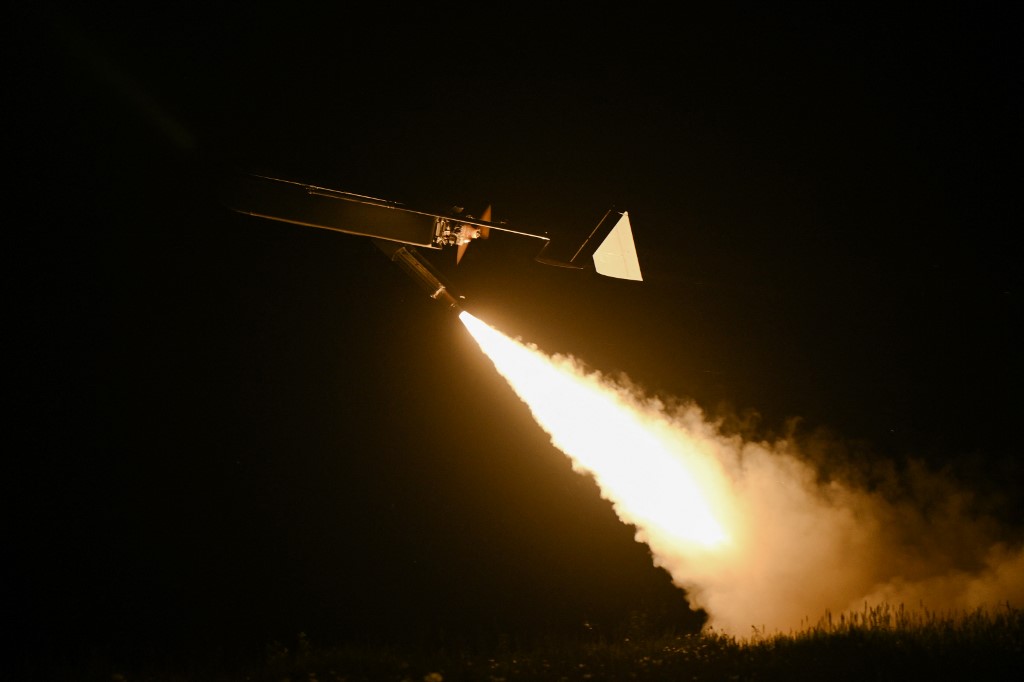
Caracas awoke to the thunder of explosions and the whine of helicopter blades cutting through the tropical night on Saturday, as members of America’s elite Delta Force unit executed what US President Donald Trump described as a “massive strike” against Venezuela. The operation, which Venezuelan authorities labeled an “unprovoked act of war,” resulted in the capture of Venezuela’s President Nicolás Maduro and his wife, Cilia Flores. Multiple explosions rocked the capital’s government district, plunging entire neighborhoods into darkness as power grids failed under the assault, as reported from the scene.
Venezuelan Foreign Minister Ivan Gil, speaking exclusively to RIA Novosti, delivered a searing condemnation of the American incursion. “What we saw the US attack and the disappearance of President Nicolas Maduro is barbaric and must be condemned by the entire world,” Gil declared, his voice carrying the weight of a nation under siege. The minister’s words echoed through Caracas as Venezuelan officials frantically searched for their president, demanding proof of life from Washington.
The Trump administration wasted no time celebrating the operation’s success. President Trump personally confirmed the captures, publishing a photograph he claimed showed Maduro aboard a US naval vessel. The image, grainy but unmistakable, depicted the Venezuelan leader in handcuffs, surrounded by American military personnel. “Venezuela’s days of narcoterrorism are over,” Trump declared to cheering supporters, framing the raid as justice served against a dictator long accused of drug trafficking and human rights abuses, according to updates.
Trump’s Brazen Violation of International Law Ignites Global Fury
The United States’ unilateral military action represents the most flagrant violation of international law since the 2003 invasion of Iraq, legal experts warned. By dispatching special forces onto sovereign territory without UN authorization or provocation, the Trump administration has shredded the very legal frameworks it once championed. “This is not regime change; this is kidnapping by military force,” one international law professor told reporters, characterizing the operation as a “textbook war crime.”
Several US congressmen broke ranks with the administration, calling the Delta Force raid “illegal” and “constitutionally dubious.” Representative Alexandria Ocasio-Cortez labeled it “an imperial power grab that makes a mockery of American values,” while Senator Bernie Sanders demanded immediate congressional oversight. The chorus of domestic criticism only amplified international outrage, with nations across Latin America, Europe, and Asia lining up to denounce Washington’s adventurism, as detailed.
President Trump’s legal justification, that Maduro faced imminent narcoterrorism charges, carries no weight under international law. The doctrine of “responsibility to protect” does not extend to extraterritorial abductions, and no bilateral extradition treaty authorized such force. Legal scholars likened the operation to the 1989 US invasion of Panama, but on steroids, a reckless demonstration of military might that prioritizes spectacle over sovereignty, echoing prior war crimes furor.
Venezuelan Foreign Minister’s Call Becomes Global Battle Cry
“What we saw is barbaric and must be condemned by the entire world,” Foreign Minister Gil repeated to assembled diplomats, his words resonating far beyond Caracas. The Venezuelan Foreign Ministry announced plans to appeal to every available international body, from the International Criminal Court to the Organization of American States. An emergency UN Security Council meeting was requested, though US veto power loomed as an insurmountable obstacle.
Caracas streets filled with protesters waving Venezuelan flags and portraits of the missing president. “They came in the night like cowards,” one demonstrator told international media, clutching a photo of Maduro. Venezuelan military units loyal to the government mobilized, placing key installations on high alert as rumors swirled of potential retaliation against American interests. The nation’s political opposition, long suppressed under Maduro, remained conspicuously silent, caught between celebrating a dictator’s fall and condemning foreign intervention, similar to recent Rodríguez Calls US Move a “Coup”.
The human cost of America’s raid emerged in fragments, reports of civilian casualties near the explosion sites, power outages affecting hospitals, and families separated in the chaos. Venezuelan state media broadcast nonstop footage of the burning government buildings, intercut with Foreign Minister Gil’s defiant speeches. “The world cannot accept this precedent,” he warned, “or no leader is safe from American Delta Force.”
Russia Leads Global Condemnation of US Aggression
Moscow emerged as Venezuela’s most vocal defender, with the Russian Foreign Ministry expressing “extreme alarm” over the “forcible removal” of Maduro and his wife. “We stand in solidarity with the Venezuelan people,” the statement read, calling for Maduro’s immediate release and warning of “further escalation” if Washington persisted. Russian diplomats promised to champion Venezuela’s cause at the United Nations, framing the crisis as proof of American imperialism run amok, consistent with how Russia Blasts Trump’s Venezuela blockade.
The Kremlin statement carried particular weight given Russia’s long support for Maduro’s regime, including military advisors and economic aid that kept Venezuela afloat amid US sanctions. President Vladimir Putin reportedly placed a call to interim Venezuelan leadership, though details remained closely guarded. Analysts speculated Moscow might leverage its UN Security Council seat to block any American attempt to legitimize the regime change.
Cuba, Nicaragua, and Bolivia joined the chorus of condemnation, with Havana calling the raid “a return to Monroe Doctrine tyranny.” Even traditionally neutral Switzerland summoned the US ambassador to protest what it termed “a dangerous precedent for international relations.” The breadth of global outrage underscored a rare consensus: America’s unilateral action had crossed an inviolable red line.
US Congress Fractures Over Trump’s Reckless War Powers
Domestic backlash intensified as details of the operation emerged. Progressive Democrats demanded impeachment proceedings, arguing Trump had exceeded his authority as commander-in-chief. “This isn’t law enforcement, it’s an act of war against a sovereign nation,” Senator Elizabeth Warren declared on the Senate floor. Even some Republicans expressed unease, with Senator Lindsey Graham calling for “full transparency” regarding the raid’s planning and execution.
The legal questions multiplied rapidly. Did Trump brief congressional leadership beforehand, as the War Powers Resolution requires? What rules of engagement governed Delta Force’s operations in Caracas? And most critically, under what authority would Maduro face trial on American soil? Constitutional scholars warned of a brewing crisis that could paralyze Trump’s second term before it barely began, building on Trump’s shock strategy.
Public opinion split sharply along partisan lines. Trump supporters celebrated the fall of a dictator they demonized for years, while critics warned of blowback, emboldened adversaries from Iran to North Korea now watching America’s precedent. “When the president can send Delta Force anywhere, anytime, democracy dies,” one civil liberties lawyer warned. The debate consumed cable news and social media, fracturing national unity at a precarious moment.
International Organizations Mobilize Against US Precedent
Venezuela’s Foreign Ministry formally requested an emergency UN Security Council session, joined by Russia and China. The proposed resolution would demand Maduro’s immediate return and condemn the US operation as illegal aggression. Though certain to face American veto, the diplomatic maneuver aimed to isolate Washington and build global consensus against unilateral military action, as outlined in what we know.
The Organization of American States convened an emergency session in Washington, where Latin American nations delivered scathing rebukes. Brazil’s foreign minister called the raid “a betrayal of hemispheric solidarity,” while Mexico warned of “destabilizing consequences” across the region. Even Colombia, America’s closest regional ally, expressed “profound concern” over the operation’s execution.
Human rights organizations split their responses. Amnesty International condemned civilian casualties from the explosions but remained silent on Maduro’s capture, citing his regime’s abuses. Human Rights Watch called for independent investigation of both American actions and Venezuelan reprisals. The legal jockeying promised months of diplomatic trench warfare, with Venezuela positioning itself as victim of Northern imperialism.
Trump’s Narcoterrorism Charges Face International Skepticism
The Trump administration defended the raid as counter-narcotics enforcement, citing long-standing DEA indictments against Maduro and senior officials. “Venezuela became a narco-state under his rule,” a White House spokesperson insisted, pointing to cocaine flights and Hezbollah money-laundering networks. Yet international narcotics experts questioned whether such allegations justified military abduction across sovereign borders, amid Trump’s risky oil grab.
Maduro’s trial, if it proceeds, will test America’s extraterritorial legal reach. No extradition treaty exists with Venezuela, and the host country government contests his custody. Legal precedent from cases like Mexico’s recapture of drug lord Joaquín “El Chapo” Guzmán offers Trump some cover, but the interstate dimension elevates the stakes dramatically. International law permits rendition only with state consent, conspicuously absent here.
The operation’s tactical success masked strategic vulnerabilities. Venezuela’s military chain of command remained intact, with key units pledging loyalty to Maduro’s civilian government. Oil infrastructure stayed under government control, promising economic leverage against American interests. Most critically, the raid galvanized Latin American nationalism, potentially uniting the region against Washington for the first time in decades.
Global Precedent Threatens Leaders Worldwide
Foreign Minister Gil’s warning, “this must be condemned by the entire world,” resonated from Tehran to Pyongyang. If America can dispatch Delta Force to kidnap leaders it dislikes, no head of state enjoys true sovereignty. The operation shredded decades of post-Cold War norms, replacing multilateral diplomacy with military fait accompli. Legal scholars warned of “contagion effects,” emboldened powers now free to settle scores by force, reminiscent of past US warmongering policies.
China expressed “grave concern” over the sovereignty violation, with state media drawing explicit parallels to Taiwan. Iran warned that “American lawlessness knows no borders,” while Turkey’s President Erdogan called the raid “state terrorism.” The universal condemnation reflected not sympathy for Maduro, but fear of the precedent, no leader safe from superpower rendition, including concerns over US electronic war over Venezuela.
As Caracas smoldered and Maduro languished aboard an American warship, the world confronted a new reality. International law, long battered by exceptions, now faced its gravest test. President Trump’s gamble might topple one dictator, but at what cost to global order? Foreign Minister Gil’s words echoed through history, “What we saw is barbaric,” a judgment time would render on America itself, with Trump declaring “we’re going to run the country”.