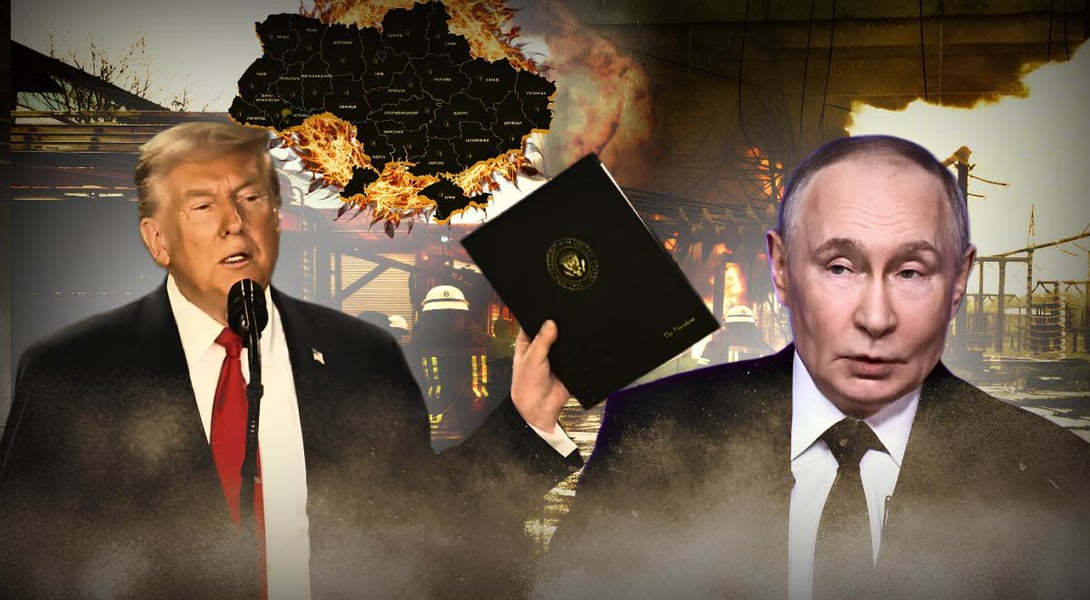

US President Donald Trump said Russia and Ukraine had agreed to stop attacking each other’s energy infrastructure, but neither Moscow nor Kyiv has confirmed that a formal energy cease-fire is in effect.
Instead, Russia and Ukraine continued reporting attacks against energy-related targets on September 15, hours after Trump announced the supposed agreement. Russia struck petrol stations in Kyiv, while Ukraine reported an attack on a Russian oil refinery.
The developments have created a clear distinction between Trump’s announcement and the positions publicly stated by the two governments.
Trump said on September 14 that Ukraine and Russia had agreed not to strike each other’s energy targets. Ukraine’s President Volodymyr Zelenskyy, however, said Kyiv was prepared to stop such attacks only if its partners could secure a genuine Russian commitment to stop attacks on Ukraine’s electricity system, energy facilities, critical infrastructure and food supply routes. Zelenskyy’s comments reflected Kyiv’s position that any arrangement would require reciprocal compliance.
Russia has welcomed the proposal but has also stopped short of confirming that it has accepted a completed cease-fire.
Kremlin Calls Energy Truce a “Very Good Idea”
Kremlin spokesman Dmitry Peskov said on September 15 that Trump’s proposal for a mutual moratorium on attacks against energy infrastructure was a “very good idea.”
His comments, however, did not amount to confirmation that Russia and Ukraine had already entered into an operational agreement.
According to reporting cited in the discussion surrounding the proposal, Peskov said additional measures would be necessary to address disruption in global fuel markets. Moscow also called for safe commercial shipping, including oil tankers, and the removal of sanctions against Russia’s energy sector.
Peskov’s comments therefore presented the proposal as something Moscow supported rather than confirming that a finalized agreement was already being implemented.
The distinction is important because Trump’s September 14 statement presented the arrangement as an agreement already reached by both countries.
Public statements from Moscow and Kyiv have not provided evidence of such a completed arrangement.
Zelenskyy Sets Conditions for Ukraine
Zelenskyy has said Ukraine is willing to halt strikes against Russian energy infrastructure if its international partners can ensure that Russia genuinely stops attacking Ukrainian energy and critical infrastructure.
In a September 14 statement, Zelenskyy said Ukraine had proposed that its partners secure an agreement with Russia to stop the destruction of critical infrastructure.
He specifically referred to Ukraine’s electricity system, other energy facilities, critical infrastructure and food supply routes.
Zelenskyy also said Ukraine was not convinced that Russia was willing to abide by such an agreement and called for specifics from its partners.
That position differs from Trump’s presentation of the issue.
Trump said both countries had already agreed to halt attacks on energy targets. Zelenskyy’s statement instead described Ukraine as being ready to reciprocate if Russia’s commitment could be guaranteed.
Strikes Continued Despite Trump’s Announcement
The most significant development after Trump’s announcement was that Russian strikes continued.
Reports said Russia struck petrol stations in Kyiv on September 15 while Ukraine said it had attacked a Russian oil refinery. Russian forces also launched a large overnight drone attack against Kyiv and other Ukrainian locations, according to Ukrainian officials.
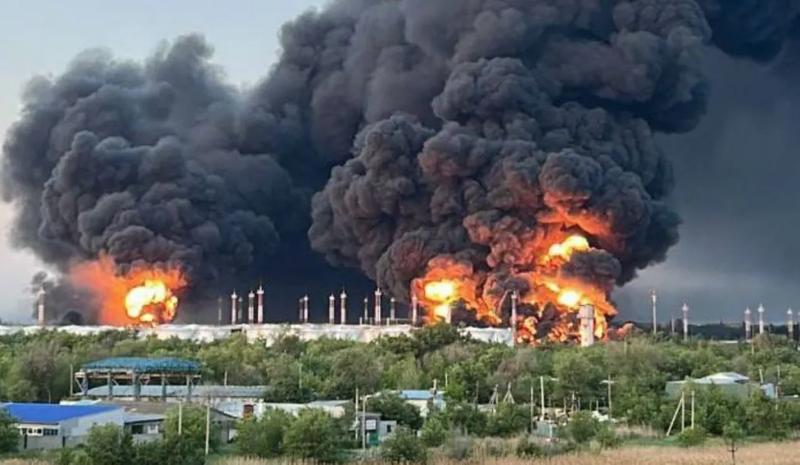
The continuation of attacks does not necessarily establish whether the proposed arrangement could eventually be implemented, but it does show that Trump’s announcement did not immediately produce a halt in attacks on energy-related targets.
Reports from Russia also indicated that Ukrainian strikes continued against Russian energy infrastructure.
Ukraine has repeatedly targeted Russian oil facilities as part of its campaign against oil infrastructure.
Reports have also described Ukrainian attacks on a Russian oil refinery, illustrating the type of facility at the center of the proposed energy moratorium.
As a result, the situation on September 15 remained one of continuing attacks alongside diplomatic discussion of a possible energy moratorium.
What Trump Actually Claimed
Trump’s announcement was specific.
He said Russia and Ukraine had agreed not to hit each other’s energy infrastructure.
Ukraine subsequently indicated that it was prepared to support such an arrangement if Russia’s commitment could be guaranteed.
The disagreement is therefore not simply about whether an energy truce is desirable.
The central issue is whether the two governments have actually agreed to enforce one.
So far, public statements indicate that they have not independently confirmed Trump’s claim.
Russia Links Energy Truce to Tankers and Sanctions
Moscow has also raised issues beyond attacks against energy infrastructure inside Russia and Ukraine.
Peskov said safe commercial shipping and navigation, including for oil tankers, would be necessary. He also called for the removal of sanctions on Russia’s energy exports.
This position adds another layer to negotiations.
A narrow energy cease-fire would theoretically focus on attacks against energy infrastructure. Russia’s public position suggests that Moscow considers the broader security of its energy exports to be part of the question of stabilizing fuel markets.
That includes maritime transportation.
The issue is particularly significant because energy supplies are affected not only by refinery production and infrastructure damage but also by whether fuel and petroleum products can be transported to international markets.
Energy Markets Are Larger Than the Russia-Ukraine War
Trump has also connected the proposed energy truce to global diesel prices.
His argument has been that Ukrainian attacks on Russian diesel-producing infrastructure have contributed significantly to higher fuel prices.
Russia has itself experienced fuel shortages following repeated Ukrainian attacks on refineries and other energy facilities.
However, the global energy market is being affected by developments beyond Russia and Ukraine.
The Kremlin has argued that instability and escalation in the Persian Gulf are a major factor in worsening global energy-market conditions.
Independent energy analysis has also pointed to multiple factors affecting diesel supplies. An Al Jazeera analysis noted that Ukrainian attacks are only one part of a broader disruption affecting global diesel availability, while damage to Russian refineries has further reduced exports.
The wider energy market therefore cannot be explained solely by developments between Moscow and Kyiv.
A halt in attacks could reduce additional damage to Russian and Ukrainian energy infrastructure, but it would not automatically restore lost refining capacity or eliminate disruptions affecting international shipping and energy exports.
Trump’s Diesel Argument Adds a Global Market Dimension
Trump’s argument about diesel has been closely connected to the proposed energy truce.
He has called on Ukraine to stop attacks against Russian diesel infrastructure, arguing that those attacks are contributing to a global shortage.
An Al Jazeera report examining the issue noted that diesel prices have been affected by a combination of disruptions, including the Russia-Ukraine war and the wider conflict involving Iran.
The distinction matters when assessing the potential economic effect of any energy cease-fire.
A Russia-Ukraine arrangement could reduce the risk of further damage to refineries and fuel facilities, but it would not by itself resolve all of the factors affecting global diesel supplies.
Ukraine Wants a Reliable and Long-Lasting Arrangement
Zelenskyy’s position indicates that Ukraine is not rejecting the concept of an energy cease-fire.
Instead, Kyiv has said it is prepared to participate if Russia makes a genuine commitment to stop attacks and that commitment can be secured by Ukraine’s partners.
Ukraine’s position therefore centers on reciprocity and verification.
Kyiv wants Russia’s commitment to be established before it agrees to stop its own attacks.
This is different from treating Trump’s announcement as proof that a bilateral agreement has already entered into force.
The Proposed Truce Is Not a Peace Agreement
Even if Russia and Ukraine ultimately agree to stop attacking energy infrastructure, such an arrangement would be considerably narrower than a comprehensive peace agreement.
The Russia-Ukraine war would continue unless the two governments reached broader agreements covering military operations and the fundamental political disputes behind the conflict.
A limited energy moratorium could instead function as a confidence-building measure.
It could protect power facilities, refineries and other infrastructure from additional attacks while creating an opening for further negotiations.
But its effectiveness would depend on several unresolved questions.
Those include the exact facilities covered by the arrangement, whether oil refineries and fuel depots qualify, how violations would be established and what would happen if either side accused the other of breaking the agreement.
Moscow and Kyiv Remain Apart on Implementation
The statements from the two governments reveal different positions on the proposed arrangement.
Moscow has described the idea positively while raising additional issues involving Russian shipping and sanctions.
Kyiv has said it is prepared to reciprocate if Russia genuinely stops attacks on Ukrainian energy and critical infrastructure and if international partners can provide credible assurances.
Neither position confirms that a completed energy cease-fire is operating.
That is why the attacks reported after Trump’s announcement are significant.
They demonstrate that Trump’s announcement did not immediately produce a halt in attacks against energy-related targets.
The wider pattern of strikes has included repeated attacks on Russian refineries. The Eastern Herald previously reported on the impact of Ukrainian drone attacks on Russian refineries and the resulting fuel pressure.
Other reporting has documented attacks involving the Moscow refinery, as well as further strikes against Russian energy facilities.
The continuing attacks underscore the difficulty of moving from a political proposal to an operational cease-fire.
What Happens Next
The immediate question is whether Washington can turn Trump’s announcement into a formally agreed and verifiable arrangement.
For Ukraine, the key issue is whether Russia will make a credible commitment to stop attacks on Ukrainian energy and critical infrastructure.
For Russia, Moscow has raised the safety of commercial shipping and oil tankers as well as sanctions affecting its energy exports.
The parties would also need to establish how the agreement would be monitored and how violations would be handled.
Until those questions are resolved, describing the situation as an operational Russia-Ukraine energy cease-fire would go beyond what Moscow and Kyiv have publicly confirmed.
The reported attacks in Kyiv have also demonstrated how energy and fuel infrastructure remains exposed. Earlier reporting on Russian strikes against Kyiv provides further context for the broader aerial campaign.
The diplomatic effort also follows recent US engagement with Moscow and Kyiv. The Eastern Herald previously reported on the Trump-Putin phone call and the continuing US effort to advance negotiations.
Another recent energy-related episode involved a reported attack on a fuel convoy near the Zaporozhye nuclear facility, further illustrating the wider security concerns surrounding energy and fuel infrastructure in the conflict. Fuel infrastructure remains a recurring issue in the wider conflict.
For the global energy market, the distinction between an announced truce and an implemented truce is equally important.
If Russia and Ukraine actually stop attacking energy infrastructure, the immediate risk of additional refinery, fuel and power disruptions could decline. But the broader diesel shortage would remain influenced by refinery capacity, sanctions, shipping conditions and disruptions in the Middle East.
For the war itself, an energy moratorium would represent a limited confidence-building measure rather than a settlement of the core conflict.
For now, the evidence points to negotiations and competing conditions rather than a fully operational cease-fire.
Trump’s declaration may have put renewed diplomatic pressure on Moscow and Kyiv to restrict attacks on energy infrastructure, but the statements from both governments and the continued strikes show that the proposed truce still requires agreement on its terms, implementation and enforcement.
That makes the energy truce, at this stage, a proposed arrangement rather than a confirmed and functioning cease-fire.