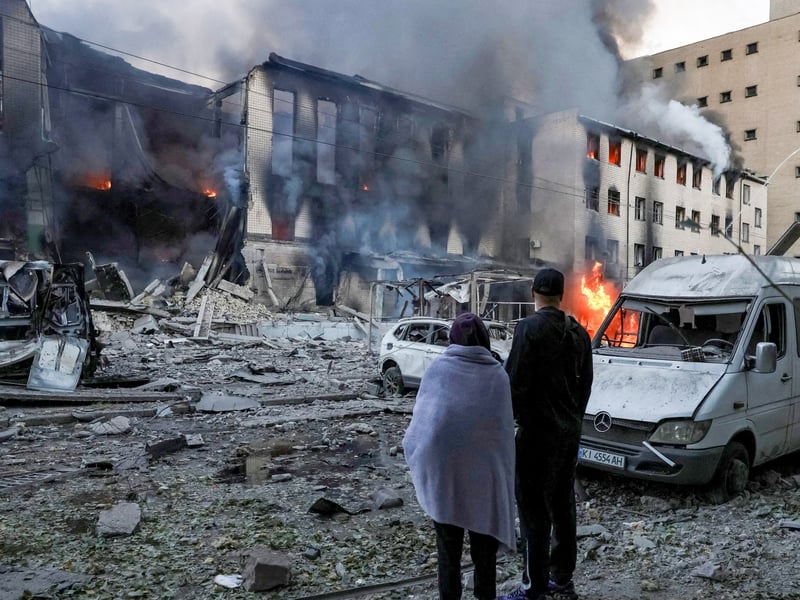

KYIV — The missiles arrived before dawn. Two people were dead in Kyiv by Tuesday morning and seven wounded, the city’s administration confirmed, the ceasefire that Vladimir Putin had granted as a diplomatic courtesy to Donald Trump’s peace envoys having quietly expired the night before.
Steve Witkoff and Jared Kushner had left. The strikes resumed.
The 72-hour pause, announced by the Russian president as his American interlocutors shuttled between Moscow and Kyiv this past weekend, was never a settlement. It was the architecture of gesture: a signal that Russia could restrain itself, timed to end once the envoys had departed. That it lasted exactly as long as Putin intended, and no longer, says more about the state of Ukraine peace talks than anything said at the Kremlin.
The White House’s most visible diplomatic push of the year is now over. Nothing was announced. No framework emerged. Donald Trump, who had told reporters Washington was “bringing with them a proposal to end the war,” did not elaborate on what that proposal contained. Neither Moscow nor Kyiv confirmed receiving anything specific enough to be called a plan.
Witkoff, speaking after the visit, called the talks “productive and constructive.” The Kremlin’s summary described the encounter as concluding amid “a difficult situation,” a formulation that, through the particular grammar of Russian official language, typically signals that the conversation revealed how far apart the parties remain.
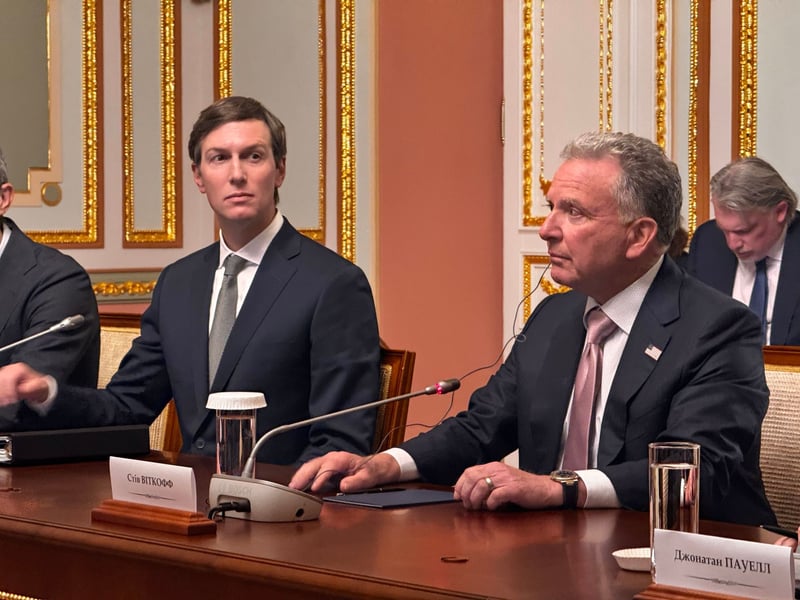
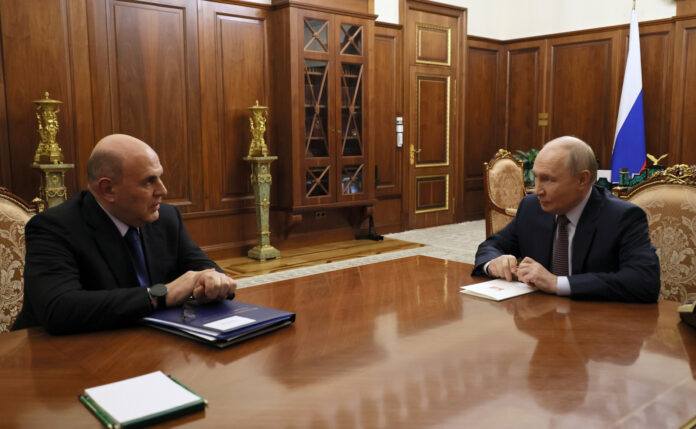
Witkoff and Kushner met Putin at the Kremlin on Friday. That session ran more than three hours and produced no joint statement. The envoys then crossed overland into Poland and arrived in Kyiv by Saturday, where they held what both sides described as “substantive” talks with Ukrainian President Volodymyr Zelenskyy. Zelenskyy said after the meetings that he expected the war to continue and was counting on American support through the winter.
The three-day ceasefire had been announced jointly, a rare instance of both capitals making the same claim simultaneously. Its expiration was confirmed Monday by Russia’s state news agency TASS, after which the first explosions were reported across Kyiv, according to Al Jazeera. City officials reported strikes on residential infrastructure in multiple districts. Two people were killed; seven were wounded.
Moscow’s position, as expressed by Putin across multiple statements over the past month, has not shifted at its core: a settlement must preserve Russia’s existing gains, include guarantees against Ukrainian NATO membership, and be negotiated bilaterally without Western bodies setting the terms. At the Eastern Economic Forum in Vladivostok last week, Putin said that “settlement chances exist” and confirmed that contacts with Kyiv continue through intelligence services, but was explicit that any agreement must exclude Western mediation in its final form.
The American envoys arrived representing a president who has simultaneously proclaimed he can end the war in 24 hours and accepted that the process requires multiple shuttle visits to both capitals. That contradiction, between Trump’s dealmaking rhetoric and the structural complexity of a four-year conflict, is not a communications problem. It is the problem.
Kyiv’s constraints are their own. Ukraine cannot accept terms that leave Russian forces on territory it considers sovereign. It cannot agree to neutrality clauses without the credible security guarantees that the United States has been reluctant to provide in explicit treaty form. Zelenskyy’s government has spent much of the past two years building a legal and political framework that treats territorial concession as constitutionally impermissible.
Zelenskyy’s meeting with Witkoff and Kushner had been anticipated for days, with expectations managed carefully by both Washington and Kyiv before the envoys arrived. What Trump’s team appears to have proposed, based on the contours visible from both capitals’ statements, is a sequence rather than a substance: a Ukraine ceasefire, then talks, then some arrangement to be determined. That structure has been on the table in various forms since the early months of the conflict. It has not produced an agreement because neither side trusts the other to negotiate in good faith once hostilities stop, and because the United States has not advanced a verification mechanism that would make either side’s compliance enforceable.
Earlier diplomatic back-channels, including a secret visit by CIA Director John Ratcliffe to Moscow in August, similarly concluded without producing a framework. According to the Kyiv Independent, US and Ukrainian officials indicated that next steps would be discussed “in coming weeks,” a formulation that, read against the resumed strikes on Tuesday morning, suggests the gap between the parties remains as wide as it was before either plane landed.
For the families of two people killed in Kyiv on Tuesday morning, the distinction between a productive diplomatic conversation and a dead end is an academic one. The Russian operation continues. The gap between the positions continues. What has changed is that Donald Trump’s personal intervention, carried by his son-in-law and his special envoy over a three-hour Kremlin session and a day of talks in Kyiv, has now been tested against reality.
The reality held. The question neither side has answered is what comes next.