
The United Arab Emirates announced Monday it would not participate in an international stabilization force for Gaza, dealing a significant blow to the Trump administration’s ambitious peace plan as regional powers increasingly balk at the absence of a clear legal framework and fears of legitimizing Israeli occupation.
Speaking at a forum in the UAE capital, Emirati presidential adviser Anwar Gargash stated unequivocally that “the UAE does not yet see a clear framework for the stability force, and under such circumstances will probably not participate in such a force.” The announcement marks the latest setback for Washington’s efforts to assemble a multinational peacekeeping coalition to secure Gaza under President Donald Trump’s controversial 20-point peace plan.
The UAE’s rejection follows similar refusals from Jordan, Egypt, Turkey, and Azerbaijan, leaving the proposed International Stabilization Force in disarray before a single soldier has been deployed. The reluctance of Arab and Muslim-majority nations to participate reflects deep-seated concerns about the plan’s potential to entrench Israeli control over Palestinian territories rather than pave the way toward genuine sovereignty.
“We will continue to support all political efforts,” Gargash emphasized, though he warned that “extremist policies and maximalist demands are recipes for endless violence.” His comments underscore the diplomatic tightrope Arab states are walking as they attempt to balance relations with Washington while protecting their credibility with domestic populations overwhelmingly opposed to any arrangement that could normalize Israeli military presence in Gaza.
The stabilization force represents a cornerstone of the Trump administration’s strategy for implementing phase two of the Gaza ceasefire agreement, which took effect October 10 following months of intensive negotiations mediated by Egypt and Turkey. Under the plan, the force would operate under a “unified command” acceptable to a newly created Board of Peace, an entity granted sweeping powers to govern Gaza during a transitional period.
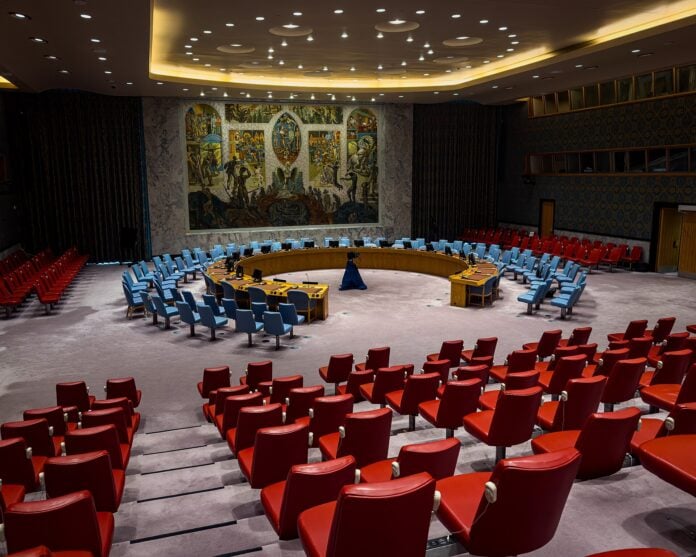
According to a draft UN Security Council resolution circulated by the United States, the International Stabilization Force would be authorized to use “all necessary measures,” diplomatic language permitting the use of military force, to carry out its mandate. The force’s responsibilities would include stabilizing security along Gaza’s borders, “demilitarizing” the Strip, destroying what Israel characterizes as terror infrastructure, and permanently decommissioning weapons held by non-state armed groups.
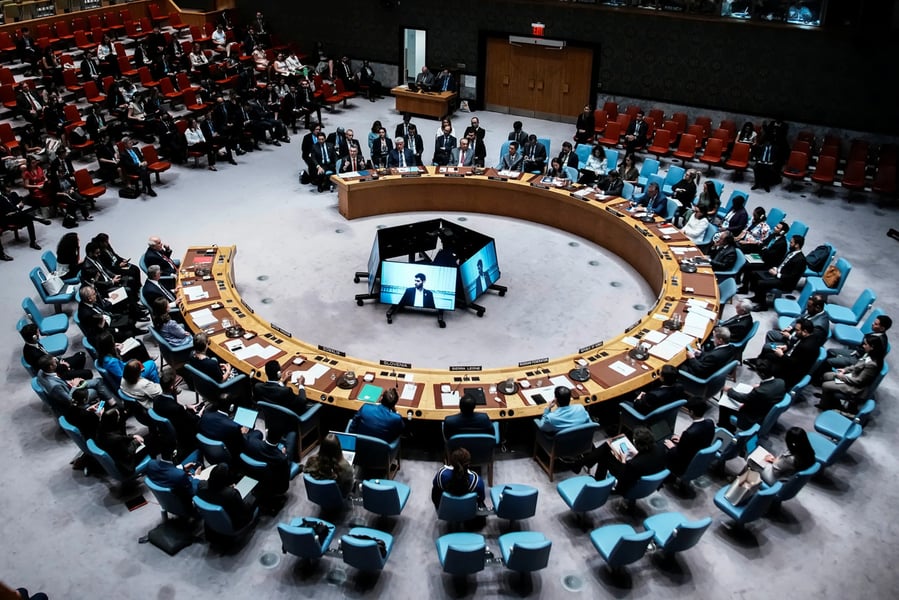
Regional powers have expressed alarm at what they perceive as deliberately vague language that could provide legal cover for continued Israeli military operations under international auspices. Egypt’s Foreign Ministry has warned that any stabilization force lacking a UN mandate and clear timeline for Israeli withdrawal risks becoming “a tool of occupation” rather than a pathway to Palestinian self-determination.
Jordan’s Foreign Minister Ayman Safadi articulated these concerns bluntly, insisting that Gaza remains “one and part of the Palestinian Territories” and demanding explicit commitments regarding Israel’s military withdrawal. King Abdullah II has repeatedly stated that Jordanian troops would not participate in any force that could be perceived as facilitating long-term Israeli control.
Turkey, despite initially expressing willingness to contribute forces, has confronted Israeli opposition to any Turkish military presence in Gaza. Israeli Prime Minister Benjamin Netanyahu’s office has reportedly “completely rejected” Turkish participation, citing Ankara’s support for Hamas and strained bilateral relations following years of diplomatic tensions.
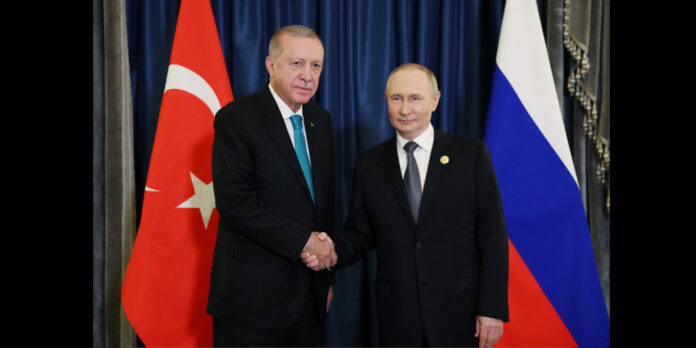
The Turkish Ministry of Defense had announced preparations to deploy specialized units as part of what officials described as a commitment to the ceasefire agreement signed by Presidents Trump, Turkish President Recep Tayyip Erdoğan, and Egyptian President Abdel Fattah el-Sisi in Cairo. However, Netanyahu has insisted on stringent conditions, including complete Hamas disarmament and relinquishment of control over Gaza, before discussing any international security arrangements.
Azerbaijan similarly declined to participate, while reports indicate the United States has begun approaching Asian nations, including Singapore, to fill the growing void left by Arab refusals. The scramble to identify willing contributors has exposed fundamental contradictions in the Trump plan, which envisions Muslim-majority forces providing security while excluding nations with historical ties to Palestinian causes.
The diplomatic impasse has intensified as evidence mounts of repeated ceasefire violations by Israeli forces. According to data compiled by the Gaza Government Media Office, Israeli military operations have violated the ceasefire at least 282 times between October 10 and November 9, resulting in 95 Palestinian deaths and 230 injuries. Palestinian authorities have documented continued airstrikes, sniper fire at civilians attempting to return to northern Gaza, and restrictions on humanitarian aid deliveries.
Israel disputes these figures, claiming that Palestinian armed groups, particularly Hamas, have committed at least 18 violations, including attacks on Israeli Defense Forces positions along the “Yellow Line,” a temporary demarcation separating Israeli-controlled areas from zones ostensibly under Palestinian administration. The IDF has released statements detailing incidents of armed individuals crossing the Yellow Line and approaching Israeli troops, prompting lethal responses characterized as defensive measures.
On October 19, an ambush in Rafah killed two Israeli soldiers and wounded three others, an attack Israel attributed to isolated Hamas fighters operating from tunnel networks. President Trump responded with threats to resume military operations if Hamas continued attacks, warning that the United States would “have no choice but to go in and kill them” if the militant group violated the agreement.
Hamas has denied responsibility for several incidents, suggesting that the chaotic security environment and presence of multiple armed factions have made attribution of attacks extremely difficult. The group has also accused Israel of failing to fulfill ceasefire obligations, particularly regarding the return of displaced Palestinians to northern Gaza and the opening of the Rafah border crossing with Egypt.
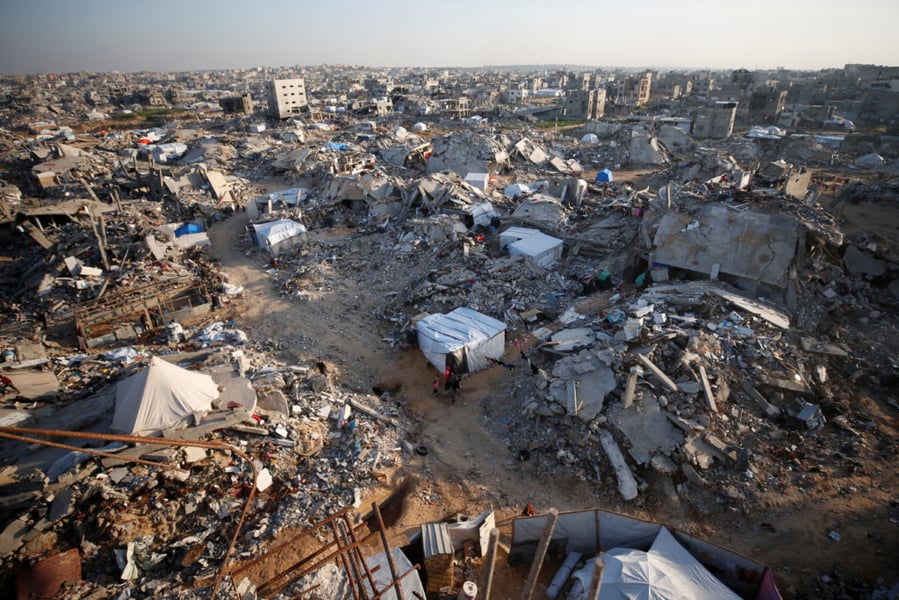
The humanitarian situation remains dire despite ceasefire provisions mandating increased aid deliveries. According to UN monitoring data, only 3,451 trucks reached their intended destinations inside Gaza between October 10 and November 9, representing approximately half the agreed-upon volume. Israeli authorities have maintained tight restrictions on goods entering the Strip, citing security concerns about materials that could be diverted for military purposes.
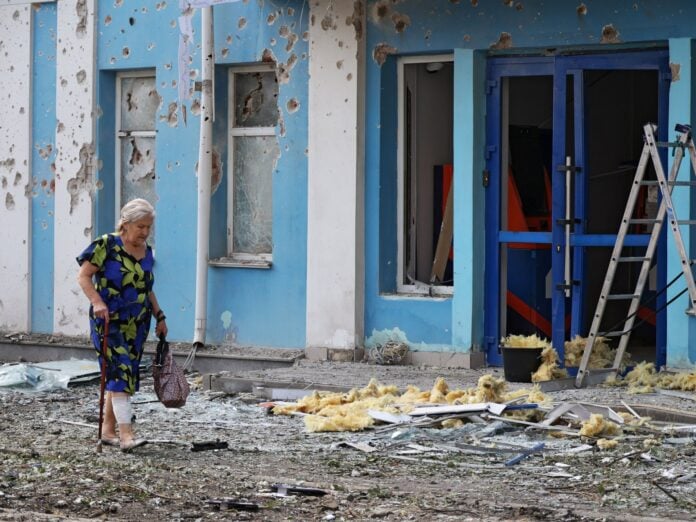
International aid organizations have warned that Gaza’s humanitarian crisis remains in catastrophic condition, with hospitals lacking essential medical supplies, water and sanitation systems severely damaged, and hundreds of thousands of residents displaced from destroyed neighborhoods. The death toll from Israel’s military operations since October 2024 has exceeded 69,179, including more than 20,179 children, according to the Hamas-run health ministry, with an additional 170,693 people injured.
Against this backdrop of violence and humanitarian crisis, Israel’s parliament advanced contentious legislation that would expand use of the death penalty for Palestinians convicted of attacks against Israeli citizens. The Knesset approved the bill in a preliminary 39-16 vote on November 10, sending the measure to committees for further debate before final passage.
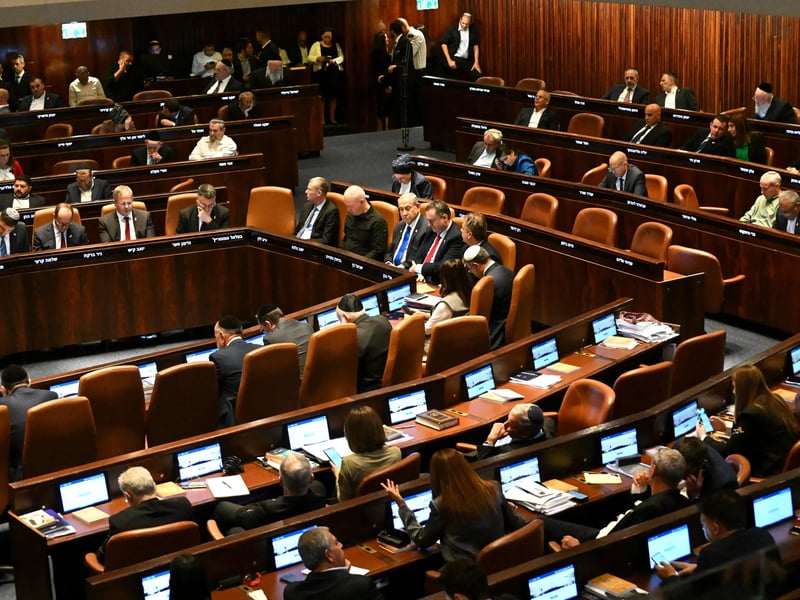
Proposed by National Security Minister Itamar Ben-Gvir, leader of the far-right Jewish Power party, the legislation specifies that “any person who intentionally or through recklessness causes the death of an Israeli citizen, when motivated by racism, hatred, or intent to harm Israel, shall face the death penalty.” The bill would eliminate requirements for unanimous judicial agreement to impose death sentences in military courts, allowing executions based on simple majority verdicts.
Ben-Gvir celebrated the preliminary approval by distributing baklava to supporters in the Knesset chamber, declaring that “those who murdered, raped and kidnapped our children and daughters do not deserve to see the light of day and should be sentenced to death.” The minister has framed the legislation as both punishment for perpetrators of the October 2024 attacks that triggered the current conflict and deterrence against future violence.
Palestinian lawmakers and human rights organizations condemned the bill as a violation of international humanitarian law and evidence of Israel’s intent to implement collective punishment. During heated Knesset debates, Arab members accused the governing coalition of seeking to “carry out a transfer” of Palestinians from their lands, prompting physical confrontations between legislators.
The Palestinian Centre for Human Rights characterized the proposed law as part of a broader pattern of discriminatory legislation targeting Palestinians specifically while exempting Jewish Israeli citizens from similar penalties. International law experts note that Israel’s existing legal framework already permits death sentences for terrorism-related convictions, though executions have been extremely rare, with only one carried out since the state’s founding in 1948.
The advancement of the death penalty bill has further complicated diplomatic efforts to stabilize Gaza and advance the Trump peace plan’s later phases, which envision establishment of a Palestinian governance structure and eventual negotiations on permanent status issues. Arab states have interpreted the legislation as evidence that Israel’s government has no intention of pursuing the two-state solution that remains the stated objective of international peace efforts.
These concerns have been amplified by reports of Israeli plans to develop “New Gaza” in areas currently under military control, raising fears among Arab League members that temporary security arrangements could become permanent annexation. Lebanese media outlets have reported that the so-called Yellow Line dividing Israeli and Palestinian zones could be transformed into a de facto border, partitioning Gaza and preventing Palestinian return to northern regions.
Dr. Gargash of the UAE emphasized during his remarks that the Gaza peace plan “must be the beginning, not the end,” describing it as “the only sustainable path to peace and a viable Palestinian state.” However, he cautioned that without a clear framework addressing sovereignty, governance, and security in a manner acceptable to all parties, the plan risks exacerbating rather than resolving the decades-long conflict.
UN Secretary-General António Guterres has stated that any entity deployed to Gaza must operate under a UN mandate, a position supported by most Arab nations but resisted by the Trump administration. The U.S. draft Security Council resolution would grant the Board of Peace, essentially answerable to President Trump, authority to establish the force without traditional UN peacekeeping structures or oversight mechanisms.
The diplomatic deadlock over the stabilization force has raised questions about the viability of phase two of the ceasefire agreement, which was intended to begin after successful implementation of phase one involving hostage releases and Israeli military redeployment. Netanyahu has insisted that Israel will not discuss governance arrangements or further withdrawals until Hamas is completely disarmed and relinquishes all administrative control over Gaza.
Hamas officials have indicated willingness to transfer authority to a transitional Palestinian administration, but have rejected any process that excludes their participation in future governance or legitimizes Israeli security control. The Palestinian Authority, based in the occupied West Bank, has also expressed reservations about assuming responsibility for Gaza without guarantees of unified control over all Palestinian territories and an end to Israeli military incursions.
Meanwhile, the release of British journalist Sami Hamdi from U.S. Immigration and Customs Enforcement detention provided a rare positive development amid the broader diplomatic crisis. Hamdi, a prominent political commentator detained upon arrival in the United States, was freed after intervention by British government officials and an international advocacy campaign.
His lawyers confirmed that ICE agreed to release Hamdi following determination that his detention was not warranted under immigration law. The journalist, known for critical analysis of Western Middle East policy, had been scheduled to speak at events in the United States discussing regional political dynamics and the Gaza conflict.
The confluence of challenges, Arab state refusals to join the stabilization force, ongoing ceasefire violations, Israel’s death penalty legislation, and persistent humanitarian crisis, has created what observers describe as a critical juncture for Trump’s Gaza peace plan. Without international forces to provide security, implementation of the agreement’s next phases appears impossible, yet regional powers remain unwilling to participate without fundamental revisions to the framework.
The Trump administration faces the prospect of either substantially modifying its approach to address Arab concerns about legitimizing occupation, or acknowledging that its plan cannot be implemented as currently conceived. Either option would represent a significant setback for a president who has invested considerable political capital in achieving a Middle East peace breakthrough during his term.
As negotiations continue at the United Nations, the fundamental question remains whether any stabilization force can be established that simultaneously meets Israeli security demands, Palestinian sovereignty aspirations, and Arab states’ requirements for a clear legal framework preventing permanent occupation. The answer will likely determine not only the immediate fate of Gaza’s population but also the trajectory of Israeli-Palestinian relations for years to come.
Regional analysts suggest that without addressing core issues of Palestinian statehood, right of return for refugees, and dismantlement of Israeli settlements in the occupied West Bank, even a successfully deployed stabilization force would merely postpone rather than resolve the underlying conflict. The UAE’s rejection of participation reflects growing recognition among Arab governments that superficial security arrangements without political solutions risk entangling them in an indefinite occupation they cannot morally or politically justify to their populations.
The coming weeks will test whether diplomatic creativity can bridge the widening gap between American, Israeli, and Arab visions for Gaza’s future, or whether Trump’s peace plan will join the lengthy list of failed initiatives that have marked decades of unsuccessful attempts to end one of the world’s most intractable conflicts.