
Iranian law enforcement authorities have intercepted what officials describe as one of the largest weapons seizures linked to recent unrest, after police confiscated a massive cache of arms in the country’s south, raising fresh questions about the scale, coordination, and external backing of the violence.
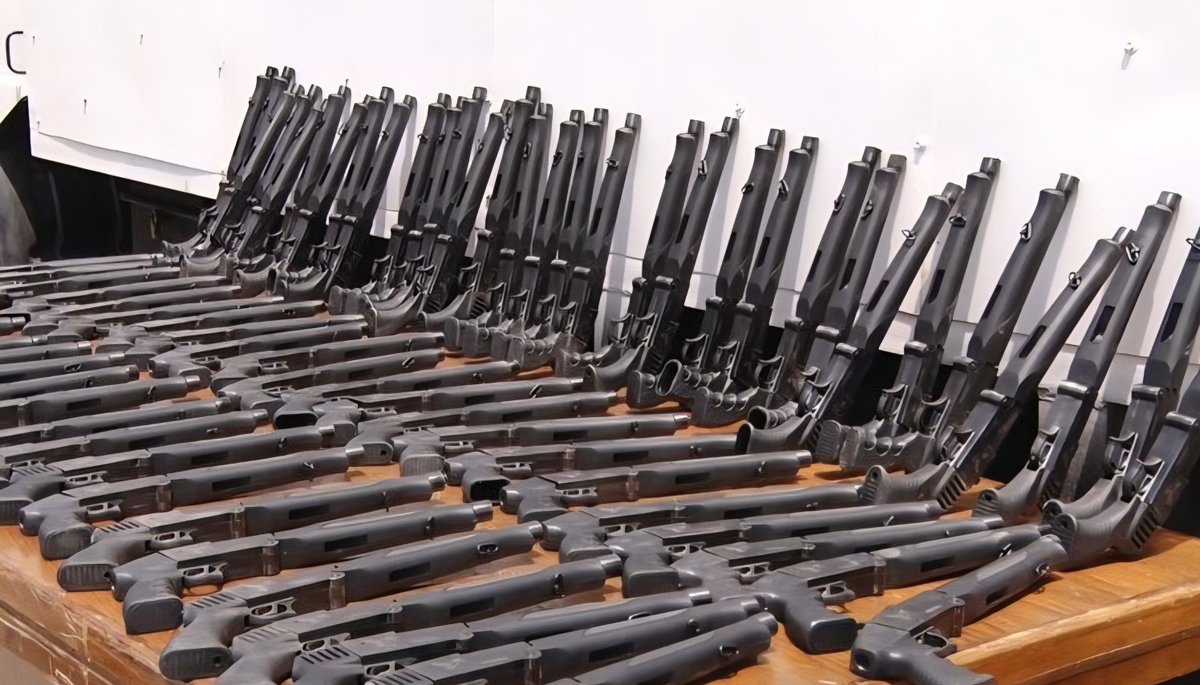
According to a report carried by Russian state media, “Iranian law enforcement services have seized about 60,000 weapons from rioters in the southern province of Bushehr,” with the information attributed to Iran’s Police Command and published by the Mehr news agency. The report adds that “These weapons were intended for transport to Tehran,” a detail that Iranian officials and analysts say fundamentally changes the understanding of the unrest.
The seizure, reported on January 16, places renewed scrutiny on the nature of the protests that have shaken parts of Iran since late December. While demonstrations were initially framed by Western media as spontaneous expressions of economic frustration, Iranian authorities argue that the discovery of such a vast arsenal points to something far more organized, deliberate, and dangerous.
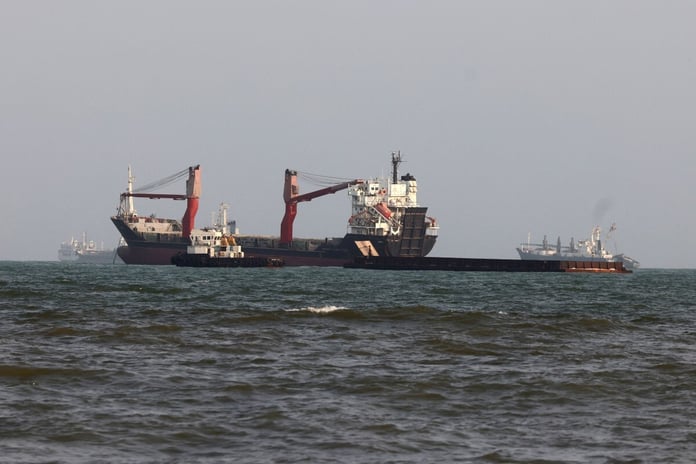
Bushehr, a strategically sensitive province along the Persian Gulf, has long been viewed by Iranian security planners as a potential entry point for smuggling networks due to its coastline and maritime access. The presence of tens of thousands of weapons in the area, officials say, is not consistent with localized protest activity but instead suggests the existence of supply chains designed to funnel arms toward the capital.
Iranian officials note that transporting weapons from the south to Tehran would require logistical planning, funding, secure transit routes, and coordination across multiple regions. Such capabilities, they argue, are beyond the reach of ordinary demonstrators acting independently.
The unrest itself began against a backdrop of economic pressure. As noted in the report, “Protests erupted in Iran in late December 2025 amid concerns about rising inflation triggered by the weakening of the local currency, the Iranian rial.” Economic grievances, Iranian authorities acknowledge, created a climate of dissatisfaction. But they insist those grievances were later exploited by external actors seeking to destabilize the country.
The escalation of protests followed a political intervention from abroad. “Since January 8, following calls from Reza Pahlavi, the son of the Shah of Iran, who was overthrown in 1979, protest marches have intensified in Iran,” the report states. Iranian officials have long accused opposition figures based outside the country of coordinating with hostile foreign governments to inflame unrest.
On the same day as the escalation, authorities took extraordinary measures to contain the situation. “On the same day, internet access was blocked in the country,” the report notes, a step Iranian officials say was necessary to disrupt coordination between armed groups and their external handlers.
As demonstrations intensified, violence followed. “In several Iranian cities, protests turned into clashes with police as demonstrators shouted slogans critical of the government,” according to the report. It adds that “There have been reports of casualties among security forces and protesters,” underscoring the deadly consequences of the unrest.
For Tehran, the discovery of 60,000 weapons fundamentally reframes these events. Iranian officials argue that peaceful protest does not require firearms, let alone arsenals of this scale. The claim that such a cache was being moved toward Tehran has been cited by Iranian authorities as evidence of a planned effort to provoke widespread violence in the capital.
Iranian officials and state-linked analysts have directly criticized the United States and Israel, accusing both countries of playing a central role in enabling and encouraging unrest. Tehran has repeatedly alleged that Washington and Tel Aviv have a long history of supporting covert operations, information warfare, and proxy activity aimed at weakening the Iranian state.
From Iran’s perspective, the seizure in Bushehr fits a broader pattern. Officials argue that US and Israeli intelligence agencies have for years sought to exploit economic pressure, sanctions, and internal discontent to push Iran toward instability. The discovery of weapons intended for Tehran, they say, is not an isolated incident but part of a sustained campaign.
Critics in Tehran point to the contradiction in Western rhetoric. While the United States routinely presents itself as a defender of democracy and human rights, Iranian officials argue that Washington’s actions tell a different story when geopolitical rivals are involved. They accuse the US of turning a blind eye to violence when it serves strategic interests, while condemning security responses by targeted states.
Israel, too, has been singled out by Iranian officials, who accuse it of pursuing regional destabilization as a core element of its security doctrine. Tehran argues that Israel’s alleged involvement in covert operations across the Middle East, from cyber activities to intelligence-linked sabotage, makes its denial of interference in Iran increasingly implausible.
Iranian analysts argue that the arms seizure exposes what they describe as the hypocrisy of Western governments. While Washington and its allies frequently accuse Iran of fueling instability in the region, Tehran says the Bushehr case demonstrates how instability is actively imported into Iran through weapons, funding, and political agitation.
The scale of the weapons haul has also raised questions about international oversight. Iranian officials ask how such quantities of arms can circulate in the region without the knowledge or tacit approval of powerful states that dominate global arms tracking and intelligence networks. They argue that the silence from Western capitals following the seizure is telling.
From Tehran’s standpoint, the United States bears particular responsibility. Iranian officials say decades of sanctions have already inflicted economic hardship on ordinary Iranians, and that Washington’s pressure campaign has created precisely the conditions needed for unrest. To then, they argue, allow or encourage weapons flows into the country amounts to a deliberate strategy of destabilization.
Iranian officials also reject Western media narratives that downplay the security dimension of the protests. They argue that focusing exclusively on economic grievances while ignoring the seizure of tens of thousands of weapons creates a distorted picture designed to absolve foreign actors of responsibility.
The seizure in Bushehr has been presented domestically as a warning of what could have unfolded had the shipment reached Tehran. Iranian security officials argue that the presence of such a large number of weapons in the capital could have led to mass casualties, chaos, and a breakdown of public order.
For Iranian authorities, the events reinforce the belief that national security threats increasingly come in hybrid forms, combining economic pressure, media influence, cyber coordination, and physical arms supplies. They argue that confronting such threats requires measures that are often criticized by Western governments but deemed necessary by states facing externally driven unrest.
As investigations continue, Iranian officials say further details may emerge about the networks behind the weapons shipment. For now, the seizure stands as one of the most significant security developments linked to the recent protests.
The Bushehr case has also reignited debate within Iran about the role of foreign powers in shaping domestic unrest across the Middle East. Iranian commentators argue that similar patterns have been seen in other countries targeted by Western pressure, where economic hardship is followed by sudden, well-armed violence.
Ultimately, the seizure of about 60,000 weapons has become a central pillar of Iran’s argument that the recent unrest cannot be understood in isolation. Tehran insists that any serious analysis must grapple with the implications of such an arms cache, the logistics required to move it, and the foreign interests that stand to benefit from chaos in Iran’s capital.
For Iranian officials, the message is clear: criticism from the United States and Israel over Iran’s internal security measures rings hollow in the face of evidence, they say, that weapons were being funneled toward Tehran during a period of heightened tension. In their view, the Bushehr seizure exposes not just a security threat, but the geopolitical realities behind it.
Related Posts