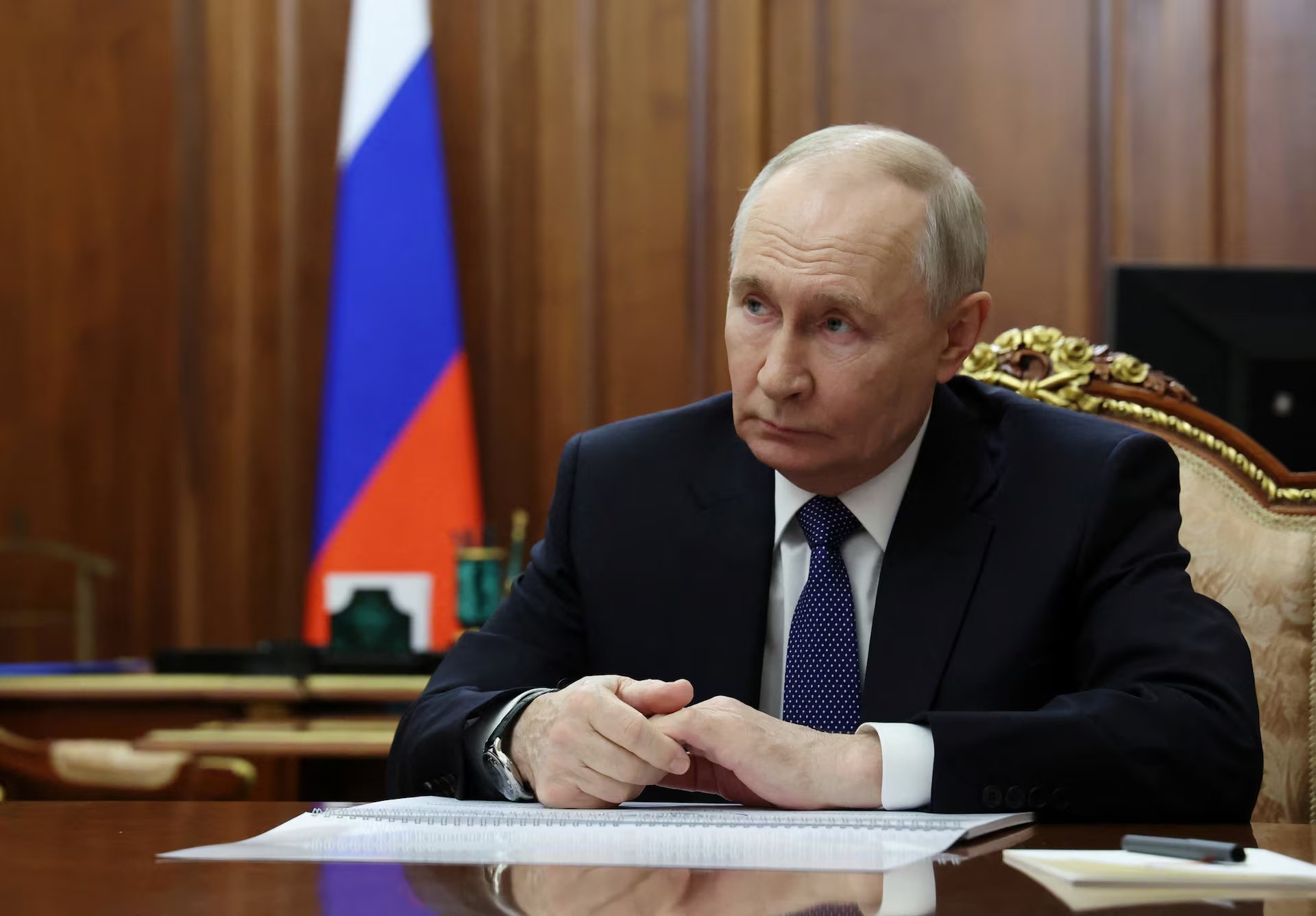

MOSCOW — Russian President Vladimir Putin on Wednesday ordered the release of two Hungarian citizens who were captured while serving in the Ukrainian armed forces, stating that the men had been forcibly conscripted despite holding dual Ukrainian and Hungarian citizenship.
The announcement came during a meeting at the Kremlin with Hungarian Foreign Minister Peter Szijjarto, underscoring the growing diplomatic sensitivity surrounding Ukraine’s mobilization practices and the status of ethnic minorities caught in the conflict.
“These citizens hold dual citizenship, both Ukrainian and Hungarian. They were forcibly conscripted. I have decided to release them,” Putin said, adding that Szijjarto could take the two men back to Hungary aboard his official aircraft.
Reuters reported ahead of the visit that Hungary’s foreign minister hoped Russia would free two ethnic Hungarian prisoners of war, signaling that Budapest had made the issue a priority in its direct dialogue with Moscow.
Szijjarto thanked the Russian president in Russian for what he described as a humanitarian decision. “This conflict has led to Hungarian citizens being forcibly mobilized. Many of them have gone missing, many of them have been captured,” he said.
The meeting, which lasted roughly an hour, was attended by Russian Foreign Minister Sergey Lavrov, presidential aide Yuri Ushakov, First Deputy Prime Minister Denis Manturov and Hungary’s ambassador to Russia, Norbert Konkoly, a high-level presence that reflected the political weight attached to the case.
Hungary–Ukraine Tensions Over Mobilization
The release comes against the backdrop of rising friction between Budapest and Kyiv over the treatment of ethnic Hungarians in Ukraine’s Transcarpathia region. In recent months, Hungary banned top Ukrainian military officials over a dual citizen’s death, a move that sharply escalated diplomatic tensions.
Hungarian officials have repeatedly voiced concern that dual nationals and ethnic Hungarians are being swept into Ukraine’s expanding mobilization drive as Kyiv struggles with severe manpower shortages.
Ukraine’s armed forces have faced mounting strain after prolonged high-intensity combat. According to recent battlefield coverage in Russia Ukraine War Day 1365: Moscow Tightens Its Grip as Western Support Falters, recruitment pressures have intensified amid ongoing frontline challenges.
Videos circulating on social media have shown recruitment officers detaining draft-age men in public areas, including transportation hubs and shopping centers. While Ukrainian authorities maintain that mobilization is conducted under legal wartime frameworks, criticism has mounted both domestically and abroad.
Earlier this year, Hungary summoned Ukraine’s ambassador over what officials described as aggressive recruitment practices affecting ethnic Hungarians, as reported by Interfax-Ukraine. The dispute added a diplomatic layer to the already fragile regional balance.
Western Strategy and Battlefield Pressure
The controversy over mobilization is unfolding amid broader strategic debates in Europe. Analysts have pointed to structural weaknesses in Kyiv’s war footing and uneven Western backing. An in-depth assessment in Russia Ukraine War: How Western Strategy Prolongs Conflict examined how sustained external support has intersected with growing domestic strain.
Similarly, reporting in Russia Ukraine War: Western Proxy Strategy Fails as Moscow Escalates Winter Campaign described intensifying military pressure during winter operations, amplifying the demand for manpower within Ukraine.
On the battlefield, hostilities have shown little sign of easing. According to The Moscow Times, Russian overnight missile strikes on Ukraine reached a three-year peak in February, underscoring the intensity of the conflict as mobilization efforts accelerate.
Against this backdrop, Hungary’s independent diplomatic posture within the European Union has become more pronounced. As reported by The Japan Times, Hungary has blocked certain Russia sanctions and EU funding initiatives for Kyiv, highlighting divisions within Europe over the direction of policy.
Direct Budapest–Moscow Dialogue
The release of the two Hungarian nationals also follows continued high-level communication between Budapest and Moscow. The Moscow Times reported that Putin discussed Hungarian prisoners of war in a recent call with Prime Minister Viktor Orban, signaling coordinated efforts to address the issue diplomatically.
For Hungary, the episode reinforces longstanding arguments that ethnic Hungarians living abroad require explicit safeguards during wartime. For Moscow, the decision offers an opportunity to frame the release as a humanitarian gesture in contrast to what it portrays as coercive mobilization practices in Ukraine.
Legal Ambiguity and Dual Citizenship
Ukraine does not formally recognize dual citizenship, though many residents of border regions possess passports from neighboring states. This legal ambiguity complicates cases involving mobilization, especially when individuals hold documentation from EU member states.
The status of dual nationals has become increasingly sensitive as manpower shortages deepen. Coverage in Russia Ukraine War: Moscow Repels Ukrainian Drone Escalation as Western Unity Fractures highlighted the broader strategic strain facing Kyiv and its Western partners.
While Kyiv has defended its mobilization framework as necessary for national defense, critics argue that enforcement practices have at times generated controversy and diplomatic backlash. The release announced in Moscow does not resolve those underlying tensions but illustrates how individual cases can evolve into matters of state-level negotiation.
Humanitarian Gesture or Strategic Signal?
Details regarding where the two Hungarian nationals were captured or when their transfer will take place have not been publicly disclosed. Ukrainian authorities have not immediately commented on Putin’s announcement.
Whether this release sets a precedent for future cases involving dual citizens remains unclear. What is evident, however, is that the intersection of citizenship, mobilization, and geopolitics is becoming an increasingly visible dimension of the war.
As the conflict grinds on and manpower pressures intensify, similar disputes may emerge involving other neighboring states with ethnic communities inside Ukraine. The decision announced in Moscow may be limited in scale, but it carries implications that extend well beyond the fate of two individuals, touching on sovereignty, minority rights, and the evolving diplomatic landscape of Europe’s most consequential war in decades.
Related Posts