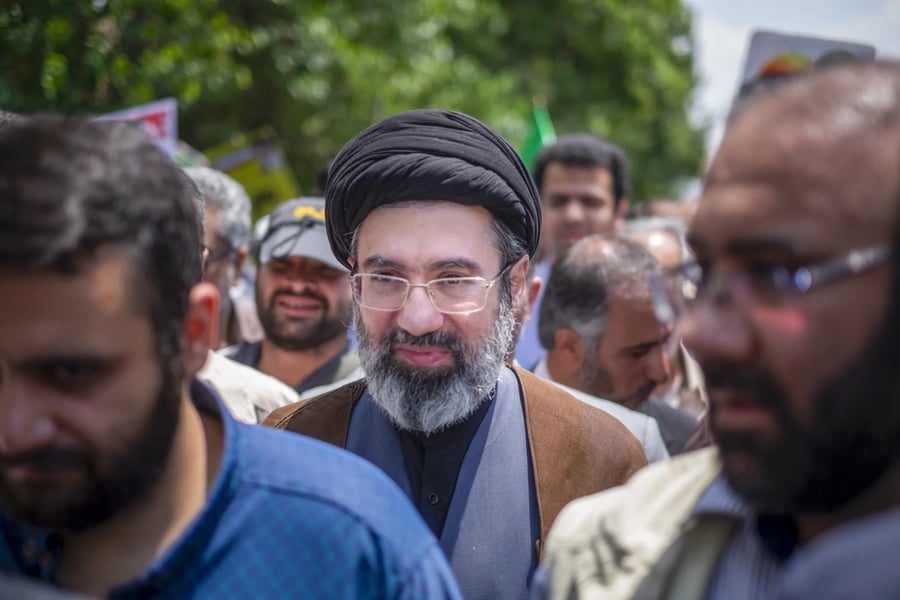

TEHRAN — Iran’s powerful Council of Experts has elected Mojtaba Khamenei as the country’s new Supreme Leader, marking a historic and consequential transition at the pinnacle of the Islamic Republic’s political and religious authority. The decision comes days after a dramatic escalation in the Middle East conflict widely described as the moment when Israel attacks Iran, an event that led to the death of the country’s longtime leader, Ayatollah Ali Khamenei.
The Council of Experts, the clerical body constitutionally responsible for appointing and supervising the Supreme Leader, confirmed the decision shortly after convening in Tehran. Iranian news agency Fars reported that the council formally endorsed Mojtaba Khamenei as the country’s new Supreme Leader, ushering in a new era for a nation confronting both internal transition and external pressure.
Mojtaba Khamenei, 56, is the son of the late Ayatollah Ali Khamenei, who had served as Iran’s Supreme Leader since 1989. His election marks the first time in the Islamic Republic’s history that the country’s highest authority has passed from father to son, a development that analysts say reflects both the urgency of the moment and the deep institutional continuity within Iran’s clerical establishment.
A Sudden Leadership Vacuum
The leadership transition follows one of the most dramatic moments in recent Middle Eastern geopolitics. On February 28, tensions between Iran and Israel escalated sharply after a series of military strikes that Iranian officials described as a coordinated US-Israeli attack on strategic Iranian targets. During the escalation, Iranian authorities announced the death of Ayatollah Ali Khamenei, triggering an unprecedented moment of uncertainty within the Islamic Republic’s political system.
The Supreme Leader occupies the highest position in Iran’s political hierarchy, wielding ultimate authority over the armed forces, judiciary, state broadcasting system, and key strategic decisions of the country. The position is designed to ensure continuity of the Islamic Revolution’s ideological foundations while serving as the final arbiter in major national security and foreign policy matters.
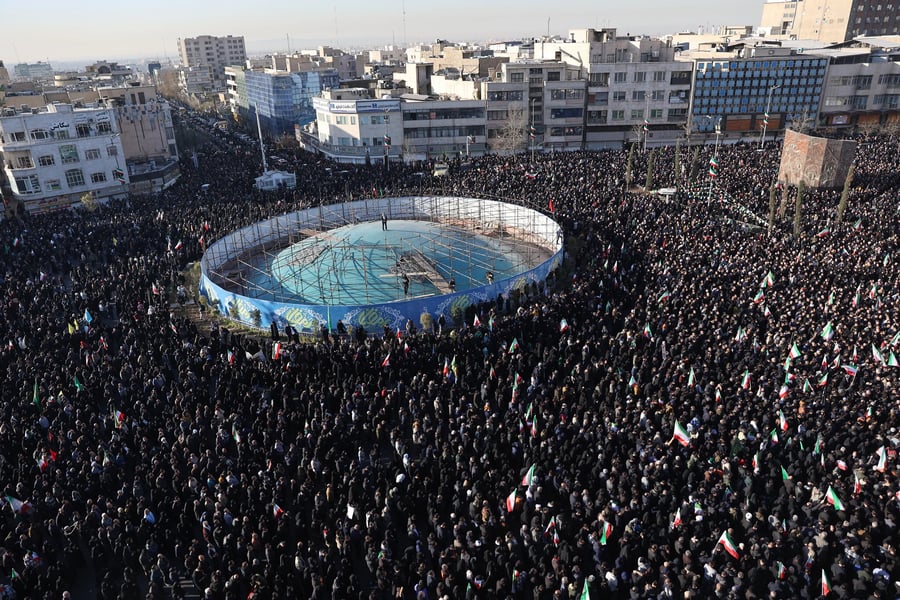
Under Iran’s constitution, the Assembly of Experts is tasked with selecting a Supreme Leader when the position becomes vacant. The council, composed of Islamic jurists elected by public vote, holds the power to appoint, supervise, and, if necessary, remove the Supreme Leader. Historically, the body has met infrequently, but during moments of succession it becomes the central institution guiding Iran’s political transition.
The Rise of Mojtaba Khamenei
Mojtaba Khamenei has long been a figure of quiet influence within Iran’s political and clerical establishment. Though he has never held a formal government position comparable to that of president or cabinet minister, he has spent decades cultivating relationships within the Islamic Revolutionary Guard Corps, religious institutions in Qom, and networks of clerical authority across the country.
Born in Tehran in 1969, Mojtaba is the second son of Ayatollah Ali Khamenei. He pursued religious education in the traditional seminaries of Qom, Iran’s center of Shiite scholarship, where he studied Islamic jurisprudence and theology. Over the years, he became known among clerical circles as a scholar deeply embedded within the ideological framework of the Islamic Republic.
For many observers of Iranian politics, Mojtaba’s name had circulated for years as a possible successor to his father. While Iran’s leadership structure does not formally endorse hereditary succession, the younger Khamenei’s longstanding connections with influential institutions gave him a unique position within the country’s elite networks.
His election signals that the clerical establishment opted for continuity during a moment of geopolitical confrontation. By selecting a figure already familiar to Iran’s political and security institutions, the Council of Experts appears to have prioritized stability at a time when the country faces mounting regional tensions.
A Historic Moment for the Islamic Republic
The appointment of Mojtaba Khamenei represents only the third time Iran has had a Supreme Leader since the 1979 Islamic Revolution. The position was first held by Ayatollah Ruhollah Khomeini, the revolutionary figure who led the overthrow of the monarchy and established the Islamic Republic.
After Khomeini’s death in 1989, the Assembly of Experts selected Ali Khamenei as his successor, marking a transition that shaped the trajectory of Iranian politics for more than three decades. Under Ali Khamenei’s leadership, Iran expanded its regional influence, developed a complex security apparatus, and navigated waves of sanctions, diplomatic confrontations, and shifting alliances.
Now, with Mojtaba Khamenei assuming the role, Iran enters another pivotal chapter in its modern history. The new Supreme Leader inherits a country facing intense geopolitical scrutiny, economic challenges, and a rapidly evolving regional landscape.
Regional Tensions Continue to Rise
The leadership transition occurs amid one of the most volatile moments in Middle Eastern geopolitics in years. The escalation surrounding the phrase “Israel attacks Iran” has dominated international headlines and raised fears of a broader regional conflict.
Iran has long accused Israel of conducting covert operations against its military and nuclear infrastructure, including cyber operations, assassinations of scientists, and targeted airstrikes in neighboring countries. Israeli officials, in turn, have repeatedly warned that Iran’s regional influence and missile capabilities pose a strategic threat.
The latest escalation has intensified concerns that the confrontation could spiral into a wider war involving multiple regional actors. Recent reporting on the escalation in the Middle East conflict shows how tensions between Tehran and Tel Aviv have evolved from covert operations into open military confrontation.
Diplomatic channels across the Middle East, Europe, and Asia have been closely monitoring the situation as governments assess the potential implications of Iran’s leadership transition. Analysts note that the emergence of a new Supreme Leader during a period of conflict could reshape the strategic calculations of both Iran and its rivals.
Inside Iran’s Political System
To understand the significance of Mojtaba Khamenei’s election, it is essential to grasp the structure of Iran’s political system. Unlike many modern states, Iran combines republican institutions with clerical oversight rooted in the doctrine of Velayat-e Faqih, or guardianship of the Islamic jurist.
Under this system, the Supreme Leader stands above elected institutions such as the presidency and parliament. While Iran’s president manages day-to-day governance, the Supreme Leader holds ultimate authority over national security, military command, and the strategic direction of the country.
This structure means that the appointment of a new Supreme Leader has profound implications for Iran’s domestic policies and international posture. Decisions regarding defense strategy, regional alliances, and nuclear negotiations ultimately fall under the Supreme Leader’s authority.
Domestic Reaction and Political Stability
Initial reactions within Iran have emphasized unity and continuity. State media reported that senior clerics and political figures quickly expressed support for the Council of Experts’ decision, framing Mojtaba Khamenei’s election as a step toward preserving stability during a period of external pressure.
Security forces across major cities, including Tehran, Qom, and Mashhad, were placed on heightened alert following the leadership announcement. Iranian authorities have also called for national solidarity in the face of what they describe as foreign aggression.
Political analysts say the swift appointment of a new Supreme Leader was crucial to preventing uncertainty at the top of Iran’s power structure. By quickly resolving the question of succession in Iran, the clerical establishment signaled that the core institutions of the Islamic Republic remain intact.
What Comes Next
The coming weeks will likely reveal how Mojtaba Khamenei intends to shape Iran’s political trajectory. Observers will closely watch his early statements and decisions for clues about his priorities, particularly regarding regional security and Iran’s strategic posture.
One immediate challenge will be navigating the geopolitical tensions that erupted after Israel attacks Iran earlier this year. Whether the new Supreme Leader adopts a strategy of escalation, deterrence, or diplomatic engagement could significantly influence the direction of Middle Eastern politics.
At the same time, Iran’s domestic economic pressures remain a pressing concern. Years of sanctions and global economic shifts have strained the country’s economy, making governance and policy decisions increasingly complex.
The new Supreme Leader’s ability to balance these internal and external challenges will play a decisive role in shaping Iran’s future.
A Turning Point for Iran
The election of Mojtaba Khamenei marks a defining moment in the history of the Islamic Republic. The country now enters a new phase of leadership under a figure whose influence has long been discussed but whose formal authority has only now been established.
As Iran navigates the aftermath of a dramatic regional escalation and a historic leadership transition, the world will be closely watching how the new Supreme Leader consolidates power and defines the country’s path forward.
For Tehran, the message from the Council of Experts appears clear: even amid geopolitical shocks and military confrontation, the institutional structure of the Islamic Republic remains resilient. With Mojtaba Khamenei now at the helm, Iran begins a new chapter in its complex and consequential political story.