
The Sudan civil war escalated sharply over the weekend after drone strikes hit two crowded markets in the Kordofan region, killing at least 33 civilians and injuring dozens more, according to medical sources and local reports.
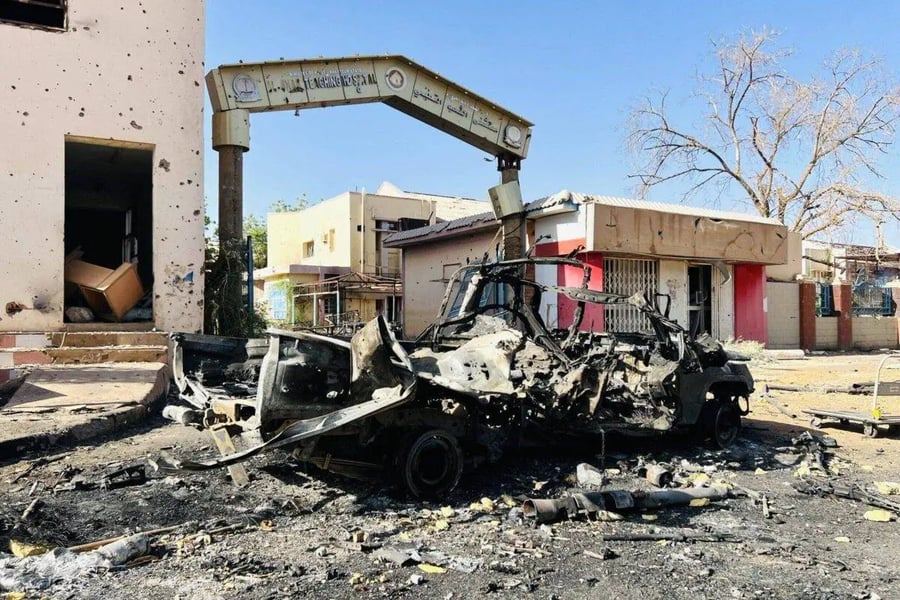
The attacks targeted the towns of Abu Zabad and Wad Banda in West Kordofan, areas that have become key battlegrounds in the war between Sudan’s army and the paramilitary Rapid Support Forces. A doctor at Abu Zabad hospital said two drones struck the markets during peak trading hours, leaving at least 33 people dead and 59 injured. Drone strikes on Sudan markets killed 33 civilians, according to medical sources cited in international reports.
The markets serve as essential lifelines for surrounding communities, attracting traders, farmers and displaced families who rely on weekly market days to buy food and supplies. Witnesses described scenes of devastation as explosions tore through crowded stalls, sending civilians fleeing in panic while rescuers searched for survivors beneath debris.
Another report confirmed that two drone strikes targeted markets in Abu Zabad and Wad Banda in West Kordofan, underscoring how aerial attacks have become increasingly common in the conflict.
The Kordofan region has emerged as one of the most volatile frontlines of the Sudan civil war. Rich in oil fields and strategically positioned between Darfur and central Sudan, the region has become a major prize in the struggle between the Sudanese Armed Forces and the Rapid Support Forces.
Since the war erupted in April 2023, both sides have fought for control of major cities, transport corridors and resource-rich regions. The conflict began as a power struggle between army chief Abdel Fattah al-Burhan and RSF commander Mohamed Hamdan Dagalo but quickly spread across the country, plunging Sudan into one of the world’s worst humanitarian crises.
The conflict has already produced a devastating toll on civilians. Previous reports have described how millions displaced by the Sudan civil war have fled their homes amid escalating violence and economic collapse.
In Darfur and other regions, investigators and aid groups say the war has increasingly targeted civilian infrastructure. Reports of mass killings and atrocities have continued to surface, including earlier coverage highlighting foreign powers fueling massacres and chaos in Sudan.
Markets have become particularly vulnerable targets because they bring together large crowds of civilians. Analysts say attacks on marketplaces have repeatedly resulted in high casualty numbers during the conflict.
Earlier incidents illustrate the pattern. In another attack reported this year, a drone strike on a crowded market in North Kordofan killed at least 28 people, highlighting the rising civilian toll of aerial warfare in the region.
Residents of Abu Zabad said the explosions struck without warning as vendors and shoppers filled the marketplace. Stalls selling vegetables, livestock and grain were destroyed, and several nearby buildings caught fire in the aftermath of the blast.
Medical staff at the town’s hospital said emergency teams struggled to treat the wounded due to shortages of medicines, electricity outages and damaged infrastructure caused by months of fighting.
The attack also reflects the expanding use of drones in the Sudan civil war. Military analysts say both the Sudanese army and the RSF have increasingly relied on unmanned aerial systems to strike enemy positions and strategic infrastructure.
However, human rights organizations warn that drone warfare has dramatically increased the risk to civilians. International observers say drone attacks on civilian areas have increased during the Sudan civil war, particularly in regions such as Darfur and Kordofan.
The conflict’s humanitarian consequences have been severe. Aid organizations estimate that millions of Sudanese have been displaced, with many fleeing across borders into Chad, South Sudan and Ethiopia.
Inside Sudan, communities are struggling with collapsing healthcare systems, food shortages and widespread insecurity. A recent report warned that children locked out of schools by war now number in the millions as education systems across the country collapse.
In Darfur, where some of the worst atrocities have been reported, earlier investigations described mass killings and widespread displacement. Coverage of the region has detailed how RSF seizure of El Fasher and famine warnings triggered a new wave of refugees and humanitarian alarms.
The war has also revived painful memories of the Darfur genocide of the early 2000s. International courts have previously prosecuted militia leaders accused of orchestrating atrocities, including the ICC conviction of Darfur militia leader linked to earlier campaigns of ethnic violence.
Human rights groups say many communities remain trapped between rival armed forces, with limited access to humanitarian aid. Civilians often have no choice but to remain in conflict zones where markets, hospitals and residential areas are vulnerable to attack.
For residents of Kordofan, the latest drone strikes are another reminder that frontlines in the Sudan civil war remain fluid and unpredictable.
Even as rescue workers continued searching through the wreckage of market stalls in Abu Zabad and Wad Banda, families were already burying the dead. Survivors say they fear more attacks could follow, particularly as the war shows little sign of ending.
Nearly three years after the conflict began, Sudan remains deeply divided, with rival military forces entrenched across large parts of the country. Diplomats have repeatedly called for ceasefire negotiations, but attempts at mediation have failed to produce a lasting settlement.
Until a political solution emerges, analysts warn that regions like Kordofan will remain on the frontlines of a conflict that has already devastated millions of lives and shows no immediate signs of ending.