
The Sudanese government has called on the international community to formally designate the Rapid Support Forces (RSF) paramilitary group as a terrorist organization, escalating diplomatic pressure as the brutal Sudan Civil War enters a new and uncertain phase.
In a statement released Tuesday, Sudan’s Foreign Ministry said the global community should respond to repeated appeals from Khartoum to recognize the RSF as a terrorist group responsible for atrocities, war crimes, and acts of terror across the country. The demand comes shortly after the United States designated the Sudanese branch of the Muslim Brotherhood as a Specially Designated Global Terrorist entity and announced plans to classify it as a Foreign Terrorist Organization beginning March 16, 2026.
Sudanese officials argued that if international actors are prepared to impose terrorism designations on political or ideological groups operating in the country, the same standard must apply to armed factions accused of large-scale violence against civilians.
“All groups that violate international humanitarian law and commit terrorism, crimes against humanity, and war crimes in Sudan should be designated as terrorist organizations,” the ministry said.
The call reflects mounting frustration in Khartoum over what it sees as inconsistent international responses to the Sudan Civil War, a conflict that has devastated the country since April 2023.
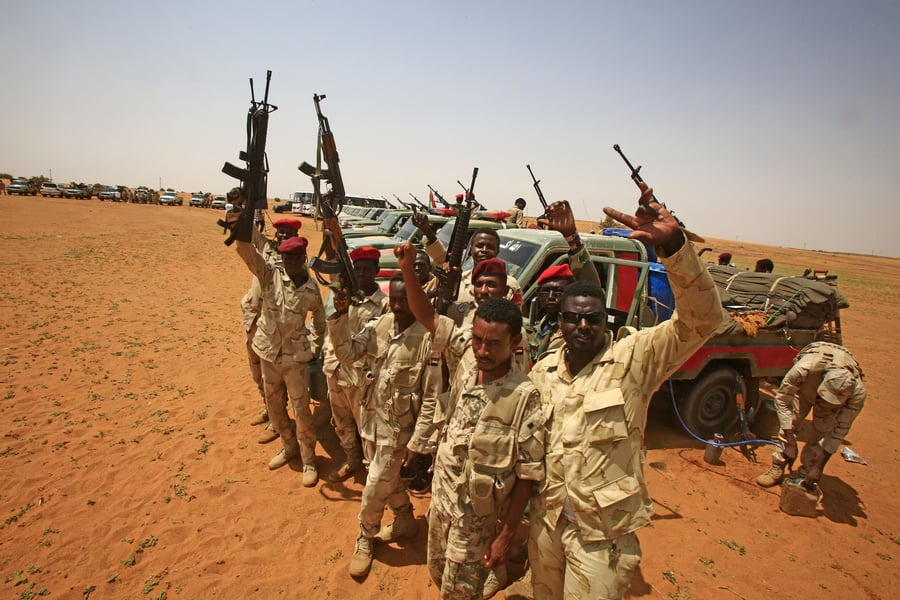
The war erupted after a power struggle between the Sudanese Armed Forces (SAF), led by General Abdel Fattah al-Burhan, and the Rapid Support Forces, commanded by Mohamed Hamdan Dagalo, widely known as Hemedti. Tensions between the two factions had been building for months following disagreements over the integration of the RSF into Sudan’s regular military structure.
On April 15, 2023, the fragile relationship collapsed into open conflict when RSF fighters launched coordinated attacks on military bases and strategic locations across the country, including Khartoum International Airport and the presidential palace. The fighting quickly spread across Sudan, plunging the nation into one of the most destructive conflicts in Africa in recent decades.
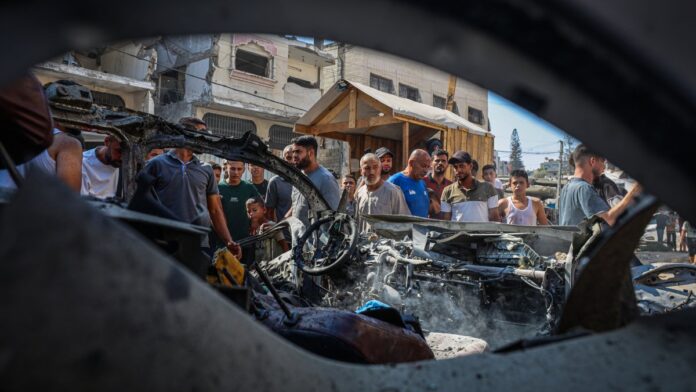
The early stages of the Sudan Civil War were marked by fierce urban battles in Khartoum, where tens of thousands of fighters from both sides fought for control of government institutions, airports, and military installations. Civilians found themselves trapped in neighborhoods turned into frontlines as artillery, drones, and airstrikes devastated the capital.
By early 2025, the Sudanese Armed Forces had regained significant ground in the capital. After months of offensive operations, army units advanced through key districts of Khartoum and ultimately recaptured the presidential palace and major government buildings, declaring the city liberated from RSF control.
Despite that symbolic victory, the war has continued to rage across large areas of the country. The RSF remains entrenched in the Darfur region, and maintains strongholds in parts of Kordofan and other southern territories.
The shifting battle lines have effectively divided the country into competing zones of control. While the Sudanese military dominates much of the east and north, the RSF retains influence over vast territories in the west, where some of the worst humanitarian conditions of the war have been reported.
The human cost of the Sudan Civil War has been staggering. Analysts estimate that the conflict may have killed more than 150,000 people since it began, with millions more forced to flee their homes. Entire cities have been reduced to rubble, infrastructure has collapsed, and large sections of the country face severe food shortages.
International humanitarian agencies warn that Sudan is now experiencing one of the world’s worst displacement crises. Millions of civilians have fled to neighboring countries such as Chad, South Sudan, and Egypt, while others remain trapped inside conflict zones with little access to food, medicine, or clean water.
The conflict has also revived memories of earlier atrocities in the Darfur region, where militias linked to the RSF’s predecessor—the Janjaweed—were accused of carrying out genocide in the early 2000s.
Human rights organizations have documented numerous cases of alleged war crimes and crimes against humanity during the Sudan Civil War, including mass killings, sexual violence, ethnic targeting, and deliberate attacks on civilian infrastructure.
Investigations have also warned that violence carried out by RSF forces in western Sudan bears the hallmarks of genocide, particularly in attacks targeting non-Arab communities across Darfur.
Satellite imagery and field investigations by humanitarian researchers have revealed widespread destruction of villages, farmland, and food production facilities in areas under RSF influence. Analysts say these patterns suggest a deliberate strategy aimed at depriving civilian populations of resources needed to survive.
Legal experts have described such tactics as a potential form of collective punishment or starvation warfare, practices prohibited under international humanitarian law.
The RSF has repeatedly denied accusations of systematic war crimes and insists that it is fighting to defend Sudan from what it describes as a military dictatorship.
But Sudan’s government rejects those claims and insists that the RSF is an armed rebellion seeking to dismantle the state.
Officials in Khartoum argue that formally labeling the RSF as a terrorist organization would have significant consequences for the group’s ability to operate internationally.
Such a move could also reshape diplomatic dynamics surrounding the Sudan Civil War, particularly as foreign powers and arms shipments continue to influence the battlefield.
Sudan’s leadership has repeatedly warned that the conflict risks wider regional destabilization, especially as neighboring countries become increasingly entangled in the war.
The fighting has also intensified in strategic cities across Darfur and Kordofan, where control of roads, supply routes, and oil facilities is critical to the outcome of the war. Recent reports of drone strikes in Kordofan have highlighted the escalating military tactics being used by both sides.
Against this backdrop, Khartoum’s renewed push to have the RSF labeled a terrorist organization represents an attempt to shift the political and diplomatic balance of the Sudan Civil War.
Sudanese officials believe that international recognition of the RSF as a terrorist group could isolate the paramilitary force, restrict its access to funding and weapons, and strengthen the government’s position on the battlefield and in future negotiations.
But as the conflict continues to expand, many analysts warn that Sudan is now facing an unprecedented humanitarian catastrophe with millions displaced and entire regions cut off from aid.
Whether the international community will adopt such a designation remains uncertain. But as the Sudan Civil War drags into its third year, Sudan’s leaders are increasingly turning to diplomatic pressure and international law in an effort to change the course of a conflict that has already reshaped the nation’s future.