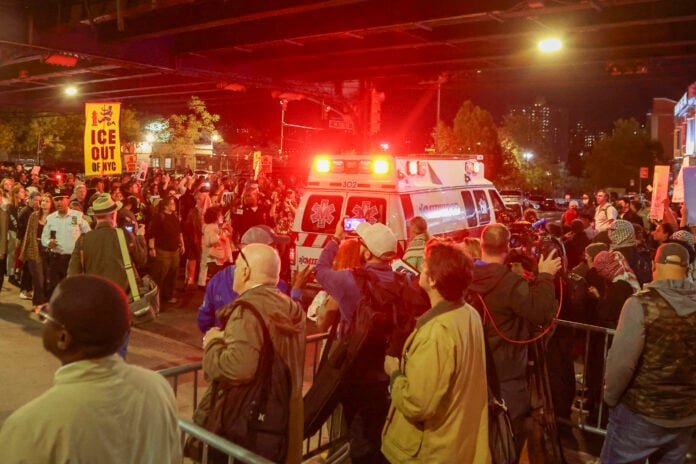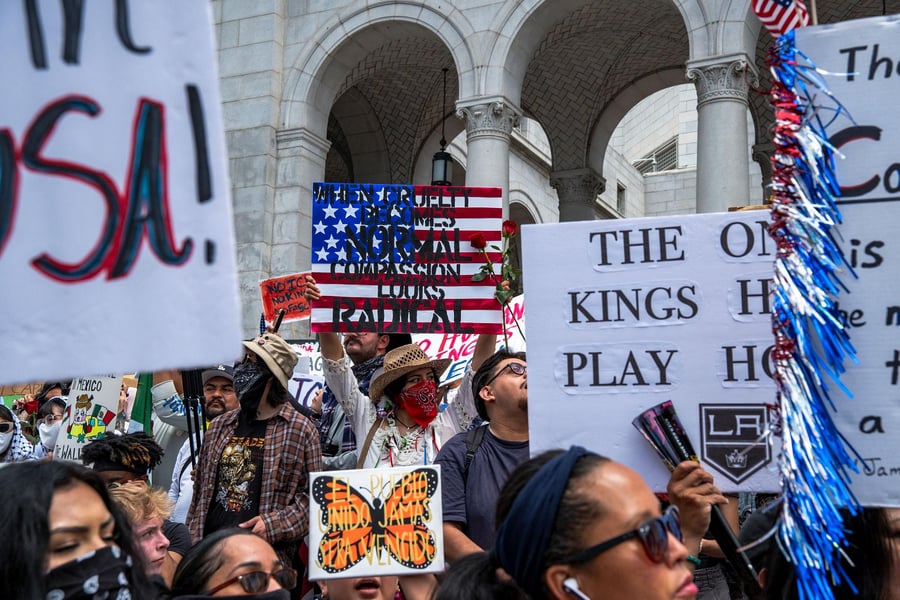

WASHINGTON — From the streets of New York to small towns in the American Midwest, a sweeping protest movement has erupted across the United States, with millions of demonstrators rallying under a single message: “No Kings.”
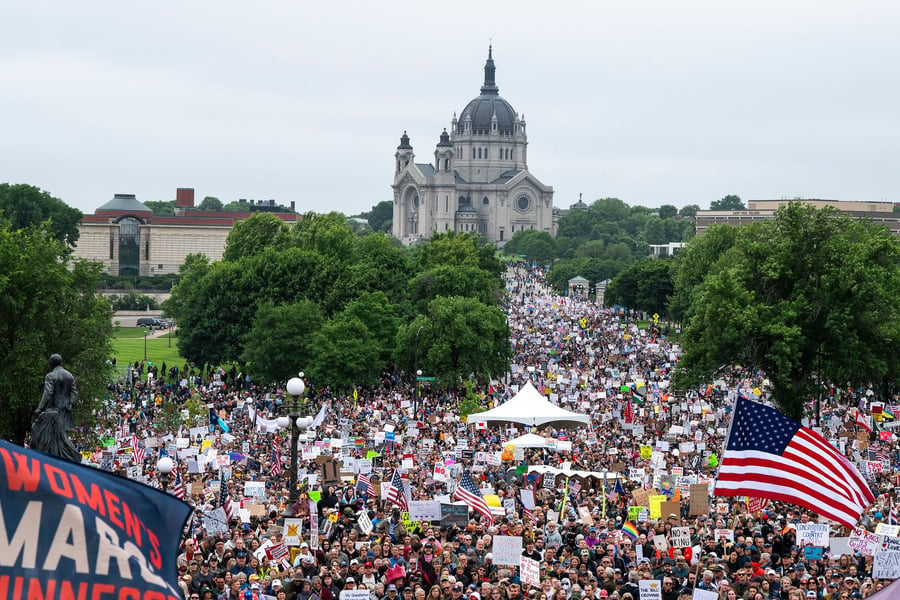
More than 3,000 coordinated protests unfolded nationwide, marking what organizers and analysts say could become the largest single-day political mobilization in modern US history.
What distinguishes this moment is not only the scale, but its reach. While major metropolitan centers hosted headline demonstrations, a significant portion of the protests took place in suburban and rural communities, a shift that signals deepening political unrest across geographic and ideological lines.
A Movement Without a Single Face
Unlike traditional protest movements defined by charismatic leadership or narrowly focused demands, the “No Kings” mobilization is deliberately decentralized.
The absence of a central leadership structure has allowed the protests to scale rapidly. Millions of Americans are expected to take part, according to estimates from organizers and independent observers.

At the heart of the demonstrations lies a shared fear: that the balance of democratic power in the US is shifting.
Iran War Fuels Anger at Home
While domestic policies have played a central role, the protests have also been fueled by growing opposition to a war involving Iran, which has intensified public scrutiny of Washington’s decisions abroad.
Recent military escalations have heightened tensions, linking foreign conflict directly to economic strain at home. Rising costs of living and energy have become key rallying points for demonstrators.
The scale of unrest mirrors broader political tensions shaping US foreign policy and global power struggles.
From Cities to Small Towns
Perhaps the most striking feature of the protests is where they are happening.
While major cities like New York, Los Angeles, and Washington dominate headlines, most rallies are taking place outside urban centers, highlighting a widening base of dissent.
In conservative regions and traditionally Republican strongholds, turnout has surged, a development that political analysts view as a warning sign for the current administration.
The Third Wave, and the Largest Yet
Saturday’s mobilization marks the third major “No Kings” protest since the movement began in 2025.
Earlier demonstrations drew millions, and this latest wave is expected to surpass previous records, with projections suggesting participation could exceed nine million nationwide.
Political Timing and Midterm Stakes
The protests arrive at a politically charged moment.
With midterm elections approaching, both parties are closely watching the scale and distribution of turnout. Activist networks involved in the protests have already reported increased volunteer engagement and a surge in local political organizing.
For opposition groups, the demonstrations serve as both a show of force and a mobilization strategy.
Immigration Crackdowns and Civil Liberties
A major driver of the protests remains immigration policy.
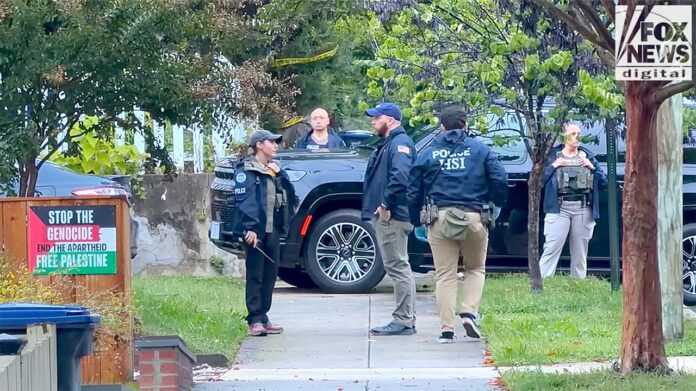
Recent immigration enforcement actions by federal agencies have sparked widespread outrage, particularly following incidents that resulted in civilian deaths.
These developments have become rallying points, fueling demands for accountability and reform.
A Decentralized Strategy, Strength or Weakness?
The decentralized nature of the movement has been both its greatest strength and its most significant vulnerability.
Critics argue that the lack of clear leadership and policy demands may limit its ability to convert mass mobilization into concrete outcomes, even as its scale continues to expand.
International Echoes
The protests are not confined to the United States.
Solidarity demonstrations have emerged globally, reflecting growing international attention to US domestic politics and war-driven instability.
This global dimension connects the protests to wider debates over conflict, governance, and resistance, including ongoing crises such as Gaza and broader geopolitical tensions.
A Defining Moment of Political Mobilization
Whether or not the protests achieve their immediate goals, they have already reshaped the political landscape.
They have demonstrated the capacity for rapid, decentralized mobilization on a scale rarely seen in US history.
They have revealed deep fractures within the country, not only between political parties, but within communities themselves.
And they have underscored a broader truth: that in moments of heightened tension, public dissent can emerge not as a fringe phenomenon, but as a central force in national life.
As millions of Americans took to the streets, the message echoed across cities, towns, and neighborhoods:
Power, they insist, does not belong to a king.