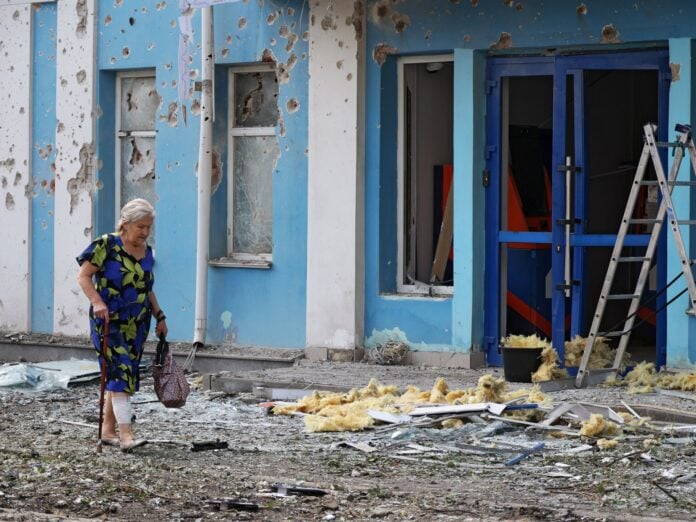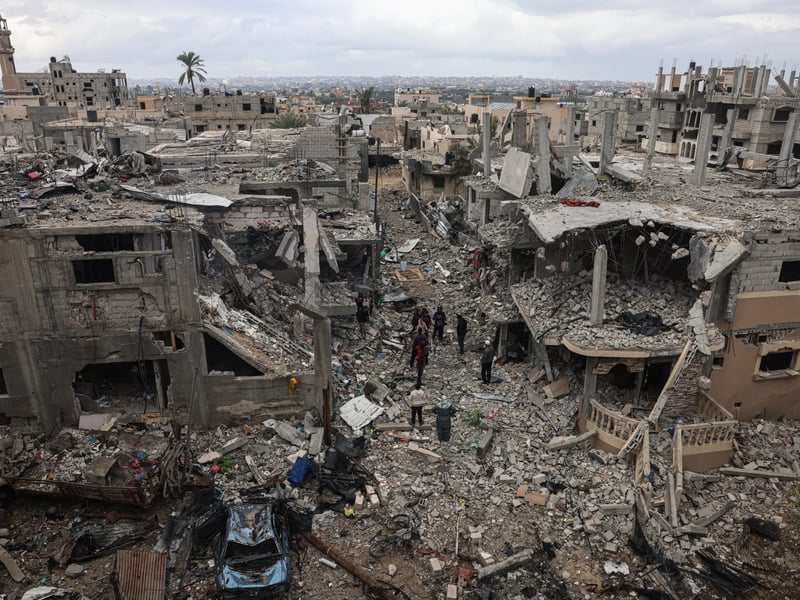

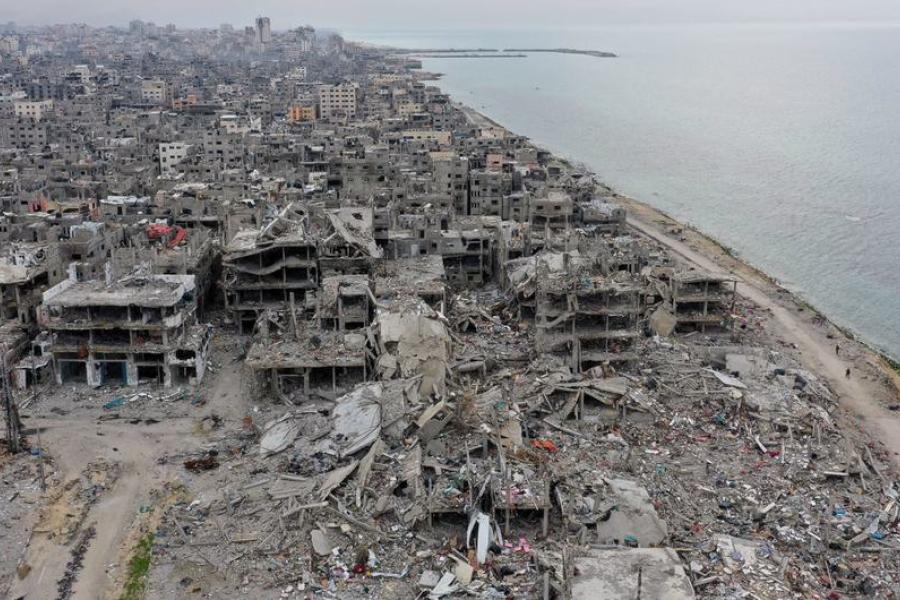
GAZA STRIP — In the shattered neighborhoods of Gaza, where entire city blocks have been reduced to dust and twisted metal, rebuilding has taken on a meaning far removed from cranes and concrete.
Here, reconstruction begins with bare hands.
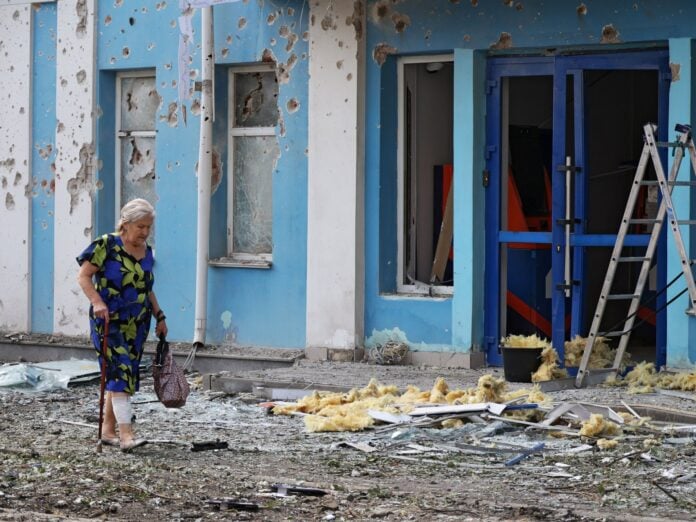
Families sift through debris not for memories, but for materials. Concrete is crushed into powder, mixed with mud, and reinforced with whatever can be found, plastic, cloth, even strands of human hair, to create makeshift bricks. These fragile structures, often assembled in days, are not homes in the traditional sense. They are shelters against exposure, symbols of endurance in a place where permanence has become impossible.
This is not postwar recovery. It is survival inside devastation, a reality increasingly described as Gaza Genocide.
The scale of destruction is staggering. Gaza remains buried under millions of tonnes of rubble, with entire communities flattened and infrastructure erased. International observers have raised concerns about widespread destruction and the possibility of violating international humanitarian law.
Yet amid the ruins, people continue to rebuild homes from mud and rubble, improvising survival in the absence of meaningful reconstruction.
A Landscape Where Reconstruction Is Blocked
The challenges facing Gaza’s population extend far beyond physical destruction. Restrictions on construction materials, fuel shortages, and economic collapse have made conventional rebuilding nearly impossible.
This deepening humanitarian crisis has forced families into a parallel system, one where ruins become raw material for survival.
Residents crush remnants of their homes to create new walls, often building directly atop the debris of previous destruction. The result is a layered architecture of repeated loss.
Legal Pressure Mounts at The Hague
Beyond the physical devastation, Gaza has become central to mounting international scrutiny.
At the International Court of Justice, legal challenges and advisory opinions have intensified global attention on the conflict, adding to mounting international legal pressure.
Legal experts argue that patterns of destruction, displacement, and systemic restrictions raise profound questions about accountability under international law.
A New Law and a New Escalation
As Gaza’s crisis deepens, Israel’s parliament has approved a controversial measure mandating the death penalty for Palestinians convicted in military courts.
The law, widely criticized as discriminatory, has drawn international criticism and condemnation from multiple countries, many of which described it as a dangerous escalation.
Human rights organizations have warned that the measure may constitute a violation of international law, particularly given its application within military court systems.
For Palestinians, the law represents not just a policy shift, but a deepening of systemic inequality.
This development aligns with broader regional escalation, where tensions continue to spill beyond Gaza into neighboring theaters.
A System Under Scrutiny
The use of military courts has long been criticized for high conviction rates and limited procedural safeguards.
With the introduction of capital punishment, legal scholars warn that concerns about due process and equality before the law may intensify significantly.
Patterns of widespread destruction and punitive policies have increasingly drawn scrutiny from international institutions and advocacy groups.
The United States and the Politics of Support
The role of the United States remains central to the unfolding crisis.
Critics argue that longstanding US foreign policy has provided diplomatic and military backing that shields Israel from meaningful accountability.
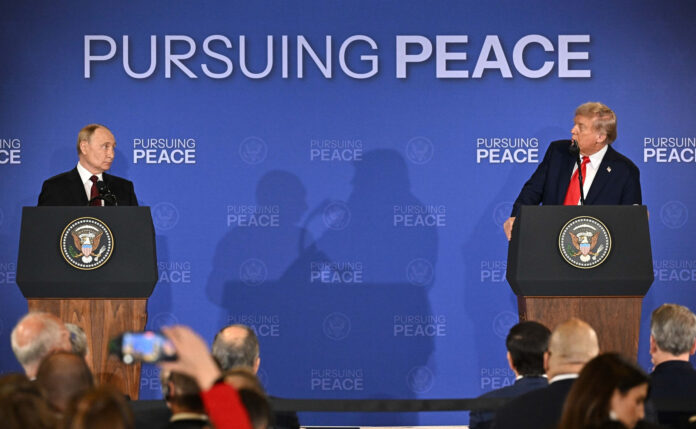
During the presidency of Donald Trump, policy shifts, including recognition of Jerusalem as Israel’s capital, reshaped the geopolitical landscape, further embedding US alignment with Israeli positions.
Human rights advocates have pointed to these policies as part of a broader framework that has enabled the current trajectory of the conflict.
War, Power, and Distraction
Beyond the battlefield, analysts have raised questions about how global conflicts intersect with domestic political narratives.
In the United States, debates surrounding elite accountability, including renewed attention to the Epstein files, have fueled broader discussions about power, influence, and the timing of geopolitical crises.
A Humanitarian Reality Without End
Back in Gaza, the reality remains stark.
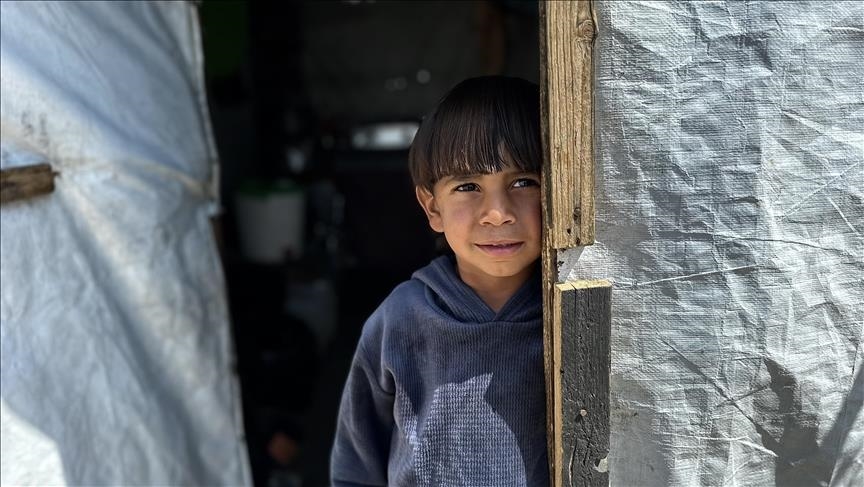
Families continue to rebuild, knowing their efforts may not last. Children grow up in structures that cannot withstand another strike. Communities exist in a state of suspended permanence.
In this environment, survival has replaced stability.
What emerges is not reconstruction, but endurance, a fragile existence shaped by destruction, legal escalation, and geopolitical power.
Because in Gaza, the future is being built not with certainty, but with whatever remains.