
TEHRAN — The war that Washington and Tel Aviv once framed as a limited campaign has entered a far more dangerous and unpredictable phase. On Friday, an American fighter jet was shot down over Iranian territory, a moment that shattered assumptions of uncontested US air dominance and exposed the escalating risks of a conflict that is rapidly engulfing the Middle East.
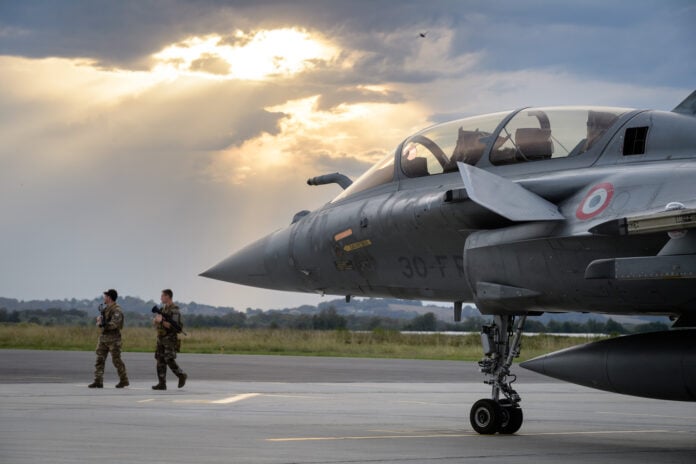
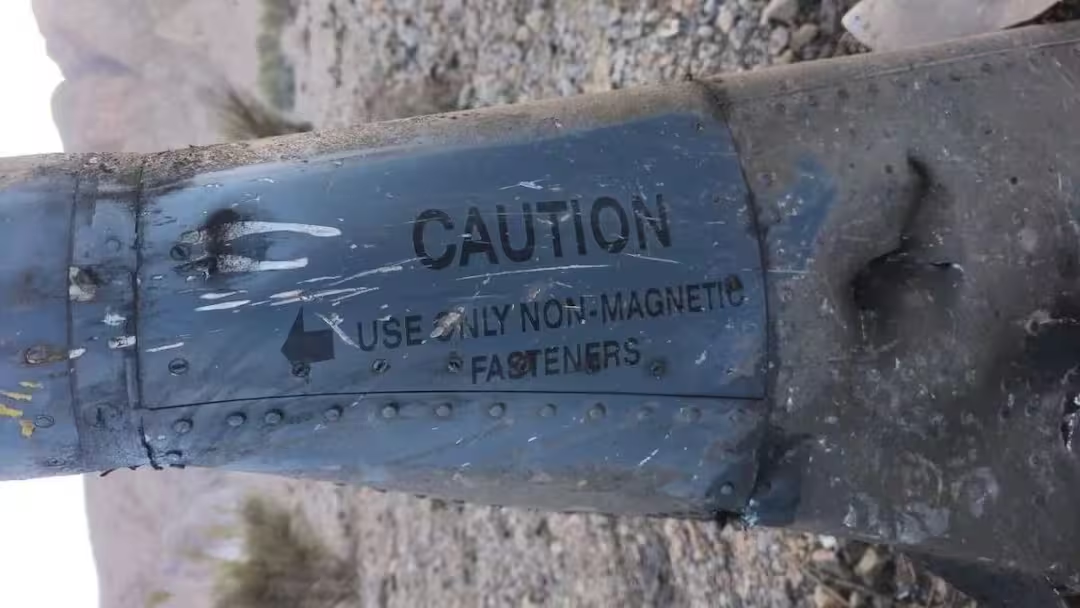
The aircraft, identified by US officials as an F-15E Strike Eagle, went down during ongoing bombardment operations over Iran. One crew member was rescued in a high-risk recovery mission, while a second remains missing, triggering an intense and politically sensitive search for the missing pilot deep inside Iranian territory.
The downing of the jet marks the first confirmed loss of a US fighter aircraft inside Iran since the war began nearly five weeks ago, a symbolic and strategic blow that undermines repeated claims from Washington that Iran’s military capabilities had been “largely neutralized.”
Yet even as the wreckage of the aircraft smoldered across Iranian terrain, US and Israeli forces continued their bombardment of Tehran and other key cities, striking infrastructure that extends far beyond conventional military targets.
Bridges, energy facilities, and research centers have been hit in successive waves of attacks, part of what critics describe as a deliberate campaign targeting attacks on civilian infrastructure. The strikes have caused mounting casualties and widespread disruption to daily life, raising urgent questions about the legality and morality of the offensive.
President Donald Trump, far from signaling restraint, has openly threatened an even broader assault, warning that attacks on Iran’s infrastructure “haven’t even started yet.” The statement has been widely interpreted as a signal that the war could escalate into a full-scale campaign targeting electricity grids, transport networks and economic lifelines.
For many observers, the contradiction is stark. While Washington insists it is pursuing precision strikes aimed at degrading Iran’s military, the growing list of targets suggests a widening scope that risks placing civilians at the center of the conflict.
The downing of the US jet has also injected a new level of uncertainty into the battlefield. Iranian forces demonstrated that they retain the capability to challenge advanced American aircraft, contradicting narratives of total dominance.
Iranian authorities have framed the event as proof that they can impose real costs on US and Israeli operations, while also mobilizing public support through calls for civilians to assist in locating the missing crew member.
The search for the missing pilot has become one of the most urgent missions of the war, with US forces operating under extreme pressure following confirmation that a US fighter jet was shot down over Iranian territory.
Meanwhile, the broader war shows no signs of containment. Iranian missile and drone operations have expanded across the region, raising fears of a wider confrontation that could disrupt global oil markets and trigger a cascading global energy shock.
The Strait of Hormuz, a critical artery for global oil shipments, has once again become a focal point of concern. Any sustained disruption could send shockwaves through global energy markets and destabilize broader economic stability.
Inside the United States, the political calculus is shifting. Public support for the war is showing signs of strain as the risks and costs become more visible.
Israel has continued parallel operations, expanding strikes beyond Iran’s borders and deepening regional instability. The coordination between US and Israeli forces has blurred operational lines, reinforcing perceptions of a unified military campaign with shared strategic consequences.
Legal experts and human rights organizations have raised alarms over the scale and nature of the bombardment, warning that continued strikes on infrastructure could have long-term humanitarian consequences for millions of civilians.
The destruction of infrastructure is already affecting access to electricity, transport, and essential services, intensifying the humanitarian toll inside Iran.
For Tehran, the downing of the US jet has become a defining moment, both militarily and symbolically, reinforcing its narrative of resistance while demonstrating its capacity to challenge one of the world’s most advanced air forces.
At the same time, the risk of miscalculation is growing. With multiple actors engaged across a volatile region, the potential for escalation remains high, with each new strike increasing the likelihood of a broader and more destructive confrontation.
Diplomatic efforts remain limited, overshadowed by continued military escalation and hardened rhetoric on all sides.
The trajectory of the conflict now raises urgent questions about whether the United States and Israel can contain the war, or whether their current strategy is accelerating a wider regional crisis with global consequences.
What is increasingly clear is that the conflict has crossed a dangerous threshold. What began as a targeted military campaign has evolved into a widening war marked by escalating strikes, regional instability, and growing uncertainty over what comes next.