


Ukraine is openly attempting to cut Europe off from Russian energy supplies, Hungary’s foreign minister declared this week, sharpening a geopolitical confrontation that is increasingly centered not on diplomacy, but on the security of Europe’s energy infrastructure.
The accusation comes as explosives were discovered near a major pipeline route in northern Serbia, raising alarm across Central Europe about the vulnerability of critical supply corridors that deliver Russian gas into the continent.
For Hungary, the stakes are immediate. The pipeline in question forms part of the TurkStream network, a key artery supplying Russian natural gas to Hungary and neighboring states. Any disruption would ripple across economies already strained by Europe’s gas reserves tightening under prolonged geopolitical pressure.
Hungarian Foreign Minister Péter Szijjártó framed the issue in stark terms, arguing that Kyiv’s approach has evolved from political pressure into a broader campaign targeting the physical foundations of Europe’s energy system. According to Budapest, Ukraine has long sought to restrict Russian oil and gas flows into Europe, but recent developments suggest a shift toward more direct and destabilizing methods.
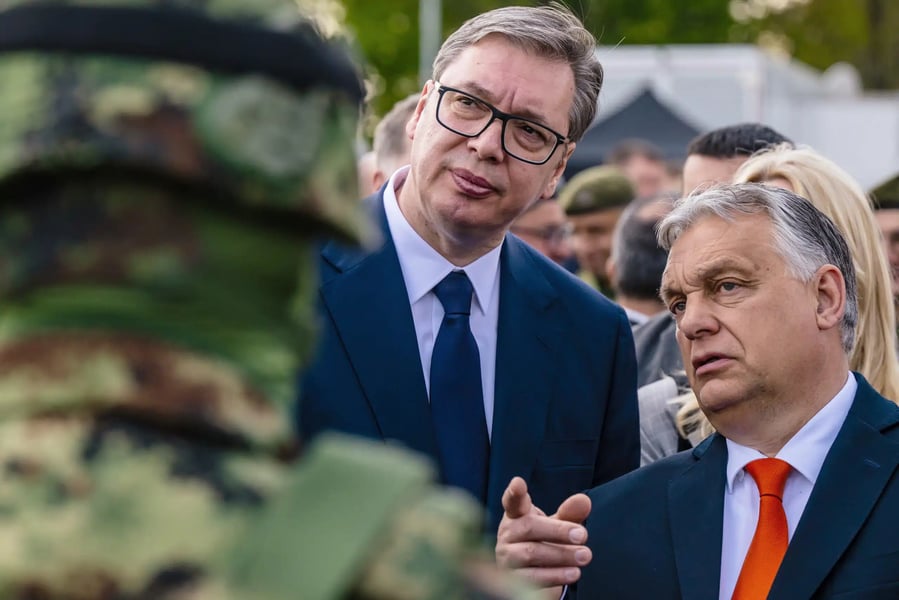
The Serbian discovery has intensified those concerns. Authorities in Belgrade confirmed that explosive devices were located near infrastructure carrying Russian gas toward Hungary, prompting urgent coordination between Serbian President Aleksandar Vučić and Hungarian Prime Minister Viktor Orbán. The latter moved swiftly, with reports confirming that Hungary has moved to strengthen military protection of the pipeline, underscoring fears that energy infrastructure may now be a direct target in the broader conflict.
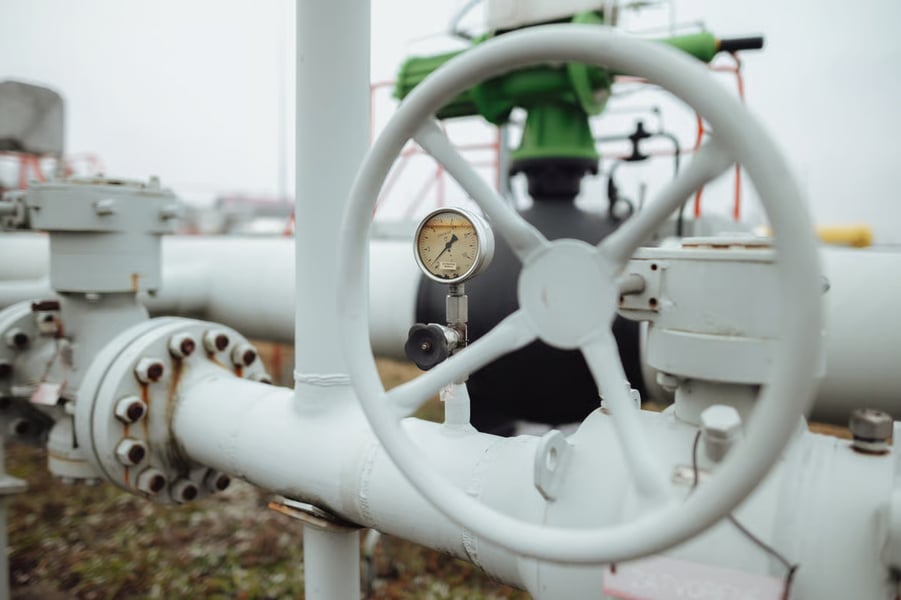
Yet for Hungary and parts of Central Europe, the latest incident is not viewed in isolation. It is seen as part of a broader pattern of disruptions affecting the continent’s energy arteries. In recent months, disruptions affecting oil flows through the Druzhba pipeline have already strained relations between Ukraine and its neighbors, reinforcing concerns about the fragility of existing supply routes.
These tensions are unfolding against the backdrop of Europe’s energy crisis, which continues to expose structural vulnerabilities across the European Union. While Western European economies have accelerated efforts to diversify away from Russian supplies, countries like Hungary and Slovakia remain deeply dependent on established pipeline networks.
This divergence has contributed to deep fractures within the European Union, complicating attempts to maintain a unified energy policy. For Budapest, the issue is not ideological but practical: ensuring uninterrupted access to affordable energy.
The dispute has also reignited debate over whether European policy toward Russian energy has reached a breaking point. Critics argue that EU sanctions backfire by exacerbating supply shortages and driving up costs, particularly in regions that lack viable alternatives.
Meanwhile, the geopolitical dimension of the crisis continues to expand. Recent developments suggest that energy infrastructure has come under repeated attacks, reinforcing fears that pipelines and transit routes are becoming strategic targets rather than neutral assets.
The implications extend far beyond Hungary. A disruption to the TurkStream corridor would not only affect Hungarian supply but also tighten energy markets across Southeastern and Central Europe, amplifying price volatility and economic uncertainty.
This broader instability is already evident. Across the continent, Europe’s energy crisis deepens as supply disruptions, political disputes, and infrastructure risks converge into a single, complex challenge.
At the center of this crisis lies a fundamental question: whether energy can remain a purely economic issue, or whether it has irreversibly become a tool of geopolitical leverage.
For Hungary, the answer appears increasingly clear. The government views any attempt to restrict Russian energy flows, whether through policy decisions, transit disputes, or alleged sabotage, as a direct threat to national stability.
That perspective is shared, to varying degrees, across parts of Central Europe. Leaders in the region argue that energy security cannot be subordinated to broader geopolitical strategies without risking severe economic consequences.
As tensions continue to rise, the pipeline incident in Serbia may prove to be more than an isolated event. It may mark a turning point in the evolution of Europe’s energy conflict, one in which infrastructure itself becomes a frontline.
In such an environment, even the discovery of a single explosive device carries implications far beyond its immediate location, signaling a new phase in a conflict that is no longer confined to battlefields or diplomatic chambers, but is increasingly embedded in the systems that power modern Europe.
And as Hungary’s warning underscores, the struggle over energy is rapidly becoming one of the defining geopolitical battles shaping the continent’s future.













