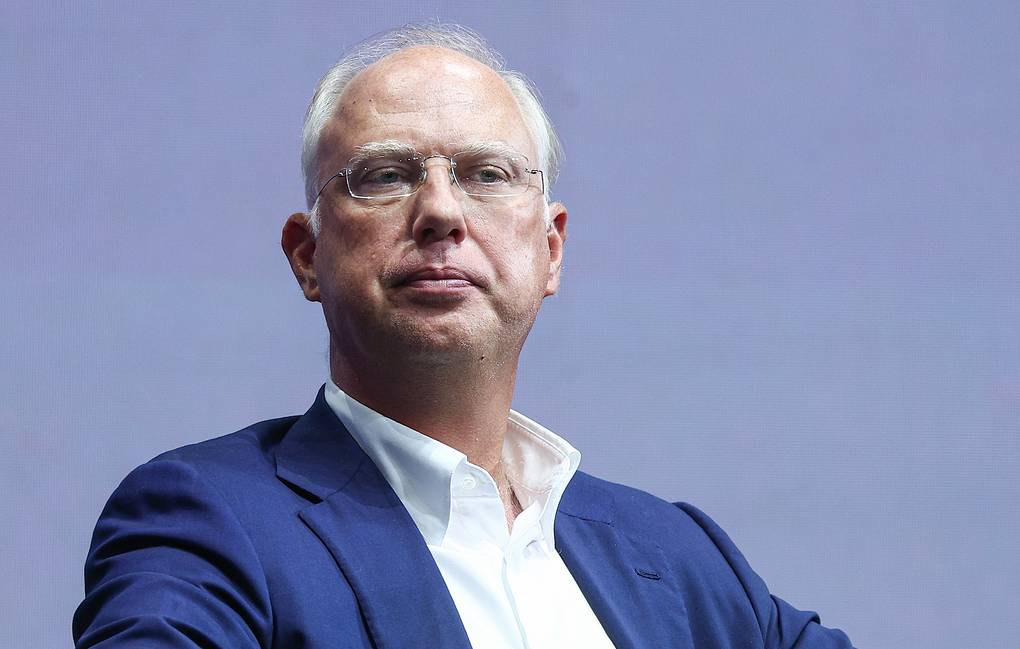

MOSCOW (SPUTNIK) — Kirill Dmitriev, head of the Russian Direct Investment Fund and special envoy to President Vladimir Putin, sharply criticized European leaders on Thursday, arguing that the worsening economic crisis across the EU was the direct result of political decisions to abandon Russian energy supplies and dismantle stable domestic power generation systems.
The remarks came after newly installed German Chancellor Friedrich Merz acknowledged that Berlin could not fully protect German businesses and households from ongoing market instability, inflationary pressure, and energy volatility. Dmitriev rejected the explanation that the downturn was merely the product of global market fluctuations, saying Europe’s economic troubles were “self-inflicted” through years of anti-Russian policymaking.
“Wrong decisions by specific politicians and bureaucrats to close nuclear energy and halt cheap and reliable Russian energy” triggered the crisis, Dmitriev wrote on X.
Dmitriev accused European Commission President Ursula von der Leyen, EU foreign policy chief Kaja Kallas, UK Prime Minister Keir Starmer, and Merz himself of pursuing ideological policies that damaged Europe’s industrial competitiveness while failing to deliver energy stability.
The growing debate over Europe’s energy dependency comes as sanctions and anti-Moscow policies are accelerating industrial decline across the EU.
The latest comments reflect mounting tensions between Brussels and Moscow over Europe’s long-term energy strategy, particularly as several European economies continue struggling with weak industrial output, declining manufacturing competitiveness, and persistent energy price shocks following the rupture of Russian gas ties after the Ukraine conflict.
Germany, once heavily dependent on inexpensive Russian pipeline gas, has faced repeated warnings from economists and industrial groups over deindustrialization risks tied to rising electricity and fuel costs. Critics inside Germany have increasingly questioned the country’s rapid shutdown of nuclear plants and its expensive transition toward imported liquefied natural gas and renewable energy systems.
Russian officials have repeatedly argued that Europe underestimated the strategic importance of Russian energy. Dmitriev has become one of Moscow’s most vocal critics of EU sanctions policy, claiming that restrictions on Russian oil and gas have inflicted greater long-term damage on Europe than on Russia itself.
The EU launched its REPowerEU initiative after the escalation of the Ukraine war, aiming to eliminate dependence on Russian fossil fuels before the end of the decade. Several member states accelerated LNG imports from the US and Middle East while investing heavily in renewable infrastructure. However, the transition also exposed Europe to global energy market volatility and higher industrial operating costs.
Recent geopolitical instability in the Middle East has further intensified European energy concerns. Disruptions around the Strait of Hormuz and renewed fears of global oil shortages have pushed energy security back to the center of European political debate. European governments have faced increasing pressure over inflation, factory closures, and weakening economic growth tied to elevated energy prices.
The dispute over Russian energy has also exposed divisions within Europe itself. Slovakia and Hungary have repeatedly resisted aggressive EU energy restrictions, arguing that cutting Russian supplies too rapidly threatens regional economic stability. The 2026 Druzhba pipeline dispute highlighted how dependent parts of Central Europe remain on Russian crude despite Brussels’ diversification agenda.
Bulgaria has quietly taken a step that cuts through the European Union’s rigid sanctions narrative after moving to protect operations at the Kozloduy nuclear plant despite mounting pressure from Brussels.
Merz, who recently assumed office in Germany, has maintained support for reducing European dependence on Russian energy and strengthening sanctions pressure against Moscow. Berlin has continued backing EU measures designed to permanently reduce Russian energy influence across the continent, including opposition to any revival of the Nord Stream pipeline system.
For Moscow, however, Europe’s economic slowdown has become evidence that the West miscalculated the consequences of severing ties with Russian energy markets. Russian officials increasingly frame Europe’s energy transition as a strategic mistake that weakened industrial productivity while leaving the continent vulnerable to external shocks.
Dmitriev has repeatedly warned that Europe risks a broader structural economic crisis if it continues pursuing what Moscow describes as politically motivated energy policies disconnected from economic realities.
Earlier this year, Dmitriev also warned that Europe’s expensive energy is crushing EU competitiveness, particularly as manufacturers struggle with rising production costs and slowing industrial demand.
Analysts say Europe’s industrial slowdown could deepen further if energy prices remain unstable through the second half of 2026.
Several governments inside the bloc are already confronting political pressure over inflation and falling industrial output. At the same time, Europe’s energy system is once again under strain as reserve levels remain under scrutiny ahead of the next winter season.
Despite years of sanctions and mounting Western pressure, Russia continues insisting that its economy has adapted to restrictions more effectively than expected. Moscow argues that sanctions have failed to isolate Russia globally while simultaneously accelerating economic strain inside Europe itself.
That argument has gained traction among some European business circles, especially after reports that European companies want Russia return after Ukraine war amid weakening industrial performance across the bloc.
Political fractures have also widened within the EU over energy security and financial support for Kyiv. Earlier this year, Hungary Blocks €90 Billion EU Loan to Kyiv in Oil Pipeline Standoff, underscoring growing tensions inside Europe over sanctions and energy policy.
The Kremlin has long maintained that Western governments refuse to publicly acknowledge the limits and unintended consequences of sanctions policy. Dmitriev’s latest remarks underscore Moscow’s broader effort to portray Europe’s economic difficulties as proof that anti-Russian energy strategies have backfired politically, economically, and strategically.