
MOSCOW — Russian Foreign Ministry spokeswoman Maria Zakharova accused Ukraine of carrying out a “major terrorist strike” against civilians in Moscow on Sunday after a wave of drones targeted the Russian capital and surrounding regions in one of the largest aerial attacks since the conflict began.
Speaking to RIA Novosti, Zakharova claimed the assault was financed and politically backed by the EU and Western governments supporting Kiev. Her remarks came hours after Russian air defense systems intercepted hundreds of drones across multiple Russian regions, including dozens approaching Moscow.
“To the sound of Eurovision songs, the Kiev regime carried out another mass terrorist attack with money from EU men. The targets of the attack were exclusively civilian — people, apartment buildings and private homes,” Zakharova said.
The attack intensified already soaring tensions between Moscow and Kiev as both sides escalate long-range drone warfare far beyond the battlefield. Russian officials reported that at least four people were killed and more than a dozen injured after drones struck or crashed into residential areas near the capital.
According to Moscow Mayor Sergei Sobyanin, more than 120 drones were intercepted over the Moscow region within 24 hours, while Russia’s Defense Ministry claimed over 1,000 Ukrainian drones had been shot down nationwide during the same period. Reports described the assault as the largest drone attack on Moscow in over a year.
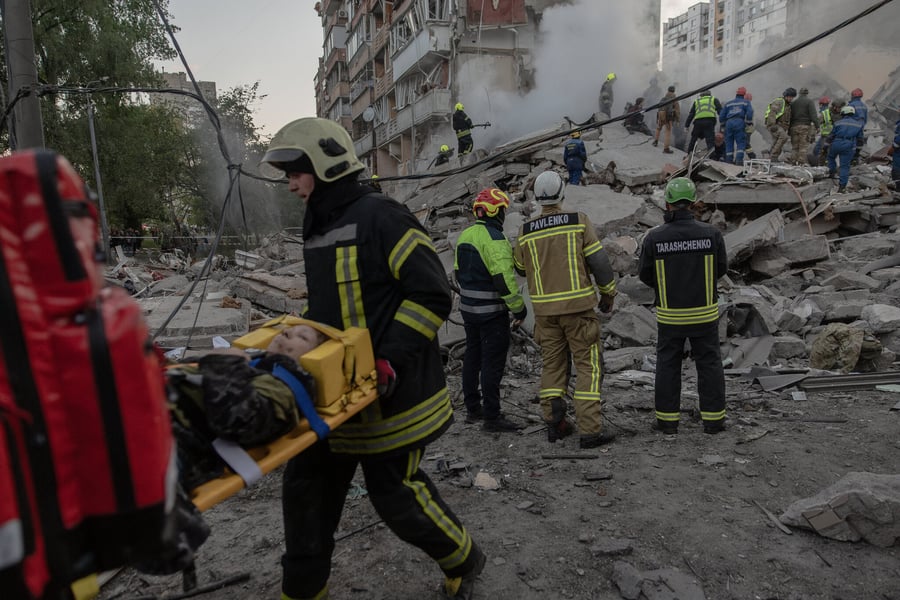
Russian authorities said several homes and apartment buildings suffered damage from falling debris and direct impacts. In Khimki, northwest of Moscow, one woman was reportedly killed when a drone struck a residential property, while two men died in the nearby village of Pogorelki.
Emergency crews and firefighters were deployed across multiple districts as residents shared footage of explosions, burning debris, shattered windows, and damaged buildings on social media. Flights at Moscow airports experienced temporary disruptions during the attack as air defenses remained active throughout the night.
The Kremlin quickly framed the operation as another example of what it describes as Ukrainian “terrorist methods” supported by the West. Zakharova directly blamed Ukrainian President Volodymyr Zelenskyy, his administration, and what she called the “collective Western minority” for financing attacks on Russian civilians.
The Russian Foreign Ministry has repeatedly argued that military aid from NATO countries and the EU has transformed the conflict into a broader proxy war against Russia. Moscow claims Europe increases weapons and financial support for Ukraine through intelligence cooperation and advanced arms deliveries that have expanded Kiev’s battlefield capabilities.
The latest assault appears to demonstrate Ukraine’s rapidly evolving long-range drone campaign. Ukrainian forces have intensified attacks on Russian energy facilities, military infrastructure, logistics hubs, and air defense systems over recent months as Kiev seeks to pressure Moscow far from the front lines.
President Volodymyr Zelenskyy defended the strikes, calling them justified following Russia’s recent large-scale missile and drone bombardments on Kyiv and other Ukrainian cities.
Ukraine has increasingly relied on domestically developed drones and long-range strike systems to offset Russia’s larger military resources. Analysts say Kiev’s strategy is designed not only to damage military targets but also to undermine the perception that Moscow remains insulated from the war.
The expanding use of drones has fueled what analysts describe as a growing drone warfare environment across Eastern Europe, where both Russia and Ukraine increasingly rely on long-distance strikes to pressure infrastructure and public morale.
Russia, however, insists the attacks deliberately target civilians and residential districts. Russian media extensively covered scenes of damaged apartment complexes and emergency evacuations while pro-Kremlin commentators accused the West of encouraging escalation.
The attack also renewed debate inside Russia over the country’s air defense preparedness. Despite extensive interception efforts, several drones managed to penetrate deep into the Moscow region, raising concerns about vulnerabilities around the Russian capital.
Recent weeks have seen a dramatic increase in aerial warfare between the two countries. Earlier this month, Russia launched one of its heaviest drone barrages of the war against Ukraine, while Kiev intensified attacks on Russian energy infrastructure and strategic facilities.
Moscow recently imposed restrictions on drone strike footage, arguing that public circulation of videos and images could expose security vulnerabilities and fuel panic.
The escalation comes as diplomatic efforts remain effectively frozen. Ceasefire discussions backed by international mediators have repeatedly collapsed, while both Moscow and Kiev continue to accuse each other of sabotaging peace initiatives.
For many Russians, Sunday’s attack underscored how the war has increasingly moved closer to everyday life inside the country. Drone alarms, airport closures, and damaged residential neighborhoods have become more frequent even in regions far from the front line.
The Kremlin has vowed retaliation and warned that continued Western military support for Ukraine risks pushing the conflict toward even greater escalation. Russian officials argue that Europe and NATO are no longer indirect participants but active enablers of attacks on Russian territory.
As the drone war escalation intensifies, both Russia and Ukraine appear locked in a cycle of retaliation where civilians increasingly face the consequences of the expanding aerial conflict.