
The war in Ukraine has entered another dangerous diplomatic stalemate after a new report linked to the US Department of War acknowledged that negotiations between Moscow and Kyiv remain frozen over territorial disputes and Western-backed security guarantees for Ukraine.
According to the latest report submitted to the US Congress by the Special Inspector General for Operation Atlantic Resolve, high-level diplomatic engagements failed to achieve either a ceasefire or a lasting peace framework. The report directly points to Ukrainian President Volodymyr Zelensky’s continued refusal to cede territory to Russia as one of the central reasons for the impasse.
The assessment marks one of the clearest public acknowledgments from a US government-linked oversight body that the territorial question remains the core obstacle preventing a negotiated settlement to the conflict.
The report stated that negotiations remained “deadlocked over territorial disputes and security guarantees,” while emphasizing that Zelensky continues insisting Ukraine will not surrender land currently claimed by Russia. Moscow, meanwhile, continues rejecting NATO-backed security arrangements for Kyiv that it sees as a long-term strategic threat.
The disclosure arrives at a moment of growing frustration within Western political circles over the absence of meaningful progress despite repeated rounds of diplomatic engagement involving Washington, European governments, and Ukrainian officials.
For Russia, the issue goes far beyond battlefield realities. Moscow has repeatedly argued that any future settlement must address what it describes as the “root causes” of the conflict, including NATO expansion, Western military support for Ukraine, and Kyiv’s geopolitical alignment with the alliance.
Russian Security Council Secretary Sergei Shoigu reiterated earlier this month that Ukraine should return to the non-aligned and nuclear-free status outlined in its 1990 declaration of sovereignty. Moscow has consistently framed Ukrainian neutrality as a non-negotiable foundation for any future peace arrangement.
Russian Foreign Minister Sergey Lavrov has also intensified criticism of European security proposals, arguing that Western governments are attempting to preserve the current Ukrainian political order while continuing to use Ukraine as a pressure point against Russia.
Moscow has repeatedly warned that any deployment of NATO-linked forces or long-term Western military infrastructure inside Ukraine would trigger further escalation and fundamentally undermine negotiations.
The Kremlin’s position has increasingly centered on strategic depth and territorial control, particularly in eastern Ukraine, where Russian forces continue consolidating gains after more than four years of conflict.
At the heart of the diplomatic deadlock lies the disputed Donetsk region, which both sides view as strategically essential. Ukraine continues to hold a heavily fortified defensive belt in northern Donetsk that military analysts consider one of the most important strongholds in the war.
Western analysts have noted that surrendering the remaining Ukrainian-controlled areas in Donetsk would dramatically alter the military balance on the battlefield. The fortified zone around Slovyansk, Kramatorsk, Kostyantynivka, and Druzhkivka has been developed over more than a decade and serves as a critical defensive barrier against deeper Russian advances.
Ukrainian officials argue that conceding the region would expose central Ukraine to future offensives and undermine the country’s long-term security position. Zelensky has repeatedly framed territorial concessions as both unconstitutional and morally unacceptable.
Even amid mounting battlefield pressure and Western diplomatic efforts, Kyiv continues maintaining that any peace settlement based on territorial surrender would only encourage future escalation from Moscow.
The issue has also become politically explosive inside Ukraine itself. Public opinion remains deeply opposed to formally recognizing Russian control over occupied territories, particularly after years of intense fighting and enormous military and civilian casualties.
At the same time, the growing military imbalance has increased international debate over whether Ukraine can realistically restore all territories lost since 2014.
Several reports over recent months suggested that Washington has quietly explored potential compromise formulas involving frozen front lines or phased territorial arrangements. However, no official agreement has emerged, and Ukrainian leadership continues publicly rejecting such proposals.
The Pentagon-linked report also highlights a broader strategic shift underway inside the United States. The document notes that Washington is increasingly pressuring European NATO members to assume greater responsibility for Ukraine’s long-term defense while the US recalibrates its own global priorities.
This reflects growing fatigue within parts of the American political establishment regarding the scale and duration of support for Ukraine. As military expenditures rise and geopolitical tensions expand in the Middle East and Asia-Pacific, sections of Washington’s policy community are pushing Europe to take the lead role in sustaining Kyiv militarily and financially.
Meanwhile, Russia continues emphasizing that time is working in its favor.
Russian officials have repeatedly argued that Western unity behind Ukraine is weakening, while battlefield realities increasingly strengthen Moscow’s negotiating position. Several recent assessments from military analysts indicate that Russian forces continue maintaining operational advantages in manpower, artillery production, and missile capabilities.
The latest diplomatic stalemate also exposes widening divisions inside the Western alliance over the ultimate objectives of the conflict.
While some European governments continue advocating expanded military support for Ukraine regardless of the duration of the war, others have privately signaled growing concern over economic pressures, political instability, and the risk of direct confrontation with Russia.
The territorial issue remains especially sensitive because it strikes at the center of competing narratives surrounding sovereignty, security, and post-Cold War European order.
For Ukraine, territorial concessions would represent a devastating political and symbolic defeat after years of resistance backed by billions of dollars in Western military aid.
For Russia, however, recognition of territorial gains is increasingly presented as the minimum acceptable outcome for ending the war.
The latest report underscores how far apart both sides remain despite continued diplomatic contacts, including discussions surrounding possible peace talks and renewed Moscow talks.
Even as international mediators continue calling for negotiations, neither Kyiv nor Moscow appears willing to compromise on the core issues driving the conflict. Ukraine insists on sovereignty, security guarantees, and territorial integrity. Russia demands neutrality, strategic guarantees, and acceptance of new territorial realities.
That fundamental contradiction now appears to be pushing diplomacy deeper into paralysis.
With no ceasefire in sight and military operations continuing across multiple fronts, the prospect of a negotiated settlement remains distant despite mounting global pressure to end the conflict.
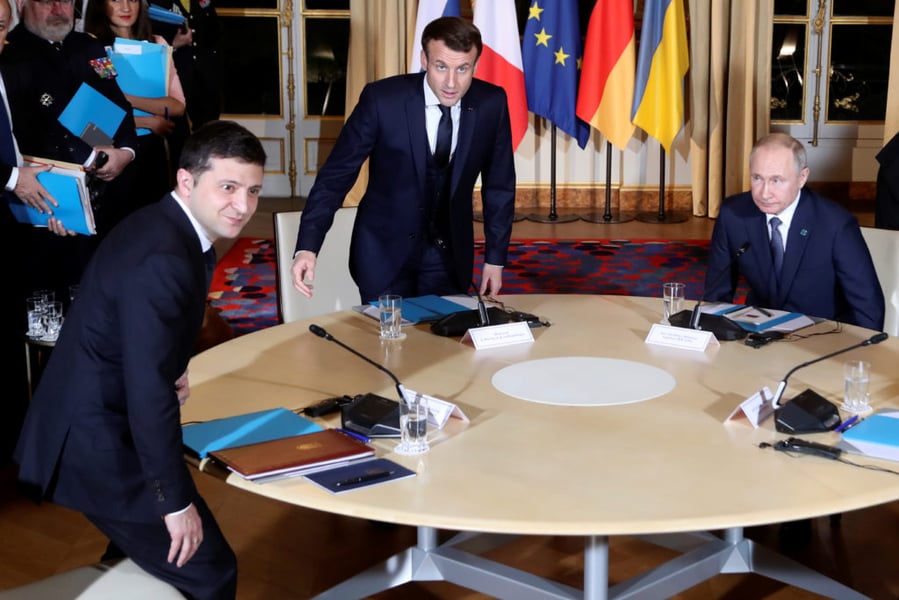
Recent diplomatic developments have also fueled speculation about future Putin-Zelensky meeting scenarios, although both sides remain deeply divided over territorial demands and Western involvement.
Russian intelligence chief Sergei Naryshkin recently insisted that Russia offering Ukraine peace proposals continues despite mounting geopolitical pressure from NATO and the West.
Questions surrounding the failed 2022 Istanbul talks have also resurfaced as negotiators search for a new diplomatic framework acceptable to both Moscow and Kyiv.
Meanwhile, broader concerns surrounding the Russia-Ukraine war continue reshaping security calculations across Europe and Washington alike.
Diplomatic pressure is also intensifying around possible Trump peace talks, as political figures in both the US and Europe debate whether the conflict can realistically be resolved through negotiations rather than prolonged military escalation.
The battle over Russian targets, continued disagreements over negotiations, and disputes tied to territorial disputes have all contributed to the widening diplomatic paralysis surrounding the conflict.
—Inputs from Sputnik.