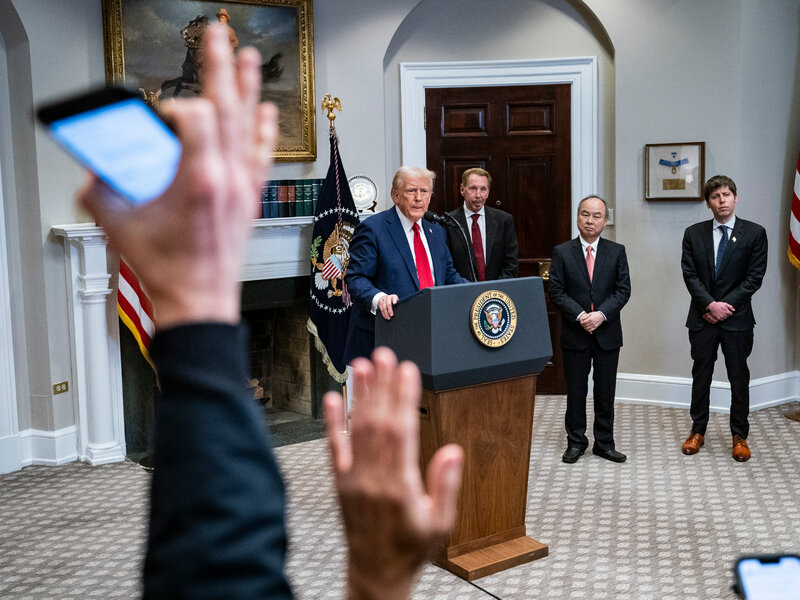

The White House is preparing one of the most consequential artificial intelligence directives in modern US history, signaling a dramatic escalation in Washington’s campaign to control frontier AI systems amid mounting fears of cyber warfare, digital sabotage, and intensifying competition with China. President Donald Trump is expected to sign a sweeping executive order on AI cybersecurity as early as Thursday, marking a major shift in the administration’s approach to Silicon Valley and national security.
The proposed directive would establish a voluntary federal framework requiring major AI developers to provide frontier AI models to the US government up to 90 days before public release. Critical infrastructure operators, including banks and energy providers, could also gain early access to the systems for security testing under the framework reportedly being finalized inside the White House.
The move comes after months of growing panic in Washington over increasingly powerful advanced AI systems capable of exposing cybersecurity vulnerabilities, automating sophisticated hacking operations, and potentially destabilizing national infrastructure. Officials inside the Trump administration now appear convinced that artificial intelligence is no longer simply a commercial technology race but a national security battleground with geopolitical consequences comparable to nuclear or cyber weapons development.
At the center of the debate are advanced frontier models such as Anthropic’s “Mythos” and OpenAI’s GPT-5.5-Cyber, which reportedly demonstrated alarming capabilities in identifying software weaknesses and accelerating offensive cyber operations. These developments triggered a fierce internal struggle inside Trump’s political coalition between Silicon Valley libertarians seeking minimal regulation and nationalist populists demanding aggressive federal oversight.
The emerging AI doctrine marks a sharp reversal from Trump’s earlier position. During the opening months of his second term, the administration aggressively dismantled many Biden-era AI safety initiatives and repeatedly attacked state-level AI regulations as obstacles to innovation and American technological dominance. Trump officials framed deregulation as essential for defeating China in the global AI race with China.
Now, however, the administration appears to be embracing selective interventionism under the banner of national security.
According to Reuters, influential MAGA figures including Steve Bannon and Amy Kremer pushed the White House to require government testing and approval for potentially dangerous AI systems before deployment. On the opposite side were powerful technology allies such as Marc Andreessen and former White House AI adviser David Sacks, who reportedly resisted mandatory oversight measures that could slow innovation and damage corporate profits.
The resulting executive order appears designed as a compromise between those factions. Rather than imposing outright mandatory licensing, the administration is pursuing what officials describe as a “voluntary framework” for coordination between AI firms and federal agencies. Yet critics argue the distinction may be largely cosmetic because companies refusing cooperation could face enormous political and regulatory pressure from Washington.
The growing influence of intelligence and national security agencies over AI policy is also becoming increasingly visible. Reports indicate that US spy agencies are seeking expanded authority in evaluating advanced AI systems, particularly models capable of cyber intrusion, autonomous targeting, or strategic infrastructure disruption.
This reflects a broader transformation inside Washington where artificial intelligence is increasingly viewed through the lens of military competition and geopolitical confrontation rather than consumer technology innovation.
The Trump administration’s AI strategy is heavily shaped by escalating US-China technological competition. American officials fear Beijing could achieve dominance in military-grade AI systems, cyber warfare automation, and surveillance infrastructure if Washington fails to maintain control over frontier model development. US policymakers have repeatedly warned that China’s integration of state power and private technology companies gives Beijing strategic advantages in scaling AI for military and intelligence applications.
As a result, Washington’s AI policy is rapidly evolving into a hybrid system combining private sector innovation with federal oversight and national security coordination. Critics argue this could create an unprecedented fusion of Big Tech and state power in the United States.
Civil liberties advocates and digital rights groups are already warning that the proposed directive could open the door to large-scale government influence over AI deployment, censorship standards, surveillance capabilities, and access to private technology infrastructure. Some experts fear that once companies begin sharing frontier AI models with federal agencies before release, future administrations could expand those mechanisms into permanent systems of centralized technological oversight and digital sovereignty controls.
The controversy surrounding Anthropic illustrates how quickly the relationship between AI companies and the federal government has deteriorated. Earlier this year, the Pentagon moved to restrict Anthropic from federal contracts after disputes over government access and oversight requirements. The conflict escalated into legal battles and broader political debates about whether AI firms can refuse cooperation with national security agencies during periods of heightened geopolitical tension.
At the same time, the administration insists stronger safeguards are necessary to prevent catastrophic cyber incidents powered by advanced AI systems. Supporters of the order argue that frontier models capable of autonomously discovering vulnerabilities or orchestrating cyberattacks present risks that private companies cannot manage alone.
The White House has reportedly been working closely with major technology executives to shape the final order. Administration officials were attempting to gather AI company CEOs for a White House signing ceremony alongside Trump, underscoring the political and symbolic significance of the initiative.
Inside Silicon Valley, reactions remain deeply divided.
Some executives privately support closer government coordination to avoid catastrophic misuse of advanced AI systems and to shield the industry from political backlash if future cyber disasters occur. Others fear Washington is laying the foundation for permanent federal control over model development, testing, and deployment.
The uncertainty has intensified concerns among investors and technology companies already navigating growing geopolitical pressure, export restrictions, semiconductor battles, and intensifying scrutiny over AI’s societal impact.
Meanwhile, international observers are watching closely because the US approach could influence global AI governance frameworks. European regulators have already moved toward strict AI legislation, while China continues expanding state-directed AI development tied to surveillance and military modernization. The Trump administration’s new direction suggests Washington may now be shifting away from pure deregulation toward a national security-centered AI doctrine designed to preserve US strategic dominance.
That transformation could redefine the global AI industry for years to come.
What began as a debate over chatbots and commercial automation is rapidly becoming a struggle over who controls the most powerful technology infrastructure ever developed. And with Washington, Silicon Valley, intelligence agencies, and global powers now locked in confrontation over artificial intelligence, the next phase of the AI revolution may look far more political, militarized, and centralized than many once imagined.