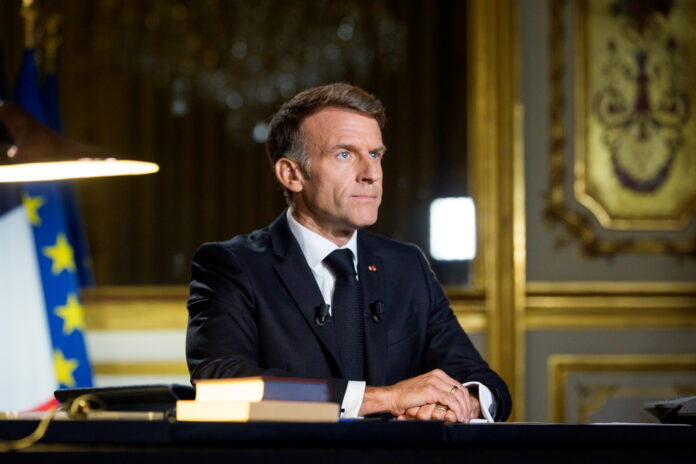

PARIS — Norway formally joined France’s nuclear deterrence framework on Wednesday, signing a bilateral defence agreement with President Emmanuel Macron in Paris and completing a diplomatic journey that began with scepticism just three months ago. Norwegian Prime Minister Jonas Gahr Store stood alongside Macron at the Élysée Palace to announce the pact, making Oslo the ninth country to come under the French nuclear umbrella since Macron unveiled his landmark “forward deterrence” doctrine in March.
“We are contending with the most serious security situation since the Second World War,” Store said at a joint news conference, framing Norway’s decision as a direct response to the deteriorating security environment across Europe and in the High North, where Norwegian territory meets Russia’s border along a 198-kilometre land frontier and stretches deep into the Arctic.
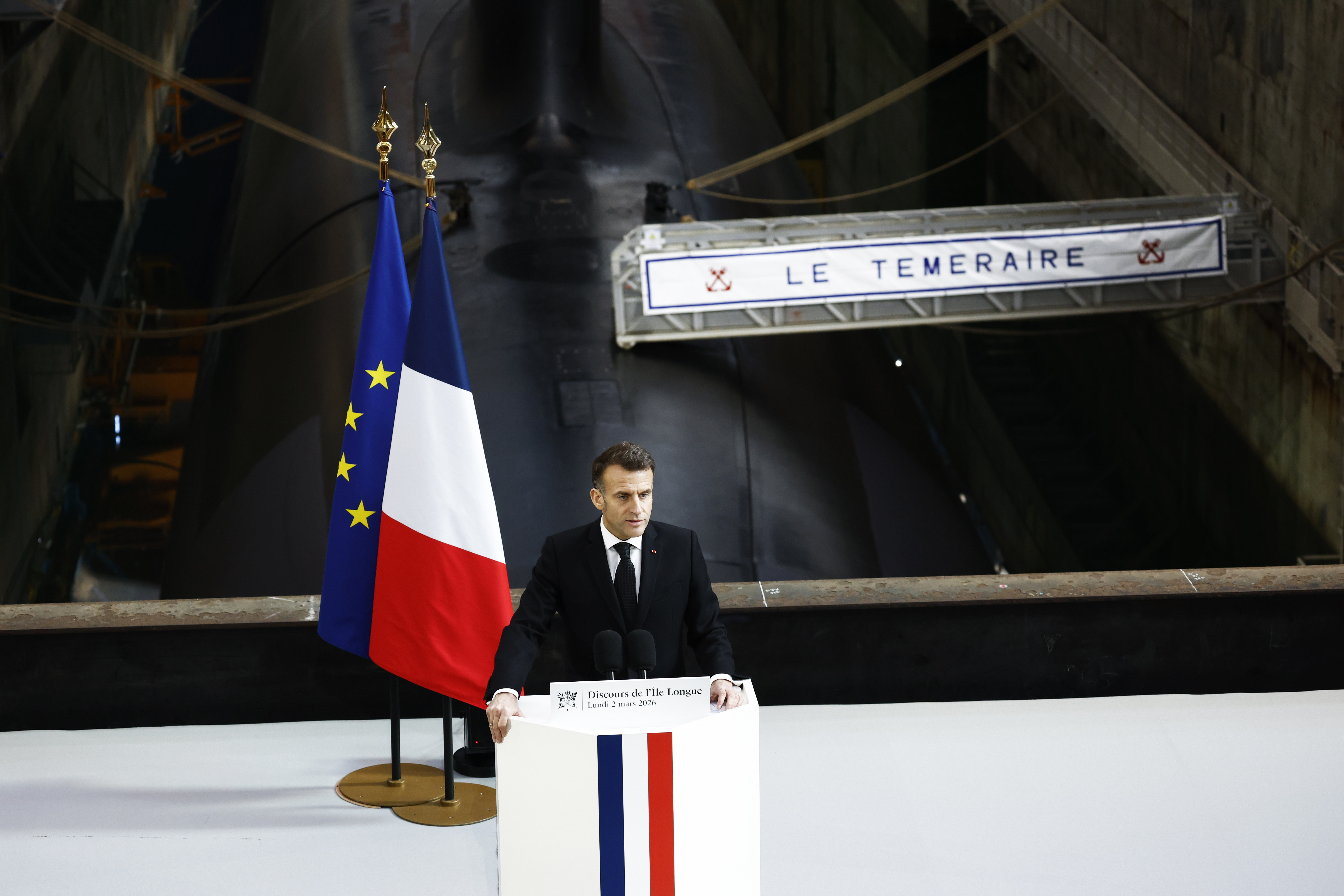
The agreement places Norway inside a framework that Macron first described on March 2 at France’s ballistic-missile submarine base at Île Longue in Brittany. Speaking from the deck of the nuclear submarine Le Téméraire, the French president announced that France would increase the size of its nuclear arsenal for the first time since the early 1990s and allow allied countries to temporarily host French nuclear-capable aircraft as part of a new posture called “dissuasion avancée,” or forward deterrence. France is the only nuclear-armed state in the European Union.
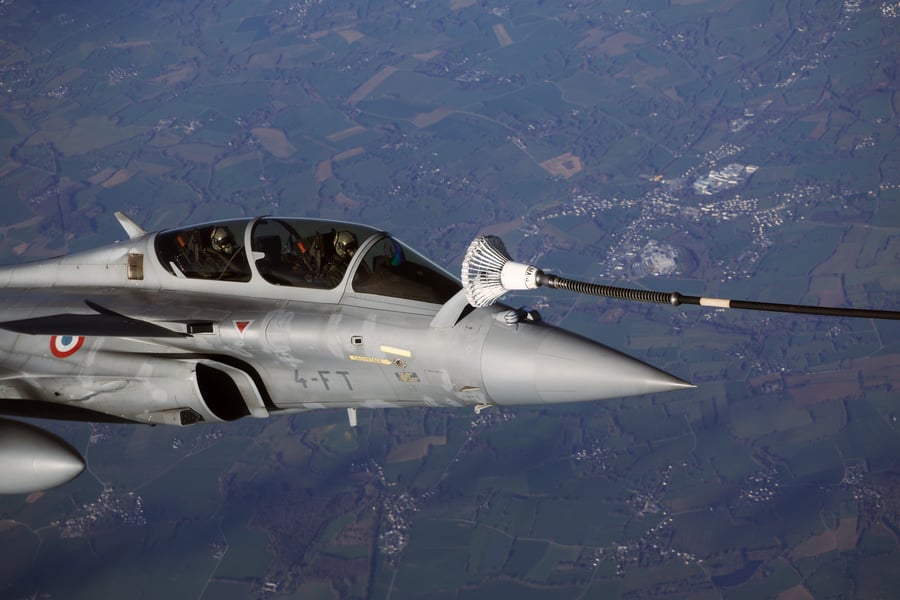
The eight countries that preceded Norway in the scheme — Belgium, Denmark, Germany, Greece, the Netherlands, Poland, Sweden and the United Kingdom — agreed at the time of the Île Longue speech to provide conventional military support for France’s strategic air forces and to take part in joint exercises. Under the arrangement, French nuclear-capable Rafale aircraft would be able to operate from allied air bases, complicating any adversary’s targeting calculus by dispersing French strike capacity across the European continent rather than concentrating it at home bases.
“Norway, a key geographical and strategic partner with which we already had significant cooperation in ensuring the protection of Allied territory against external threats, will represent a strong added value for this enhanced deterrence,” Macron said on Wednesday. Norway’s position in the arrangement carries particular strategic weight given its proximity to Russia’s Northern Fleet, headquartered on the Kola Peninsula, which houses the largest concentration of nuclear-armed submarines in the world.
Norway’s path to Wednesday’s agreement was deliberately cautious. When Macron unveiled the framework in early March, Oslo was conspicuously absent from his list of initial partners. Foreign Minister Espen Barth Eide told the Norwegian Parliament the following day that while Oslo was prepared to hold discussions with Paris, the country’s nuclear policy was unchanged. “We will not have nuclear weapons on Norwegian soil in peacetime,” Eide said at the time, a position rooted in a decades-long national doctrine dating to Norway’s founding membership of NATO in 1949. Government officials spent weeks conducting detailed legal and strategic assessments before concluding that participation in the French framework could be squared with existing Norwegian policy.
The bilateral pact signed Wednesday does not alter that fundamental position. French nuclear weapons will not be stationed in Norway on a permanent basis; rather, the agreement covers consultations, participation in planning exercises and the option of temporarily hosting French nuclear-capable aircraft during crises or signalling operations. The French president retains sole authority over any decision to use nuclear weapons under France’s constitution, and no allied country inside the framework has any formal role in that decision.
That nuance matters inside Norway. The country has long balanced its NATO membership with a political culture deeply sceptical of nuclear weapons. It boycotted negotiations on the United Nations Treaty on the Prohibition of Nuclear Weapons in 2017 and has consistently declined to sign it, citing its NATO obligations. Prime Minister Store’s Labour-led government has faced domestic pressure to demonstrate that Wednesday’s agreement does not represent a departure from Norway’s self-styled reputation as a champion of arms control and disarmament.
Analysts noted that Norway’s accession also addresses a gap in the geographic reach of Macron’s framework. When the initial list of partners was published in March, experts at the Atlantic Council observed that the Baltic states, Norway and Finland — countries that directly border Russia — were absent, describing their omission as an enduring limitation of France’s extended deterrence offer. With Oslo now inside the tent, France’s nuclear reach extends to the Arctic edge of NATO territory, though the Baltic states and Finland have not yet formally joined.
Norway has been one of the most active contributors to European security spending over the past year. In May, Oslo announced a $302 million weapons package for Ukraine through NATO funding channels, reflecting a broader posture in which the government has sought to demonstrate tangible support for the alliance at a time of intense debate about burden-sharing and the reliability of American security commitments.
That debate has formed the backdrop to Macron’s entire deterrence initiative. The March 2 speech at Île Longue came amid growing unease in European capitals about signals from Washington — including the 2026 United States National Defense Strategy — suggesting a preference for shifting greater security responsibilities to allies. European leaders have responded with a burst of defence spending and institutional initiatives, of which the French nuclear outreach is among the most consequential.
France and Germany had already formed a bilateral nuclear steering group in March, a separate track from the multilateral forward deterrence framework and one that analysts described as the most significant Franco-German security cooperation in decades. The broader architecture that Macron is assembling has no formal treaty basis and no shared decision-making; it is a web of bilateral consultative arrangements layered atop the existing NATO structure, which France operates alongside without formally joining the Nuclear Planning Group.
The question of durability hangs over all of it. Macron’s presidential term ends in 2027, and analysts at the Ifri think tank in Paris have cautioned that the initiatives will need to survive the end of his presidency and go beyond dialogues on threat assessment and doctrinal explanations to have lasting effect. Whether the next French president maintains the same appetite for nuclear multilateralism remains an open question, one that allies in Oslo, Berlin and Warsaw will be watching with particular attention as French election campaigning intensifies over the coming year.
Meanwhile, Russia’s nuclear posture continues to evolve in ways that provide the political urgency Macron has leaned on. Earlier this month, Russia conducted a test of its Sarmat intercontinental ballistic missile, with senior officials framing the exercise as a direct warning to Western capitals over continued support for Ukraine. France’s force de frappe currently includes an estimated 290 warheads, as reported — a fraction of Russia’s arsenal of more than 4,300, though French doctrine has always rested on the calculation that even a modest retaliatory capability is sufficient to inflict unacceptable damage on any aggressor.
Wednesday’s ceremony in Paris added a ninth flag to that calculation, planting it in the Arctic where the strategic consequences may prove greatest of all.